Young playwrights in Serbia face a struggle not only to get their work staged, but to get their work read. Miomir Milosavac reports on the publication of a new zine spotlighting Serbia’s under-performed writers.
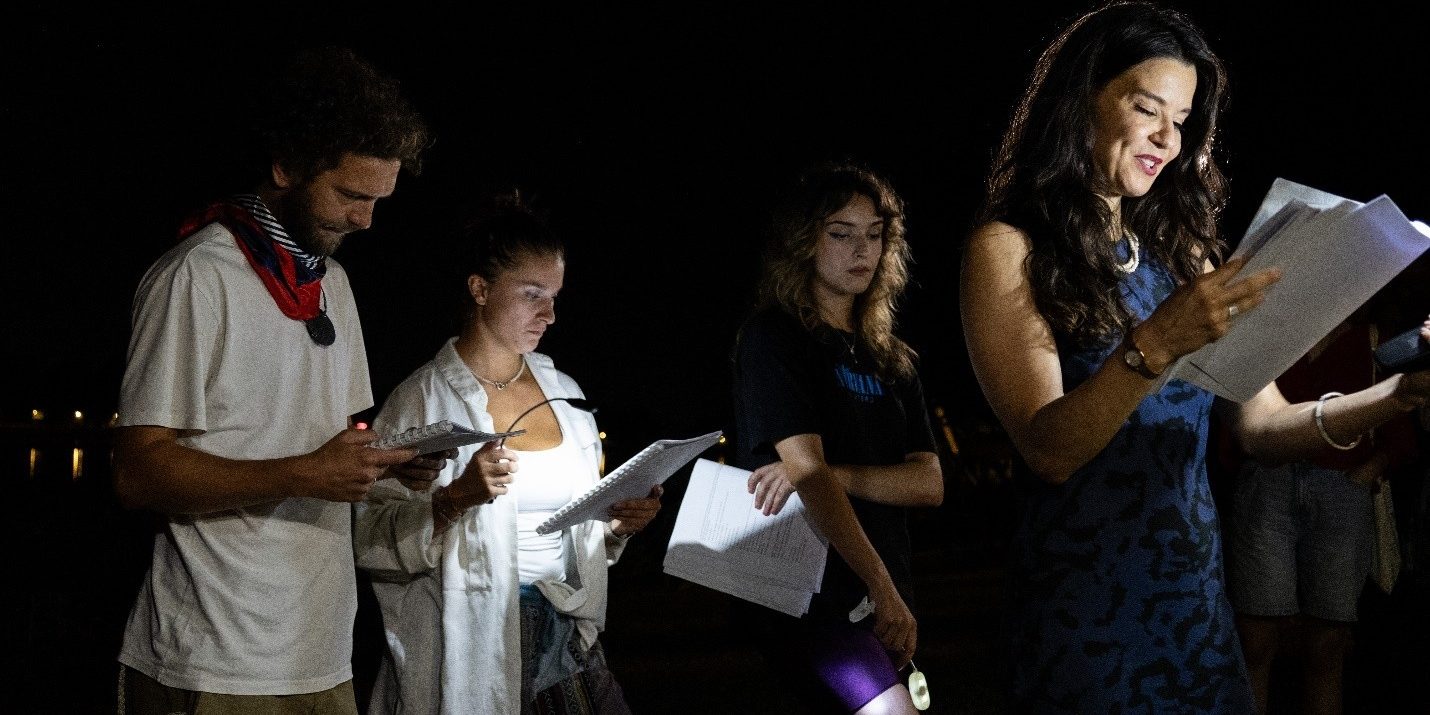
Recently, Mina Milošević, a playwright from Serbia, asked fellow playwrights on social media to send her QR codes linking to their plays that had not received proper staging opportunities or had remained unread. This resulted in a collective zine featuring playwrights (mostly) based in Serbia, titled A Collection of (Probably) Unread Plays, which was presented on August 29 before the stage reading of her play Robinson Crusoe If She Had Been a Bisexual Woman with Six Fridays, which won the Sterijino pozorje award for original domestic drama earlier this year.
During her speech, Mina mentioned that, due to the lack of opportunities, authors are forced to compete with each other, while theatres are becoming increasingly conservative. She is aware that zines, although powerful tools for community building, are not enough if institutions continue to ignore this issue. The aim of this article is to examine the unfavourable position of playwrights in Serbian theatres. Even though the research for this article focuses on the newer generation of playwrights who have been active over the past 10 years, many of the experiences discussed here are shared across generations.
Although there is no comprehensive study of the representation of contemporary Serbian playwrights in Serbian theatres, even a quick look at their repertoires reveals that their presence is very limited. Artistic directors might talk about discovering new voices as part of their marketing campaigns, but in reality, they tend to build their repertoires around theatre directors, who mostly pursue their own auteur projects or new interpretations of the classics. In such a climate, playwrights have to rely on their professional and personal connections with established figures in the field, but even those connections can’t guarantee them a place in the repertoire. The reality of being a playwright in Serbia is that it is difficult even to get your work read by someone in the industry, so it is hardly surprising that no one really makes a living from writing plays.
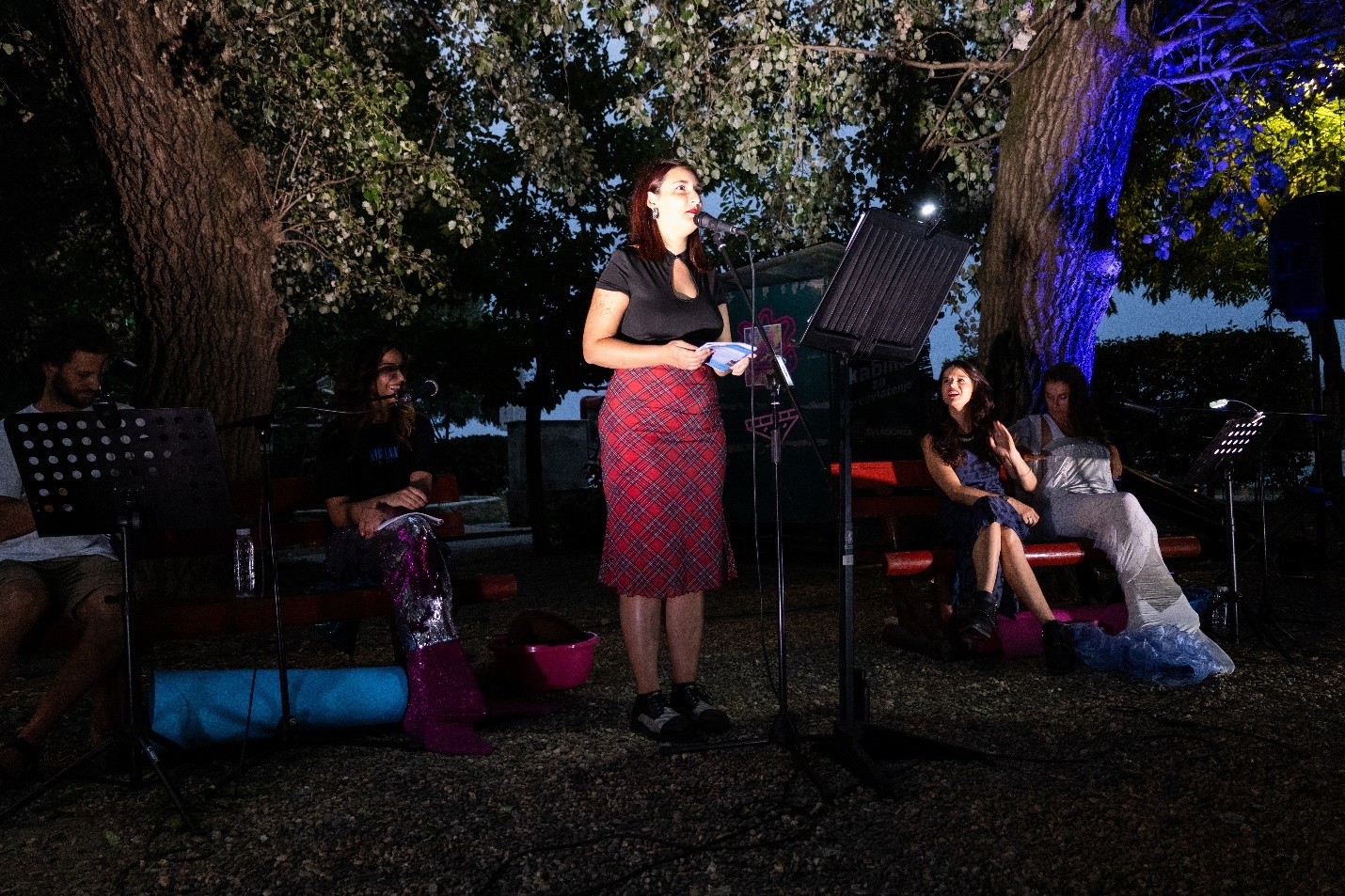
Mina Milošević presenting A Collection of (Probably) Unread Plays Photo credit: Remi Cuomo
In Serbia, there are three anonymous open-call competitions designed to give playwrights greater visibility. Two of them, the Sterijino Pozorje award for domestic drama and the Heartefact award for contemporary socially engaged drama, offer a co-production of the winning play as the prize. For many emerging writers, it is a way to get their name out there, but in reality, many winners face difficulties getting theatres interested in staging their plays. Nikola Stanišić claims that his 2023 winning play received careful treatment from Sterijino pozorje from the moment it won to the moment it premiered. Milica Amidžić and Nina Plavanjac, however, claim that they faced a lack of interest from theatres, as well as from Sterijino pozorje. Milica Amidžić’s play F1001 or The Rift remained unproduced, while Nina Plavanjac’s Name in the Ashes is being produced by Theatre Artistique, an independent theatre in Paris, after no one in Serbia or the region was interested in producing it. Both authors also mention that misogyny is still prevalent in our theatre and that it is harder for female playwrights to break into mainstream theatres if they do not fit established stereotypes. As a reminder, Mina Milošević’s production of her play Lysistrata: Sex and Strike was shut down by the newly appointed director of Bitef theatre because he deemed it “too feminist.”
Sterijino pozorje and Heartefact awards tend to highlight plays that were among the finalists and are considered by the jury worthy of staging. Some of them eventually get staged, such as Mina Petrić’s Forget-me-not, Scorpion Grasses and Snake Eyes, but most end up forgotten. Danilo Brakočević was a finalist several times for the Sterijino pozorje award, but none of this translated into a stage production. He says that being shortlisted for these kinds of competitions gives authors a form of external validation of the worth of their work, but aside from that, it usually doesn’t provide them with any other opportunities. Ana Ogrizović’s play Lilith on Earth was shortlisted for the Sterijino pozorje award in 2023, but it was not produced. Instead, at the initiative of students of Italian Studies in Belgrade, it was translated into Italian. As previously mentioned, Mina Petrić was able to have her play produced at the Serbian National Theatre, but by the time it was staged, she had already established herself as a dramaturg, having worked on numerous SNT productions and even won two Sterijino pozorje awards for dramaturgy and dramatization.
Some authors get the opportunity to have their plays performed through the New Voices programme at the Belgrade Drama Theatre, which was introduced in 2023 as a way of providing space for emerging talents. Inspired by the New Drama Project, which ran in the 2000s and produced several iconic plays, the current project does not offer the mentorship of European theatre professionals that its predecessor did. Instead, artistic teams are expected to produce a play within a short period of time, on a very limited budget, and the resulting productions are rarely performed.
As a student of dramaturgy expected to graduate next year, I can confirm that even at the academies there are no support systems for young playwrights. Theatre directing students and acting students almost never stage plays written by their peers. This year we produced stage readings of our plays as part of the Sterijino pozorje festival, but it was difficult because there were no theatre directing students available to direct them, while acting students were given only three days off by their professors to commit to our project. Dimitrije Petrović, who recently graduated from the Academy of Arts in Novi Sad, claims that dramaturgy students can gain lots of practical skills at the academy, but that a lack of professional connections prevents them from entering the industry.
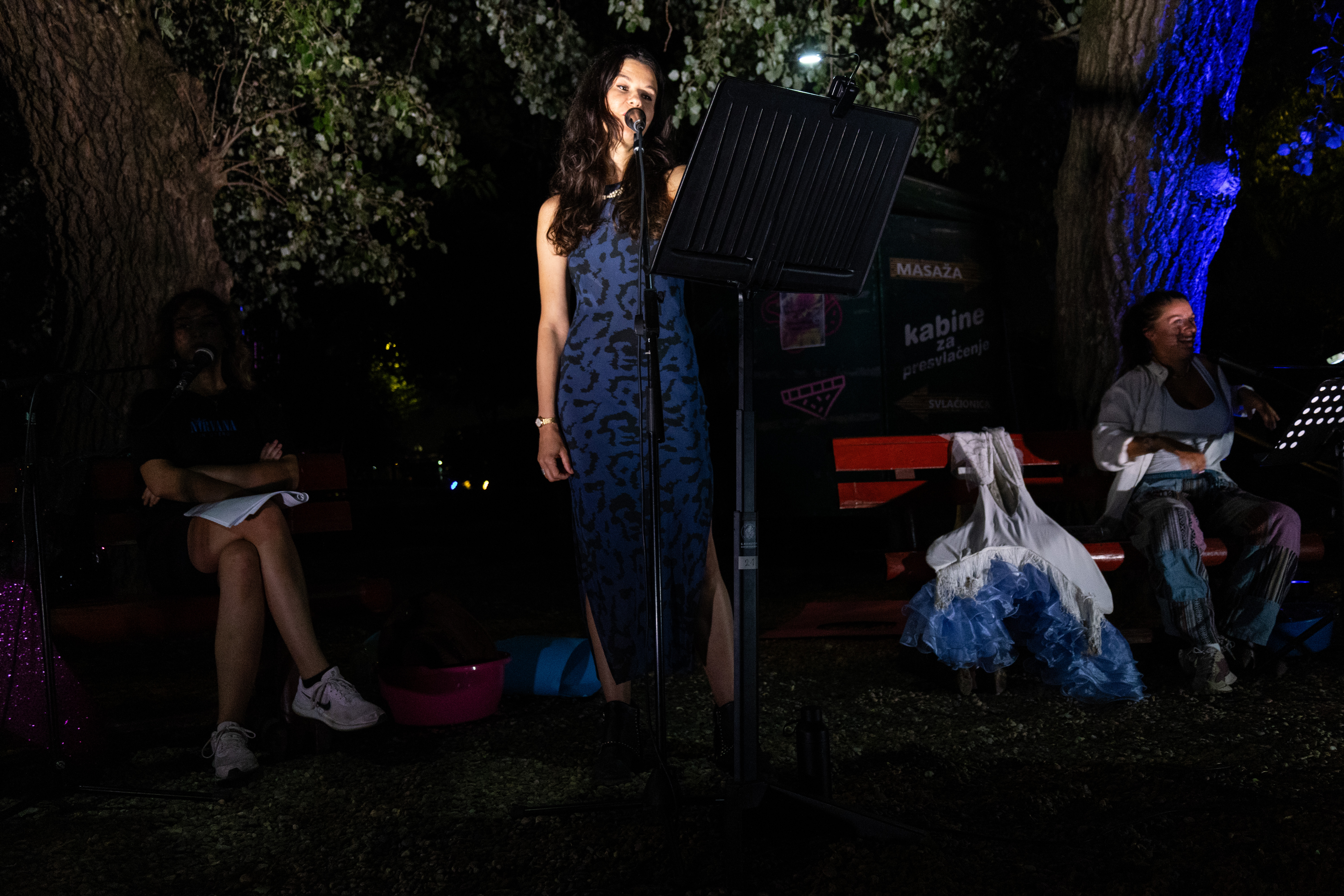
Danijela Steinfeld, reading Robinson Crusoe If She Had Been a Bisexual Woman with Six Fridays
Photo credit: Remi Cuomo
When it comes to publishing, there are not many options, especially for up-and-coming playwrights. In Serbia, plays are mostly published in the theatre journals Scena and Teatron. Both of them accept texts throughout the year, but the selection process for published plays isn’t known to the public. Some authors claim that they have never received any feedback after submitting their plays. Last year, Divna Stojanov, a playwright based in Novi Sad, published her play Never-Before-Seen Play in Matica Srpska’s prestigious Prva knjiga series, which publishes first books by emerging writers. When asked whether any theatre or theatre director had approached her following the publication of the book, she gave a negative answer. She claims that she has never heard of a play being staged after a theatre director or artistic director read it in a publication.
Playwrights including Minja Bogavac, Dimitrije Kokanov, Maja Pelević, Olga Dimitrijević, Filip Vujošević, and others were among the first to recognize the potential of online platforms for publishing plays. Their plays were available on nova-drama.org.rs, but as of September 2026, the platform is no longer available. In contrast, Croatian playwrights have drame.hr, a regularly updated platform featuring plays by both emerging and acclaimed playwrights. A Collection of (Probably) Unread Plays is currently only available for download from the link provided at the end of this text, but there are plans to make a website for the project, with the potential to expand it with new plays and playwrights. The aim is to create a platform where playwrights can publish their work without strict curation or selection, allowing everyone’s work to be seen equally, without favoring anyone.
It’s hard to fit all the issues playwrights face in Serbia into a single text, and many aspects have probably been omitted, but it is important to insist on this topic and not let entire generations of playwrights be silenced. With the publication of this collective zine of playwrights from Serbia, many correspondents expressed their hope that initiatives like this might bring about change in relation to the issues presented in this text, with some even suggesting unionization as a way to fight for fairer treatment.
The authors featured in the zine are Ana Vračar, Teodora Marković, Arina Bolihova, Irina Subakov, Ana Dragić, Milana Matejić, Ana Ogrizović, Bojan Tasić, Miomir Milosavac, Milica Amidžić, Marija Delić, Filip Vujošević, Davor Špišić and Mina Milošević.
You can download the collective zine of Serbian playwrights from this link: zbirka (verovatno) nepročitanih drama.pdf
Further reading: Serbian theatre – between resistance and appeasement

Miomir Milosavac is a dramaturgy student at the Academy of Arts in Novi Sad. His work focuses on playwriting, as well as writing on theatre. His work has been published inScena, Theatre Arts Review. He is also a co-founder of InterTribina, an online platform focused on writing about art and culture from the perspective of young authors.