As international artists continue to withdraw from the programme of the 59th BITEF, Borisav Matić reflects on the evolving situation and what it means for the festival’s future.
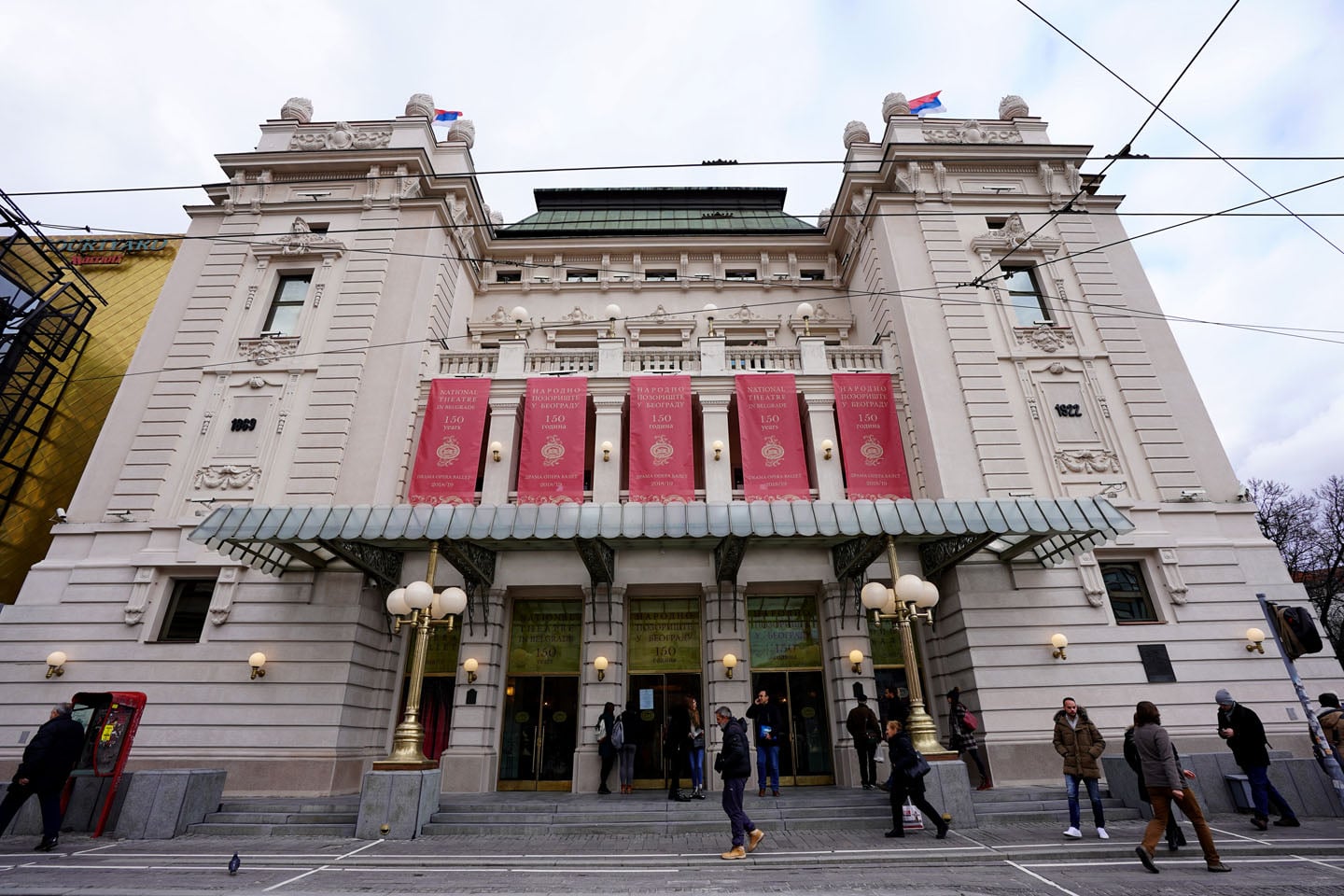
It was the second half of September 2025. The Board of BITEF (Belgrade International Theatre Festival) was ready to reject the festival’s programme that Miloš Lolić, Ana Vujanović and I created as the previous year’s curatorial team. The Board’s pending decision was an act of censorship of the programme because Milo Rau’s performance was included. Rau had previously criticized the planned environmentally-harmful mining project in Serbia that’s of strategic priority to the Serbian and the German governments. His political views on the subject were the trigger for the censorship. Lolić, who represented our curatorial team at the meeting with the Board, repeatedly warned the members that they are on the verge of a mistake that will affect BITEF for the unforeseeable future. The meeting was adjourned and everyone was given more time to think. When the Board convened again in a few days, it rejected the programme of the planned 59th edition of the festival, officially making Rau persona non grata. News about the censorship reverberated throughout the international theatre scene and media outlets in multiple languages.
Afterward, we, as curators, left our positions. The Board decided to assemble their own programme in less than two months. Though he was the only one to vote against censorship, the actor and president of the Board at the time, Svetozar Cvetković, worked hastily to organize the edition of the festival, as he publicly stated, to preserve its continuity. Cvetković imagined to invite performances from Serbia, Croatia, Bosnia and Herzegovina and Slovenia, as well as Romeo Castellucci’s Bros which was in our selection. Yet every theatre refused to participate in the censored edition of the festival. As a consequence, BITEF was not held in its institutional format last year, for the first time in the 59 years of its existence. Instead, the cultural community of Serbia, together with international colleagues, decided to defend our censored programme and organized ne:BITEF, the independent, guerrilla-style edition of the festival. Ne:BITEF showed the courage and willingness of the cultural community to create a socially-critical and free-spirited festival at a time when artistic autonomy and free expression are almost eradicated in Serbia’s institutional sector.
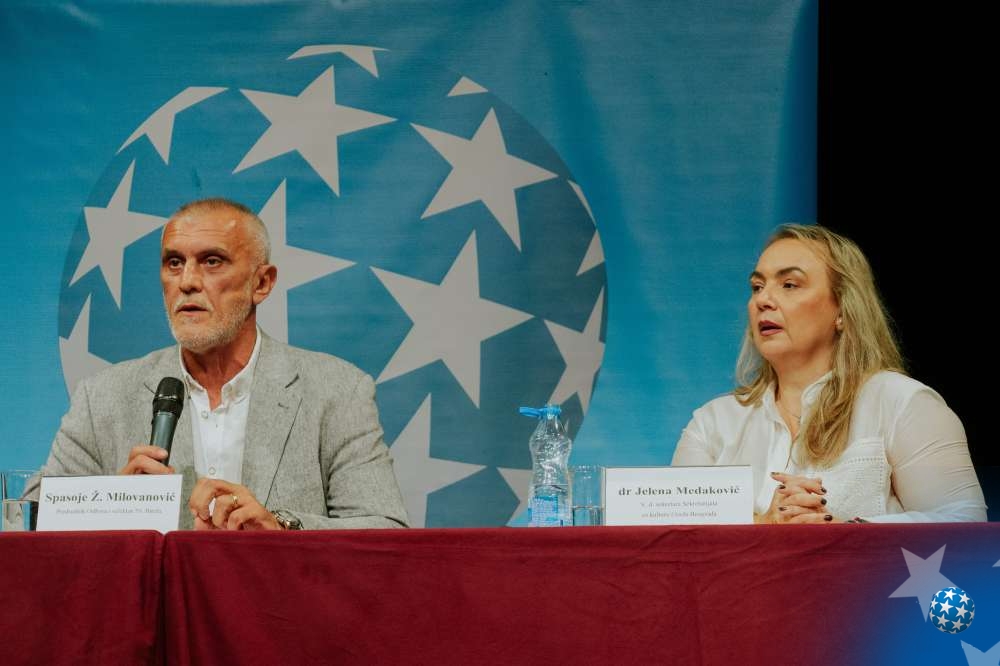
Spasoje Ž. Milovanović at the BITEF press conference. Photo: Tanja Drobnjak
In December 2025, the city government of Belgrade elected the new Board of BITEF. Two members who had voted for the censorship, Ana Veljković and Srdjan Obrenović, were kept in their positions, perhaps for a “job well done”, from the government’s perspective. The dramaturg Spasoje Ž. Milovanović was elected as the new president of the Board. Although he has lived in Serbia, cultural workers who had led BITEF said that had never seen him as an audience member at the festival in the last 20 years. While he was the managing director of National Theatre in Niš, he founded the festival Theatre at Crossroads and in 2020 said that the autocrat Aleksandar Vučić was, as Serbia’s president, the patron of the manifestation. Theatre artists responded by withdrawing their performances from the festival; in the end, four out of eight scheduled performances cancelled their participation. Now, besides being the president of BITEF’s Board, Milovanović is also functioning as the de facto curator, which is a precedent, as the festival always had an autonomous artistic/curatorial leadership.
Milovanović repeatedly made clear that he doesn’t plan to deal with the damage that BITEF and its reputation have endured. He stated that the events of 2025 are in the past and that he has the right to lead the institution into a new direction without confronting its recent mismanagement. But it’s not really a new direction if two people who enacted censorship are still decision-makers and neither the festival nor the City of Belgrade has ever apologized for the act. The previous Secretary of Culture of Belgrade resigned shortly after the news of the censorship broke last October but the new Secretary pursuing an identical cultural policy, systematically stifling the freedom of expression in the capital’s institutions while pretending that it’s business as usual on the cultural scene.
What the new Board practically has the mandate to do is create the illusion of legitimacy for itself and the city government by presenting the situation as if things are back on track. Last autumn, the self-organized ne:BITEF was a huge embarrassment not only for the previous Board but also for the Secretariat of Culture of the City of Belgrade, because the cultural community organized voluntarily and with almost no budget what institutions with all their resources had failed to manage – a relevant international festival. Thus, the priority of the Secretariat of Culture this year is for the official BITEF to happen in any form, since the failure to hold an event will be seen as proof of lasting incompetence.
The Board is projecting this illusion of legitimacy by inviting highly respected theatres and artists, yet regulating the programme so that no part of it is critical of the repressive regime in Serbia and its violent crackdown on peaceful citizens and the cultural sector. What they didn’t count on was the boycott. But many theatres and artists have refused to take part in this year’s BITEF, precisely because they do not want to give legitimacy to the way the institution is currently led. Many dissenting artists are BITEF’s laureates and former participants.
In May 2026, the Board of BITEF invited the show Osvajalec from the City Theare of Ljubljana, yet the theatre rejected the invitation because the show’s authors, director Sebastijan Horvat and dramaturg Milan Ramšak Marković, objected.
“We know that, in the situation BITEF is, our foremost duty is to express solidarity with our colleagues who have become targets of state censorship”, Horvat and Ramšak Marković wrote in their public statement. “We do not view BITEF’s situation in isolation from the broader social context. The festival is merely the latest institutional victim in Serbia which, grave as it is, does not come close to what workers in other sectors have been subjected to for years.” The artistic duo also noted that their refusal to participate doesn’t mean that we won’t build the festival from scratch one day.
The British-German company Gob Squad also refused to participate in this year’s edition, as we learned from a journalist at BITEF press conference in June announcing the programme.
Yet it is striking that theatres and artists are cancelling their participation after the official announcement of the programme. After BITEF published the names of seven shows that were supposed to be performed from 14 to 20 September during the festival, international artists became aware of the political and cultural situation in Serbia and the authorities’ interference in the cultural sector. Thus, more dissenting voices followed.
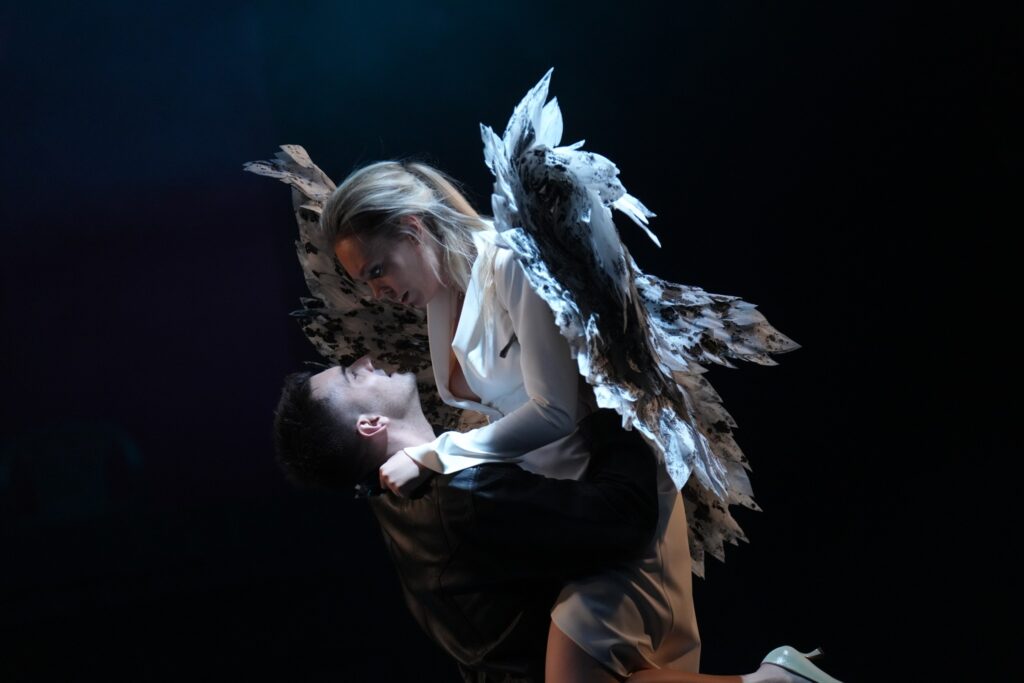
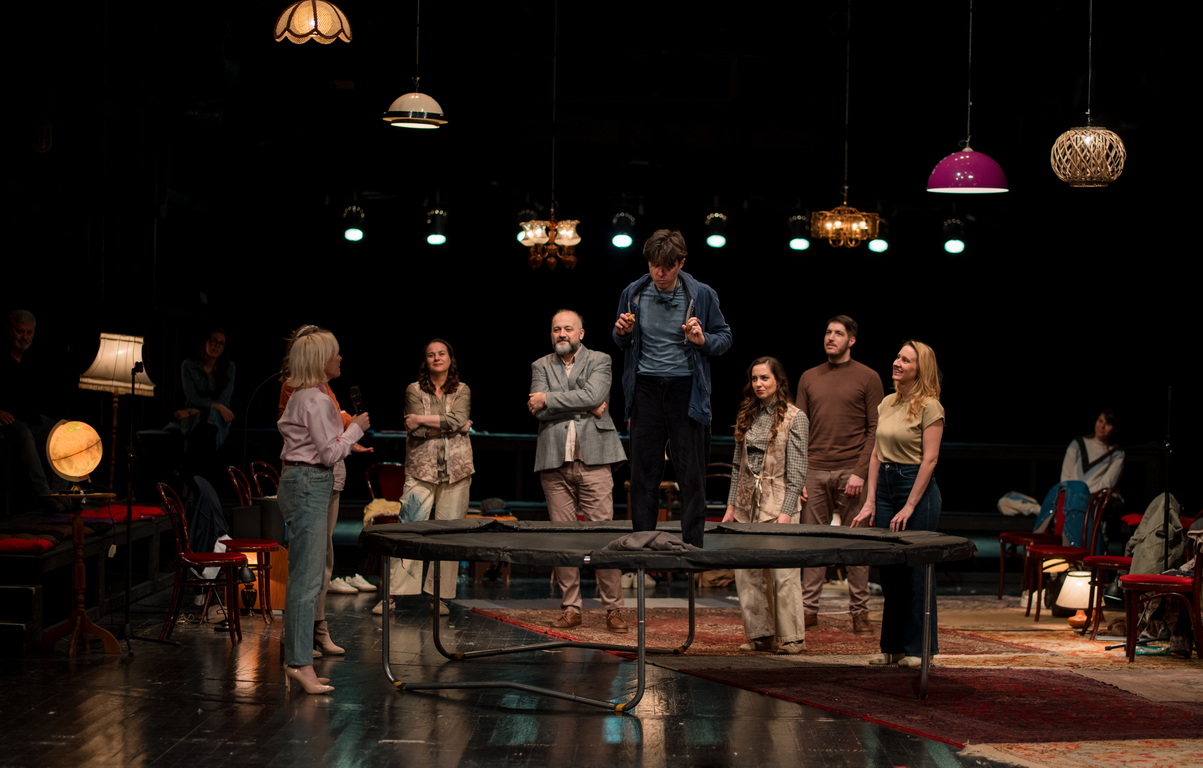
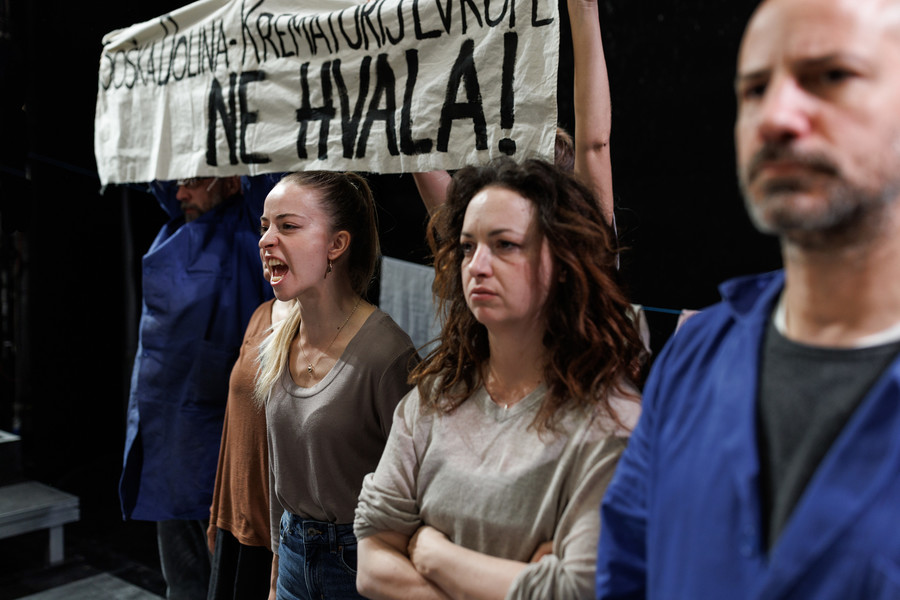
Black Gold, Belgrade Drama Theatre
Weeks after the programme announcement, director Oliver Frljić told the newspaper Danas that he heard only from them that his performance Black Gold (Belgrade Drama Theatre) is in the programme. “It would be truly unfortunate if Black Gold served as an alibi to forget that act of censorship. I do not believe that BITEF’s continuity can be restored without facing the fact that its autonomy has already been politically trampled once”, Frljić said.
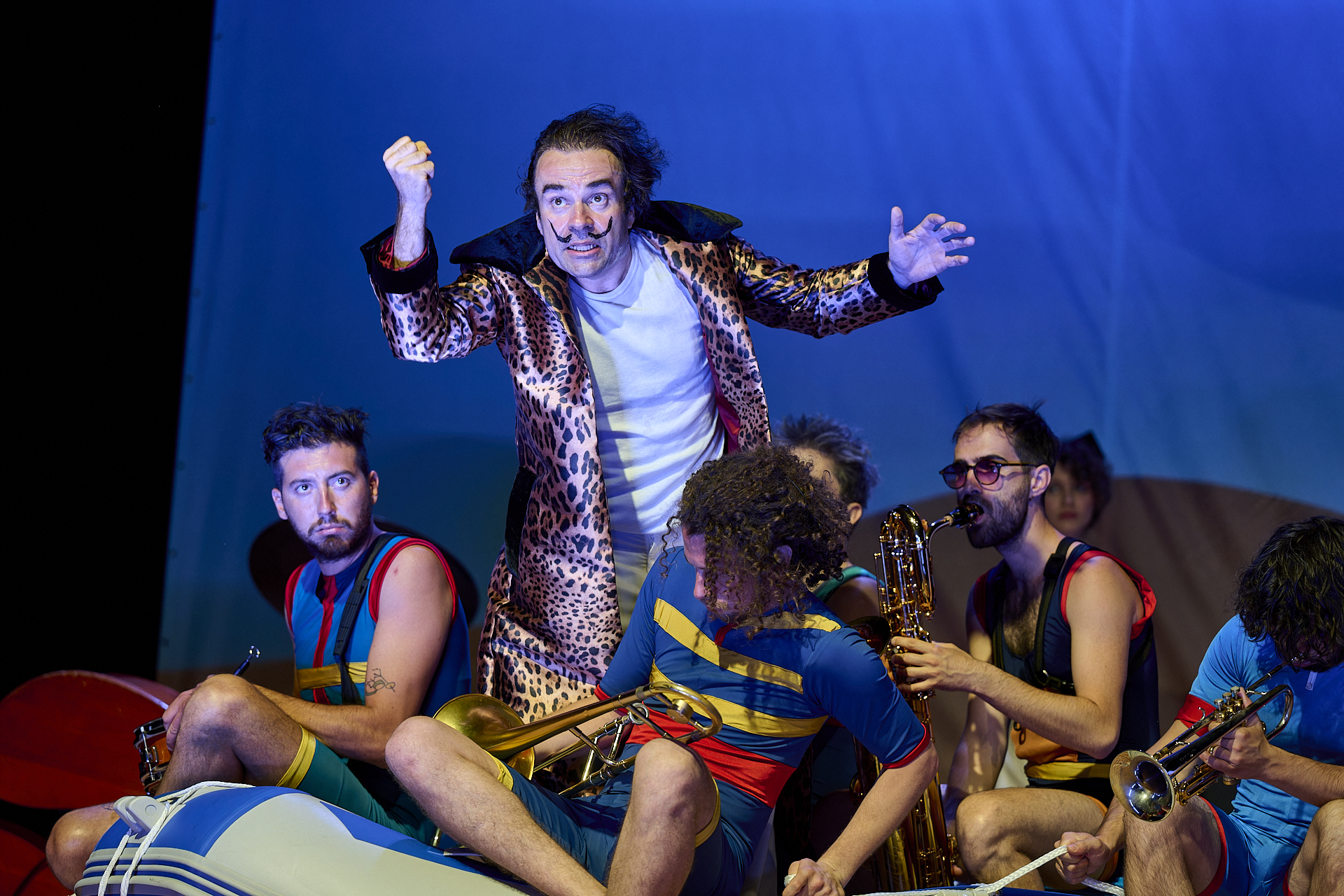
The Slovenian director Žiga Divjak, whose show Ahnovo was selected, said for Danas: “I really don’t want our participation to legitimize the current form of the festival. I do not support participating in this year’s BITEF.” Divjak also noted: “The interference of politics in artistic freedom is unacceptable. Sanctioning artists who critically question society is fundamentally undemocratic. BITEF is an extremely important festival with a rich tradition for our region, so I am horrified to see what has happened to it in the last two years.”
Teatro Praga from Portugal also canceled their participation with the show Audition. In a public statement, they noted: “This decision is an act of solidarity with Serbian artists, cultural workers and independent organizations who, like us, continue to imagine and build possible futures through contemporary artistic creation and who, for that same reason, are too often marginalized, silenced, or deprived of the conditions necessary to carry out their work.”
“Solidarity must prevail over opportunity, and principles must prevail over convenience”, Teatro Praga also stated. “We look forward to the day when we can once again meet at BITEF to celebrate artistic creation and democracy in freedom. The defense of freedom, democracy and and the autonomy of artistic creation is not negotiable.”
As devastating as BITEF situation currently is, it is hardly exceptional in the political climate in Serbia. In fact, BITEF can be seen as a case study of the state capture of institutions which once supported critical thought and free expression. In a recent article, Serbian theatre: Between resistance and appeasement, I emphasized how critical political thought has been purged from the repertoire. Tatjana Rosić’s article Chronicles of Repression, Chronicles of Resistance demonstrated how arts and culture are at the forefront of state capture in Serbia. However, ne:BITEF and the ongoing boycott by theatre makers prove that there is community ready to fight for the preservation of the festival. As the slogan of ne:BITEF proclaimed “BITEF is wherever we gather”, the festival continues to live also through acts of resistance from international colleagues. That community of solidarity will be ready to rebuild BITEF after the repressive regime in Serbia falls.
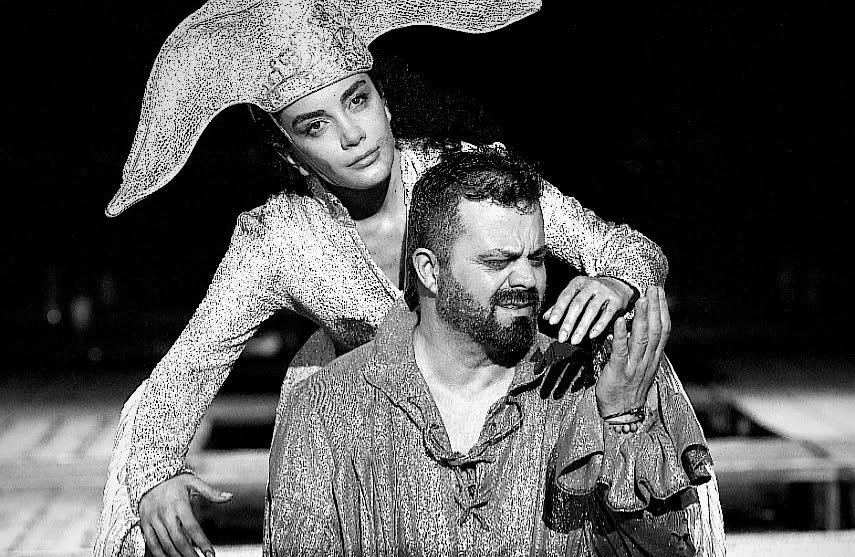
Main image: Anhovo
Further reading: Serbian theatre: Between resistance and appeasement

Borisav Matić is a critic and dramaturg from Serbia. He is the Regional Managing Editor at The Theatre Times. He regularly writes about theatre for a range of publications and media.
He’s a member of the feminist collective Rebel Readers with whom he co-edits Bookvica, their platform for literary criticism, and produces literary shows and podcasts. He occasionally works as a dramaturg or a scriptwriter for theatre, TV, radio and other media. He's the administrator of IDEA - the International Drama/Theatre and Education Association.