Zagreb Youth Theatre, premiere 2 October 2026
“All happy families are alike; each unhappy family is unhappy in its own way,” Tolstoy famously wrote. This applies to Nikaragva, new chamber play directed by Patrik Sečen for ZKM and based on the original text by Vid Adam Hribar, which explores one Croatian family who, following a death, start peeling down the layers of coldness, secrets and discontent, ultimately leading them towards their collective fallout.
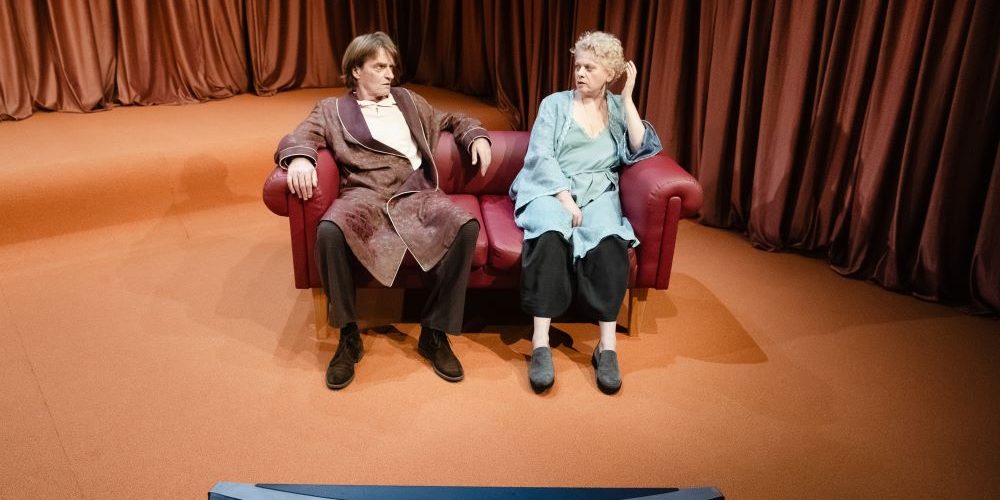
The family consists of five members: mother Kasandra (Katarina Bistrović-Darvaš), father Joško (Filip Nola), daughter Lara (Petra Svrtan), son Stefan (Adrian Pezdirc) and Grandfather (Sreten Mokrović), while Lara’s boyfriend Davor is played by Ivan Jurković. Cold and distant, Kasandra is practically glued to the couch, absentmindedly staring at the TV; Joško borders on caricature masking the harsh reality of an unsatisfied life with forced humor; Grandfather is mostly in the kitchen; Lara is somewhere out with her boyfriend while Stefan mechanically lists geographical locations in a stiff, almost paralyzed manner, trying to avoid the revelation he dropped out of University.
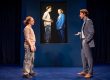
Sometimes there is a tone of absurdism, as if the characters were borrowed from Samuel Beckett, and sometimes the tone is painfully realistic. The family keeps going back and forth in between the grief of losing their Grandmother and picking on each other for their failures. The scenography by Matej Kniewald creates an intimate interior of a living room decorated with pink, soft curtains. The set’s minimalist aesthetic is infused with touches of maximalism that evoke the family’s former wealth, at the same time reminding us of the cosiness and safety which a functional family, unlike the one we see, should have. However, the oversized prop of a Trojan horse which sits on the stage only for a short period of time poses the question of its untapped potential as well as the oversimplified theatrical cue which suggests an intruder infiltrating the family (namely, Lara’s boyfriend Davor) who rolls the horse out.
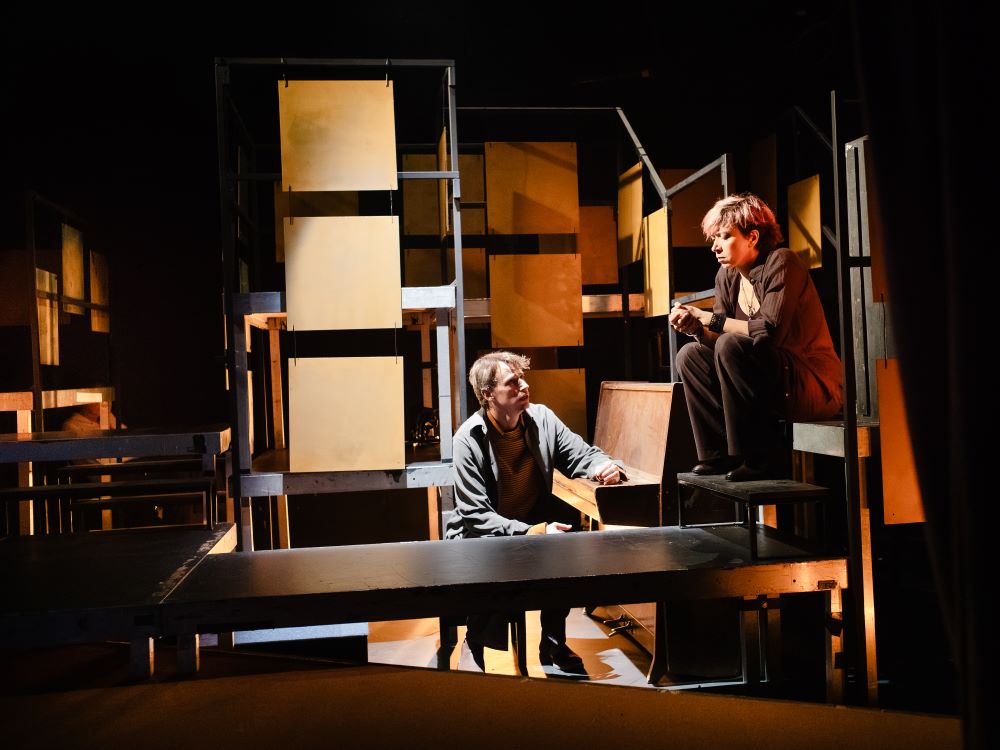
Nikaragva, Zagreb Youth Theatre. Photo: Marko Ercegović
In between their never-ending discussions, the family keeps talking about food – when is Grandfather, obviously the designated cook, going to prepare something to eat? What type of lovely dinner did Lara have with Davor? What did Stefan eat after studying in the library? Food, food, a whole lot of food occupies the underlying thoughts of the characters on stage, as if showing us their constant emptiness which they seek to fulfil with meals. Dinner tables set for a family Sunday is not only a strong tradition in Eastern Europe, but also in the majority of the world. But what happens when not even the food can satisfy the hunger for belonging, for approval, for the love and acceptance of the ones closest to us?
Even though the play itself offers a wide variety of characters’ confrontations and opens up space for a new approach to a family diagnostics, I found Sečen’s directing lacking the bite and strength for a topic like this one. Individually, all the actors of Nikaragva are strong, but sometimes it seems like they are not entirely connected to the performance as a whole, other than in a couple of scenes – for example, while meeting Davor.
The character of Davor, played Ivan Jurković, is a highlight; his presence elevates the production in his short role, posing the question of why the youngest actor, who is only on stage for five minutes, is the one to tie the play together in perhaps the only perfectly directed scene? While meeting Davor, the family (as expected) starts arguing while simultaneously bombarding him with questions in a truly funny, sitcom-like manner. Jurković is amazingly natural in his comedic role with perfect timing and boldness, at the same time playing a rather stiff, but self-assured guy. However, an ass0umed word play on Davor’s name, „I am Davorising.“ as Davor’s explanation of his cool, composed and wildly different state of mind from the rest of his girlfriend’s family, while humorous, ultimately is one of many banalities in the text.
The text itself often shows weakness in the artificial dialogue. The most powerful scenes are the monologues (such as the Grandfather’s about his deceased wife). The play is laced with so many too-on-point and banal quotes (“I feel like a black and white TV“; “The elevator leads to the basement of our fears“; “Am I just a bad man at the end of the day?“) which leave no real space for the actors to flesh out their characters with their performances. Adrian Pezdirc, as Stefan, perhaps has the most difficult task which he carries out intently through slow and mechanical stage movement which evokes his personal sense of displacement and alienation, not only from the world but also from his own family.
In some moments the production has a greatly performed darkness and absurdity and it doesn’t conform to a traditional approach, but ultimately it lacks strength and is overfilled with self-explanatory dramatic cliches. Nikaragva attempts to be an emotive, in-depth study of an unhappy family, but even though the strong ensemble do their very best, the result is an unexpectedly underwhelming portrait of a family in decline.
Credits
Director: Patrik Sečen// Dramaturg: Vid Adam Hribar// Scenography: Matej Kniewald //Costume: Ana Mikulić//Movemenent: Dora Brkarić
For more information visit: ZeKaEm.hr

Martina Marinković graduated Comparative Literature from the Faculty of Humanities and
Social Sciences. She is a literary critic, essayist and active contributor for several Croatian
cultural websites, including Kritika-HDP, Booksa.hr and Lupiga. She is also head of Booksa's
BookClub and lives in Zagreb.