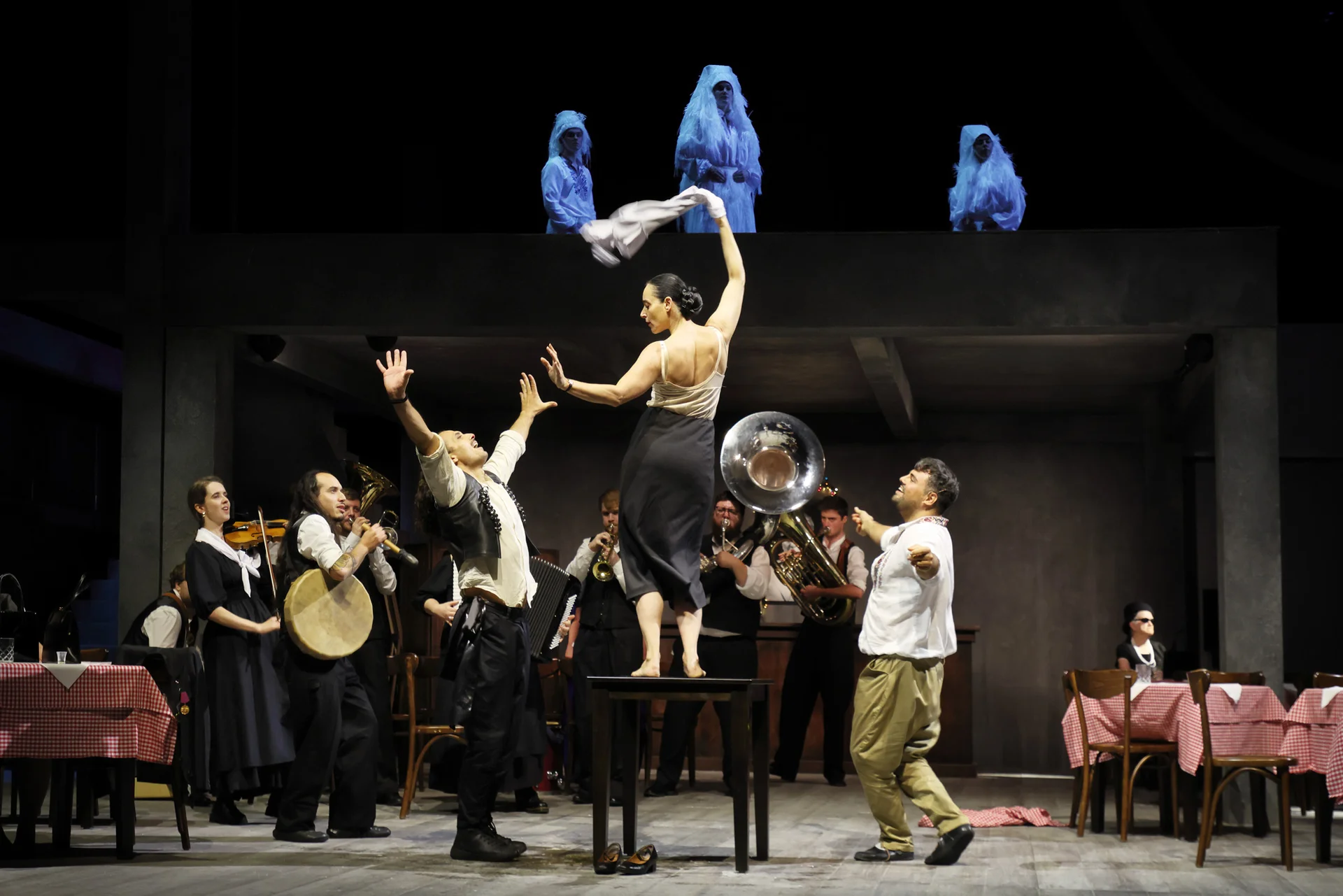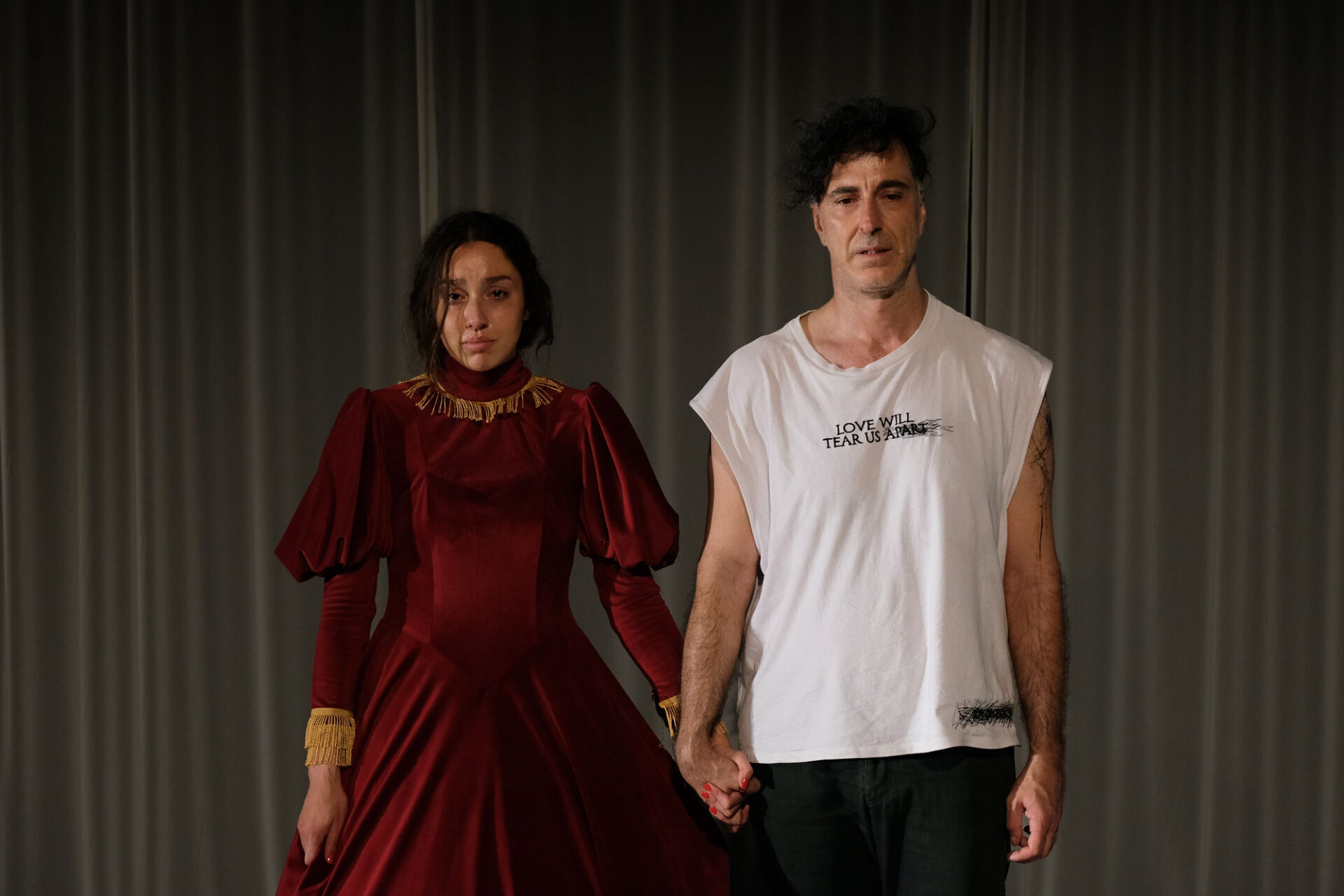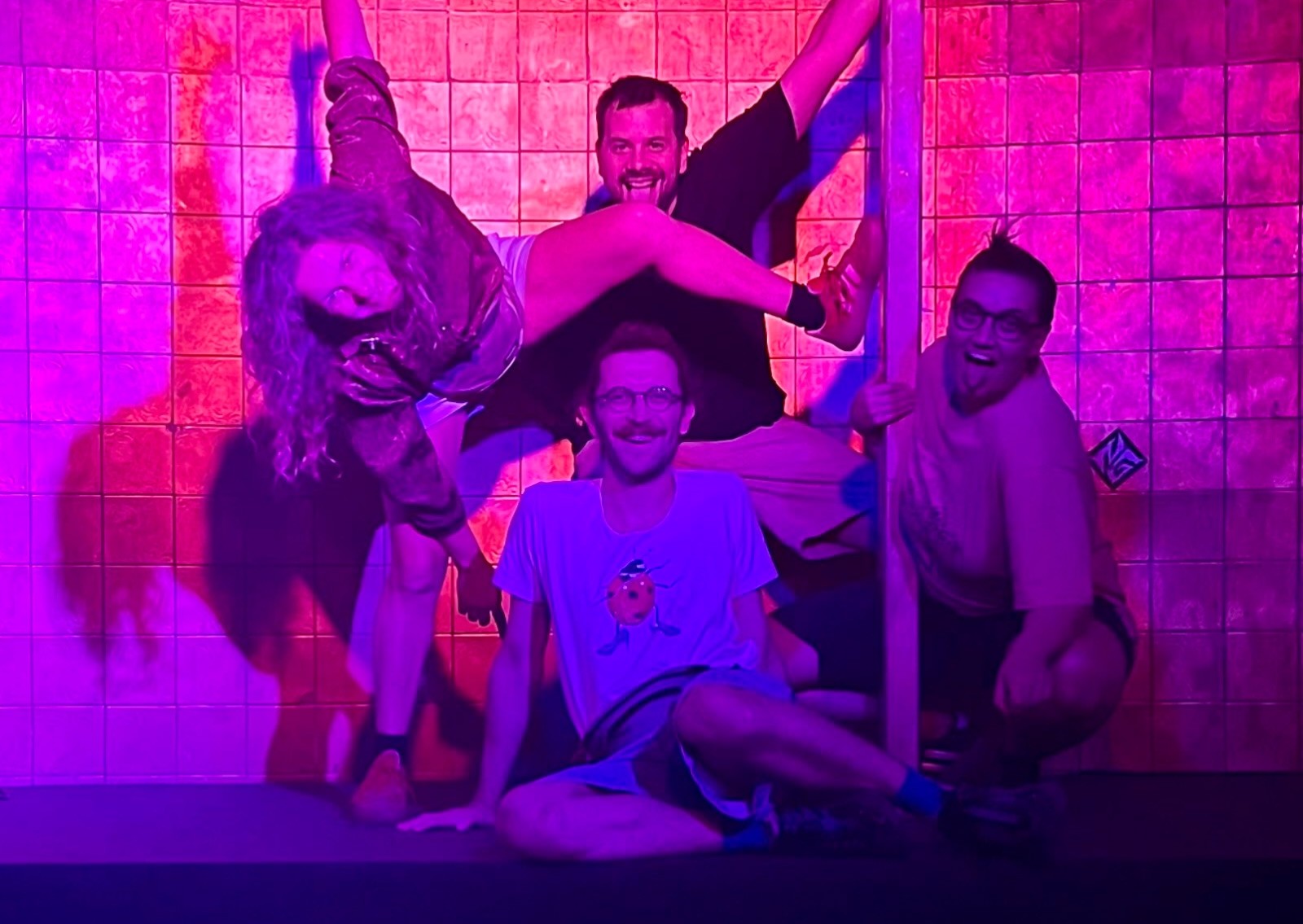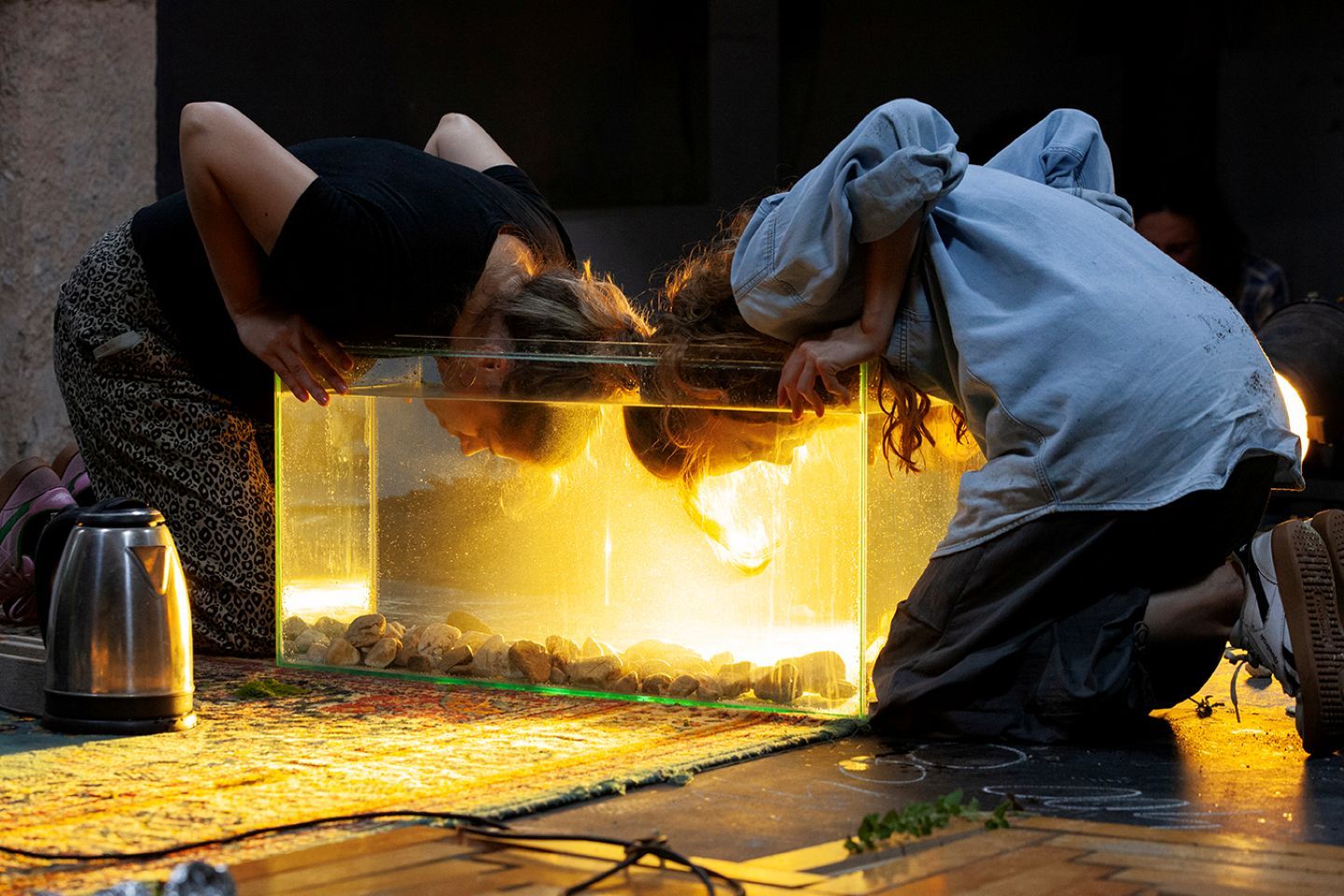
Presented as part of the Sarajevo Theatre Showcase
Work lights and a jumble of indistinct sounds. As the audience files into the space, the eight actors are already waiting, wandering the open stage, hesitating, watching, listening. For what? Marina Petković Liker’s Sounds Like Pepper emerges from a murmur of voices, a kind of white noise of life: unrecognisable voices clustered together. Četveroruka’s production brings together artists from different regions and theatrical backgrounds. Originally staged in the black box at Zagreb Dance Centre, Sounds Like Pepper is a work of dramatic vocal theatre that unsettles and sharpens our attention, exploring individual and collective dynamics, as well as our dependence on structure and clarity.
As we settle in, we are alert. Something strange is happening. We search desperately for clear meaning in the arrangements of people in differently textured coats, and in sounds that evoke a beach or a railway station. Instinctively, we try to construct a story. What follows is an excruciating test of patience as we take in elements that systematically resist this very purpose. The resistance is conveyed by the actors, who face a difficult task: suppressing their expressive urges and exploring expression at its most minute and primal, until it can grow into something of “cosmic” order.
Searching for meaning in emotional energy, bodies, costumes, textures, space, props, and the cacophony of sounds is a natural, albeit conditioned, response. We recognise sounds of the sea hitting the rocks or different birdsongs and immediately conjure up possible settings and atmospheres. We see a glass of water, a green cloak, a book, a clothes rack, or a wooden table, and try to connect them to actions. We observe a facial expression, hear a cry, or witness a body cling to the wall or fall to the ground, and look for emotional context. We treat the occasional fragment of an invented language with semantic reverence.
We want it to mean.
But how does meaning materialise? What does it take to express something? And how do we pick up on it? Sounds Like Pepper challenges the primacy of narrative. It opens up layers of association that overflow like an unfathomable chord. It questions the need to articulate meaning clearly and immediately. Essentially, it asks: what kinds of interactions make sense to us and why? This question lingers long after the curtain call.
Dramatic action dissipates, though that does not mean Sounds Like Pepper lacks drama. It is structured around the intensity of each performer’s expression as they slowly, painstakingly, and with the greatest resistance, merge into something astonishingly coherent and, crucially, devised on the spot. This final synchronicity rewards the collective patience of actors and audience alike. It is an ode to the actor’s cosmic power and the body as a theatrical instrument capable of attuning itself perfectly to others, even though no two instruments are alike.
Sounds Like Pepper
The performance explores expression and clarity through sound and image, ranging from the barely perceptible, restrained and neutral to the direct and amplified.
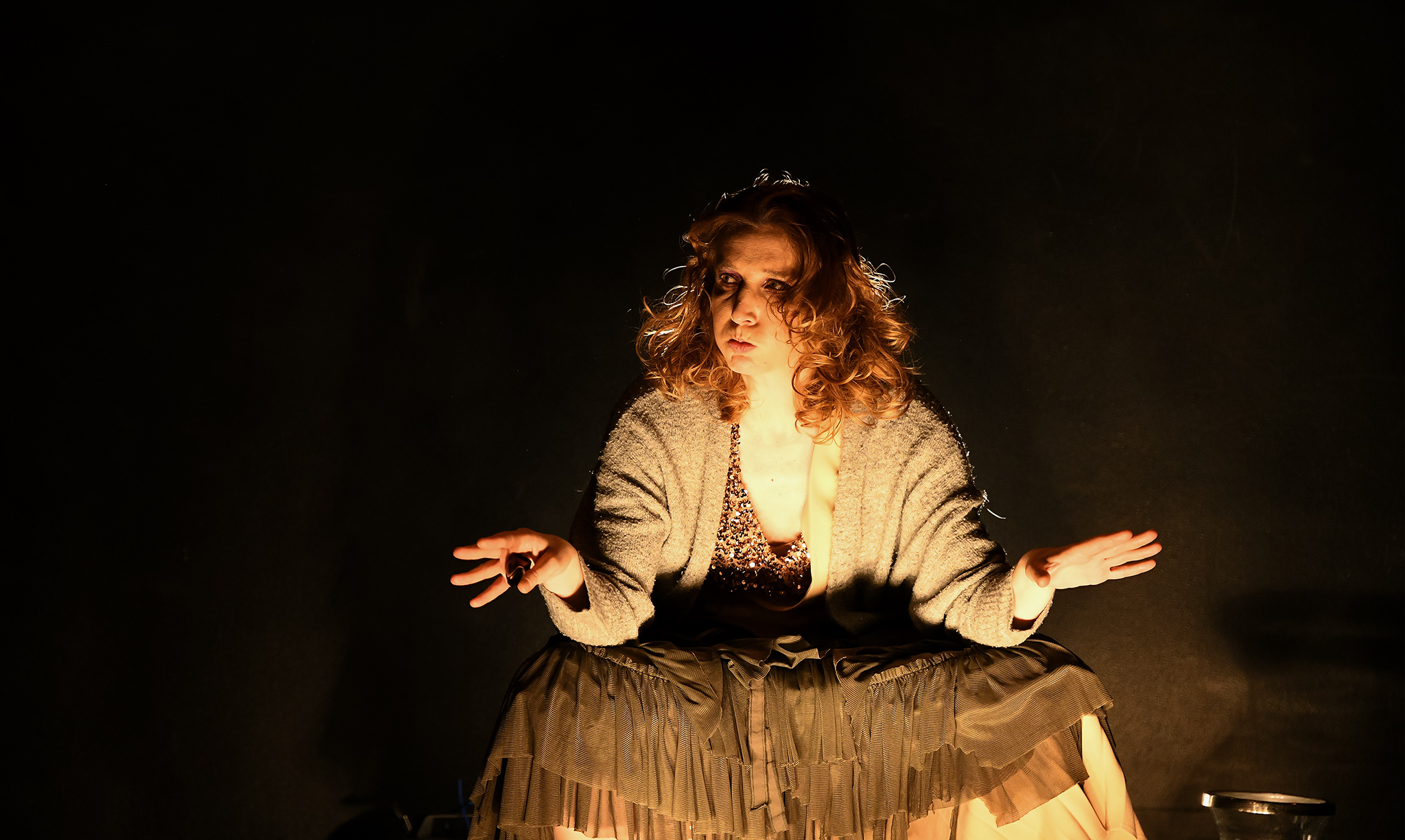
Three times, drawing ever closer, an old woman appears, smoking a long pipe over a source of yellow light. An old witch? Somebody’s creepy granny? Difficult to tell; this evocative, folkloric Sycorax in a cave-like setting, who first appears in fog and light so dim it hurts to make her out, implies degrees of clarity and gives the production a palpable frame. It explores unknown lands full of metaphorical dragons, demanding enough structure for us to begin to understand what we are experiencing.
As the title suggests, names and therefore “roles” are illusory. We are meant to question them, not simply understand them. The Moustachioed Woman (the creepy granny channelled by many), The Rasper (Silvia Marchig), The Overdirectional One (Filip Lugarić), Parinka (Urša Raukar), Ocula (Dijana Vidušin), Hamala the Bearer (Alma Ferović-Fazlić), The Visitant (Agota Vitkay-Kucsera), The Captain (Filip Riđički), The President (Fabijan Komljenović) – these labels elude the context we instinctively try to give them. Instead, if we pay attention, we begin to surrender to a sense of total play.
The actors work at three levels of intensity, and it is hard to pinpoint what they are performing (there may be as many interpretations as there are performances, and surely as many as there are spectators). All excel at playing with the emotional tones of their voices (Agota Vitkay-Kucsera is especially memorable), as well as strained silences (Silvia Marchig, Fabijan Komljenović, Filip Riđički), breath and movement (Filip Lugarić), objects (Dijana Vidušin, Silvia Marchig), and gesture (Silvia Marchig, Urša Raukar, Dijana Vidušin, Alma Ferović-Fazlić).
Breath is an anchor. We see this beautifully when Filip Lugarić closes a taxing sequence of breath-guided movement by standing still and finding a clear, stable vocal tone. Breath becomes movement, movement becomes cry, cry becomes tone, and tone becomes harmony. That’s how Sounds Like Pepper operates. Between what we might call the performance’s “stages”, Parinka repeats a resigned “There you go, as I said.” This is the only intelligible sentence, and pretty much the only sentence, apart from the crowded beach audio and the twice-spoken “ni mjeje ni vekla”. (Which, by the way, merely mimics the idiom of an ancient Slavic grandmother cursing your entire bloodline.)
The real-time exploration of articulation and its absence feels mystical, impossible to describe with words, and gradually creates total synergy. The fourth “stage” is a vocal coherence that grows out of the actors’ aaa sound (recalling Artaud), likewise moving from fragments towards a whole. In the finale, the scattered fragments we have witnessed patiently, resisting fatigue, converge, creating a clarity we cannot fully fathom. And that is all right.
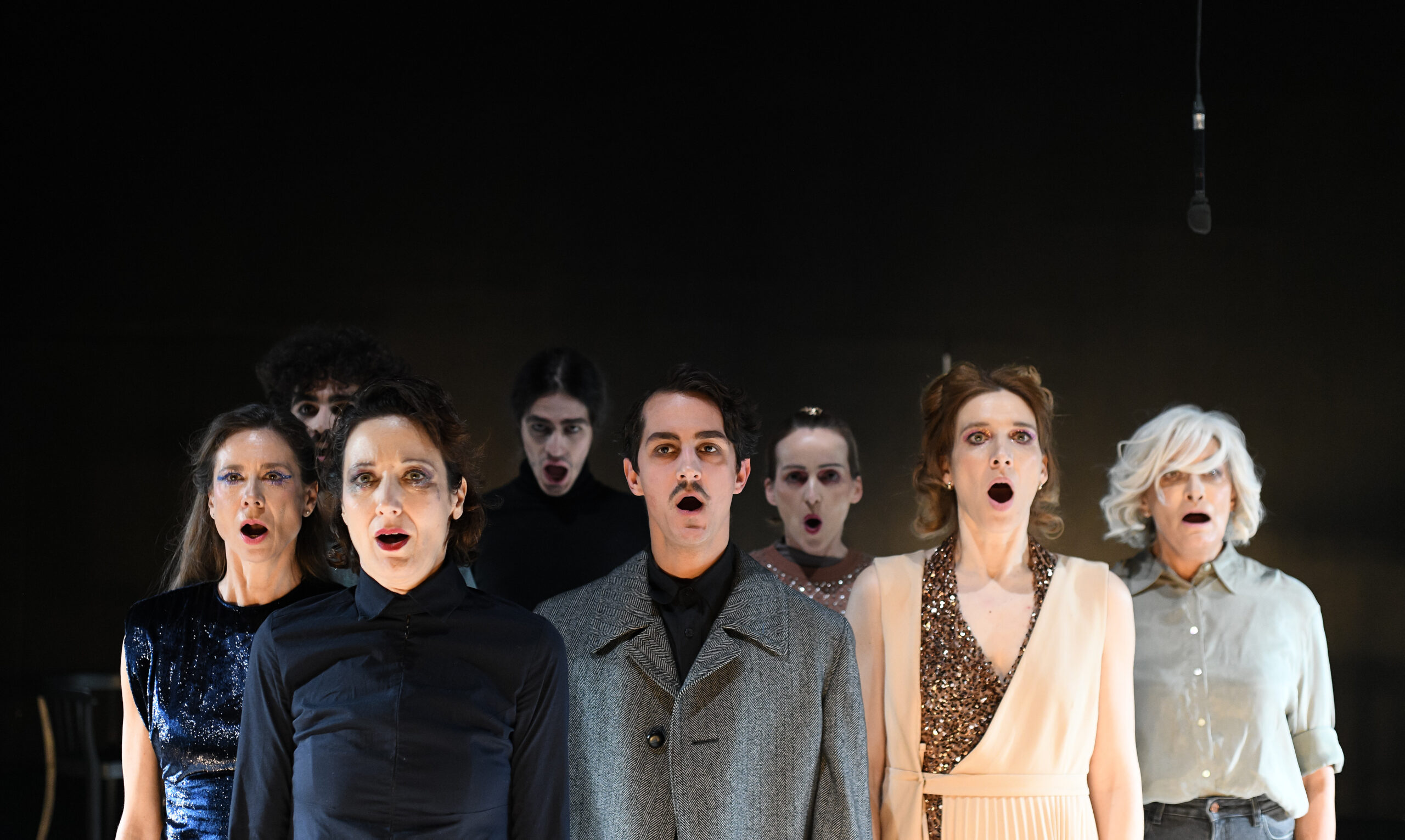
A sturdy formation of eight is a carefully arranged cluster, and its unified movement, shared breathing and the focus on shaping a tone build to an inevitable, powerful extreme. It fascinates us as much as it has confused us so far, which is a great deal. This kind of theatre demands certain resolve from actors and spectators alike.
Led by the primordial aaa, an ephemeral monument rises before us. We behold the unfathomable chord, the music of mystical instruments which cannot be re-produced: the actors produce it spontaneously, having worked their way into this state. Let that sink in. The ultimate harmony is not fixed in advance; it is an elemental, magical coalescence happening on the spot.
And what does pepper sound like, anyway? Četveroruka invites us to listen.
Credits:
Author and Director: Marina Petković Liker//Dramaturgical Support: Maja Sviben// Set and Costume Design: Ana Paulić// Lighting Design: Saša Fistrić//
Sound Design: Luka Gamulin// Production: Četveroruka
Cast: Silvia Marchig, Dijana Vidušin, Fabijan Komljenović, Filip Lugarić, Lovro Rimac, Urša Raukar, Agota Vitkay Kucsera, Alma Ferović-Fazlić