Sarajevo War Theatre (SARTR), premiere May 22 2025
Blue is the colour of solidarity, of sky and sea. Blue is the colour of my heart. For a theatre production that provoked a rival football club in Zenica into threatening and blackmailing the organisers of the 25th Festival of Contemporary Bosnian-Herzegovinian Drama, For a Lifetime is surprisingly tender. If not, consciously, schmaltzy at times. A bouncy dramatisation of the history of Sarajevo’s FK Željezničar, the production is, at its heart, a love letter to a football club and the community built around it. What was meant to be a celebration of collective belonging and devotion would eventually trigger a fairly one-sided showdown between football rivalries, culminating in the festival’s shutdown.
Yet the controversy did little to dent the production’s popularity. When the postponed festival eventually took place in Zenica, For a Lifetime received the Radovan Marušić Award for Best Scenography, alongside a Special Award for Collective Acting and Artistic Initiative. Its success with audiences has been equally remarkable: all performances since its premiere at Sarajevo War Theatre in early 2025, including guest appearances beyond the city borders, have sold out. An exceptional feat in the local theatre landscape. The author-driven project by actor-director Jasenko Pašić and writer-dramaturg Benjamin Hasić thus enters the 2026/27 season with its box-office success seemingly undiminished.
Established in 1921 by railwaymen, Željezničar‘s working-class origins permeate For a Lifetime, making it a testament to collectivism. Based on a fluid emulsion between Hasić’s original text and Thomas Steyaert’s energetic choreography, Pašić’s performative approach creates a rhythmic synergy between spoken word, movement and ensemble work, the latter a collective he is part of himself. As a member of the SARTR ensemble, Pašić makes his first professional foray into directing with an impressively clear vision. Rather than placing individual performers — or elements — at the forefront, he builds an accessible language in which the ensemble itself remains the driving force.
The original text, clearly, comes from a place of love. Written by a fan himself, Benjamin Hasić turns Željo’s history into something of a fairytale, albeit one without the familiar “Once upon a time”-rhetoric. The narrative remains relatively straightforward, yet gives way to a poetic interplay of images, anecdotes and historical detail. It moves through the ideological and materialistic shifts of the club’s chronicle, never questioning football culture – or the club itself. Instead, Hasić keeps his focus firmly on its grandeur and place in the local scheme of things.
However, there certainly is such a thing as too much love. Anyone who’s ever felt strongly about someone or something knows that one inevitably loses distance to the subject of one’s admiration. Yet, critical distance is a key to complex storytelling. When all you do is praise something, the tone gets a tad schmaltzy. This is not a play about football or FK Željzezničar, maybe it’s not even a play. It genuinely feels like a love anthem. For those who count themselves among the Plavi (the Blues), it may well deepen their devotion to the club. For everyone else, its appeal is less universal, though perhaps catchy nonetheless.
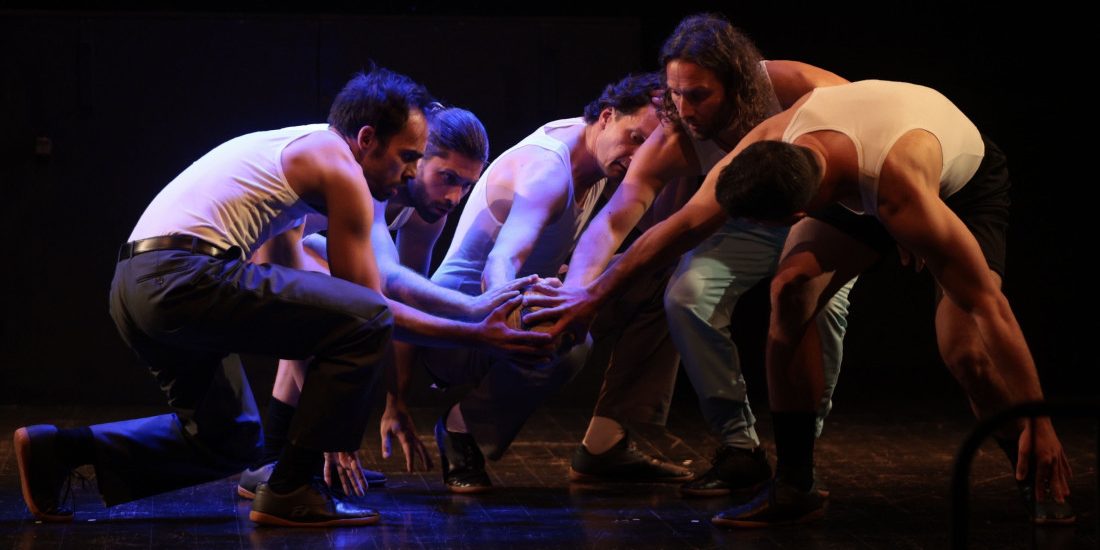
True to the collectivist spirit of its subject matter, the six-man squad delivers a dynamic, impeccably timed team effort. The performances range from Sead Pandur’s mature self-assurance to the excellent impersonations by Davor Sabo and Adnan Kreso, with spirited performances of Kemal Rizvanović and Jasenko Pašić himself also taking to the pitch, and the youngest among them, Dino Hamidović. A non-professional player, Hamidović brings a youthful ease to the performance, while displaying some impressive footballing skills. With a trick or two up his sleeve – or, rather, at his feet – he makes magic with little more than a black-and-white leather ball, sending heads spinning in the process.

For a Lifetime, SARTR
Another strength is the production’s visual language, led by Amar Zahiragić’s set design, which quite literally steals the show. At its centre stands an old locomotive, assembled and dismantled from individual components throughout the performance. A reference to the club’s origins among railway workers, it becomes a symbol of Željo’s past and future, its construction and deconstruction suggesting both technical progress and regression. In one particularly brilliant moment, the iron giant is turned into a musical instrument. As the players – or, rather, workers – strike its metal parts with hammers, pliers and other tools, they produce a haunting rhythm.
Nedim Pejdah’s lighting design is an integral part of this scenography. Floodlights evoke the atmosphere of a football stadium, while more focused, miner-like lamps conjure up the dimly lit shadow world of the railway workshop. Rapid transitions and intricate lighting cues shift the stage from white to blue, echoing the colours of the Željo crest. Adisa Vatreš Selimović’s costumes complete the picture: sporty attire that places the performers somewhere between footballers and workers, reinforcing the juxtaposition between the pitch and the railway yard.
For a Lifetime is ultimately a testament to collective endeavour: made by Željo fans, for Željo fans, it draws its strength from a shared sense of belonging. The different departments merge into a symbiotic whole, sustaining a 75-minute flow whose rhythm rarely falters, chasing one high after another. It reaches its emotional crescendo in the collective singing of Tifa’s hymn Grbavica taken up by the plavi in the auditorium. The response is immediate and overwhelming, culminating in a thunderous standing ovation among the faithful.
Credits
Director: Jasenko Pašić/ Author & dramaturg: Benjamin Hasić/ Text collaborateur: Marko Dmitrović/ Costume Designer: Adisa Vatreš Selimović/ Assistant to costume designer: Monika Moćević/ Set Designer: Amar Zahiragić/ Composer: Adis Kutkut Billain/ Choreographer: Thomas Steyaert/ Light designer: Nedim Pejdah/ Sound designer: Danijel Jurišić/ Stage manager: Goran Filipović
Cast: Sead Pandur, Davor Sabo, Adnan Kreso, Kemal Rizvanović, Jasenko Pašić, Dino Hamidović.
For further information, visit: sartr.ba
Further reading: How football fan groups shut down a Bosnian drama festival

Berina Musa is a writer, dramaturg, and critic based in Sarajevo and Freiburg. She studied German linguistics, literary studies, and art history at the University of Freiburg and is currently completing a second degree in dramaturgy at the Academy of Performing Arts in Sarajevo. Her plays and short films have been presented at the Bosnian National Theatre Zenica, MESS, the Sarajevo Film Festival, and the Mostra Internazionale del Nuovo Cinema di Pesaro.