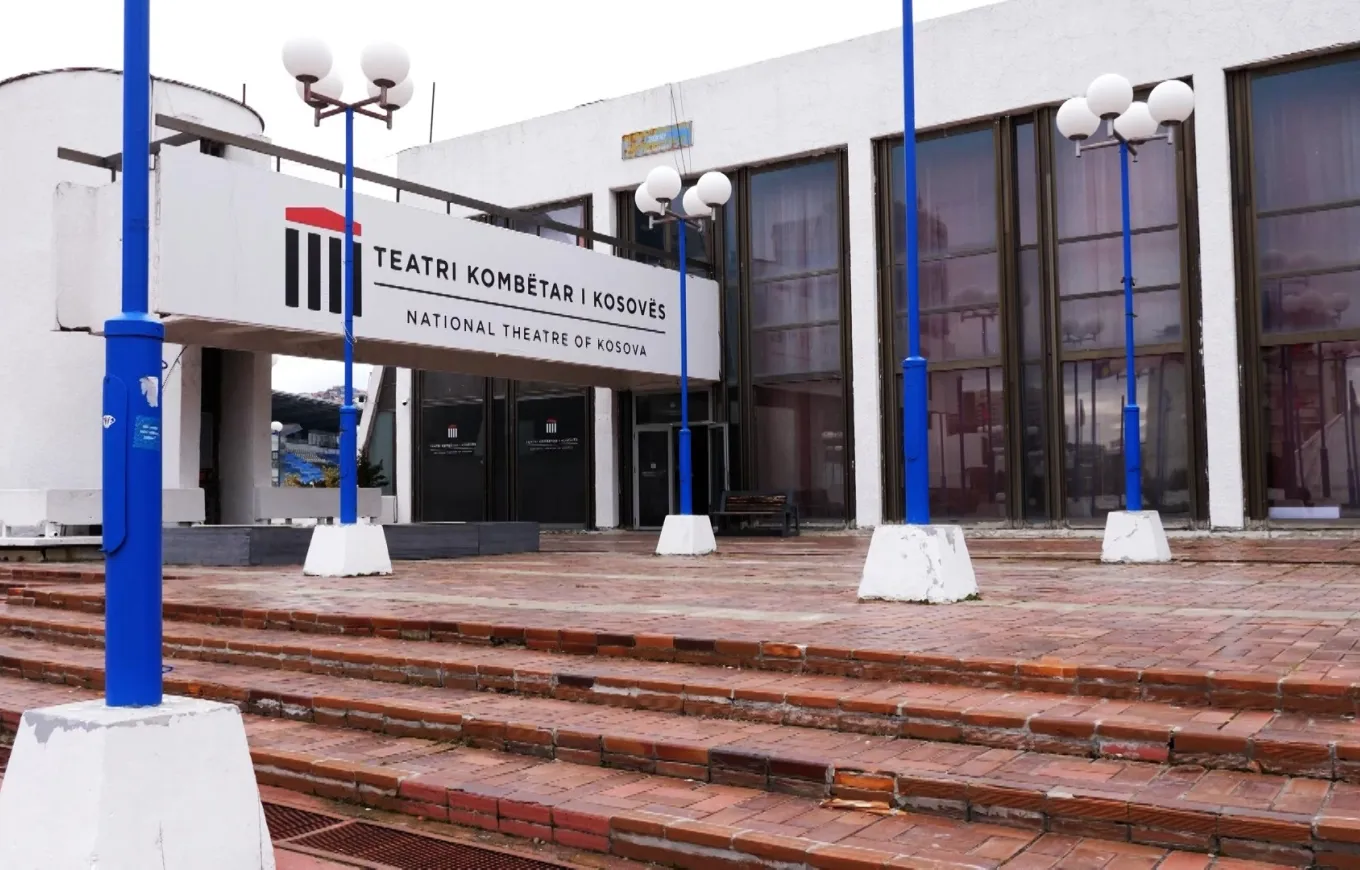
The launch of a new National Arts Council in Kosovo has led to concerns being voiced within the artistic community.
The Government of Kosovo has formed a new 11-member body, the National Arts Council, which will play a key role in shaping cultural policy. With the establishment of this Council, the governing boards of other public cultural institutions cease to exist, while the positions of artistic directors are also being abolished. It will be responsible for overseeing their operations, recommending funding, participating in the appointment and dismissal of directors, and proposing professional juries for cultural awards. The members of the Council are appointed and dismissed by the Government of Kosovo upon the proposal of the Minister of Culture and Tourism.
One of the first major challenges for the new Council, which will serve a five-year mandate, will be addressing long-standing leadership issues. Numerous cultural institutions in Kosovo are currently managed by acting directors, including the National Gallery of Kosovo, which has been without a permanent director for nearly six years.
However, the Council’s establishment has drawn sharp criticism from the artistic community due to potential political interference, as several appointed members are current or former officials, candidates, or public supporters of the ruling party Vetëvendosje.
Prominent playwright and theater practitioner Jeton Neziraj said that: “A considerable number of changes and reshuffles have therefore been introduced, although we still do not know how they will function in practice.”
Neziraj criticized both the structure and the selection process of the new body. He noted that while the Council was framed as an independent entity under the new Law on Art and Culture, the process lacked transparency and clear criteria. “In fact, for most of those appointed, being supporters of, or close to, the ruling party appears to have been the decisive criterion”, Neziraj stated, adding that he expects the current composition to “further complicate and deepen the crisis that has engulfed Kosovo’s cultural scene.”
Neziraj also highlighted concerns regarding the upcoming structural arrangements for the independent sector, pointing out that the newly adopted law provides for the establishment of the “Independent Cultural Scene Council”, a five-member body consisting of two representatives from the Ministry of Culture, one member appointed by the Minister, and two representatives from the independent scene. “Therefore, whenever this Council is established, it will also be structurally imbalanced and, in practice, function as an extension of the Minister’s authority, since the decision-making majority will consist of representatives from the Ministry of Culture”, Neziraj observed.
He also added that “The procedures for establishing this Council have not yet begun. However, considering the recruitment process of the newly established National Arts Council as a model, I do not expect that, when the Independent Cultural Scene Council is eventually formed, the authorities will be more well-intentioned or select credible and qualified individuals.”
Comparing current governance with past political practices, Neziraj argued that Vetëvendosje has failed to uphold its promised meritocracy: “Vetëvendosje came to power by criticizing the mindset according to which ruling parties would reward loyal party activists and political clients with public positions”, Neziraj remarked. “Now, unfortunately, Vetëvendosje has become part of the same cycle of political wrongdoing.”
Highlighting the impact on artistic freedom, Neziraj warned of growing political interference and extreme polarization within the cultural sector, dividing artists into vocal government supporters and those who are critical or silenced. “The ‘with us or against us’ mentality has become more visible than ever before”, Neziraj cautioned, emphasizing that this climate directly influences programming: “Artistic creativity that is critical and not in harmony with the visions and goals of the ruling party will not be able to take a place in public institutions.”
Main image: Driton Paçarada
Further reading: The dark age: Kosovo’s theatre scene faces a renovation crisis
Divna Stojanov is a dramaturg and playwright. She writes mainly for children and young people.