Ljubiša Ristić has been appointed as the new acting director of Belgrade theatre Atelje 212
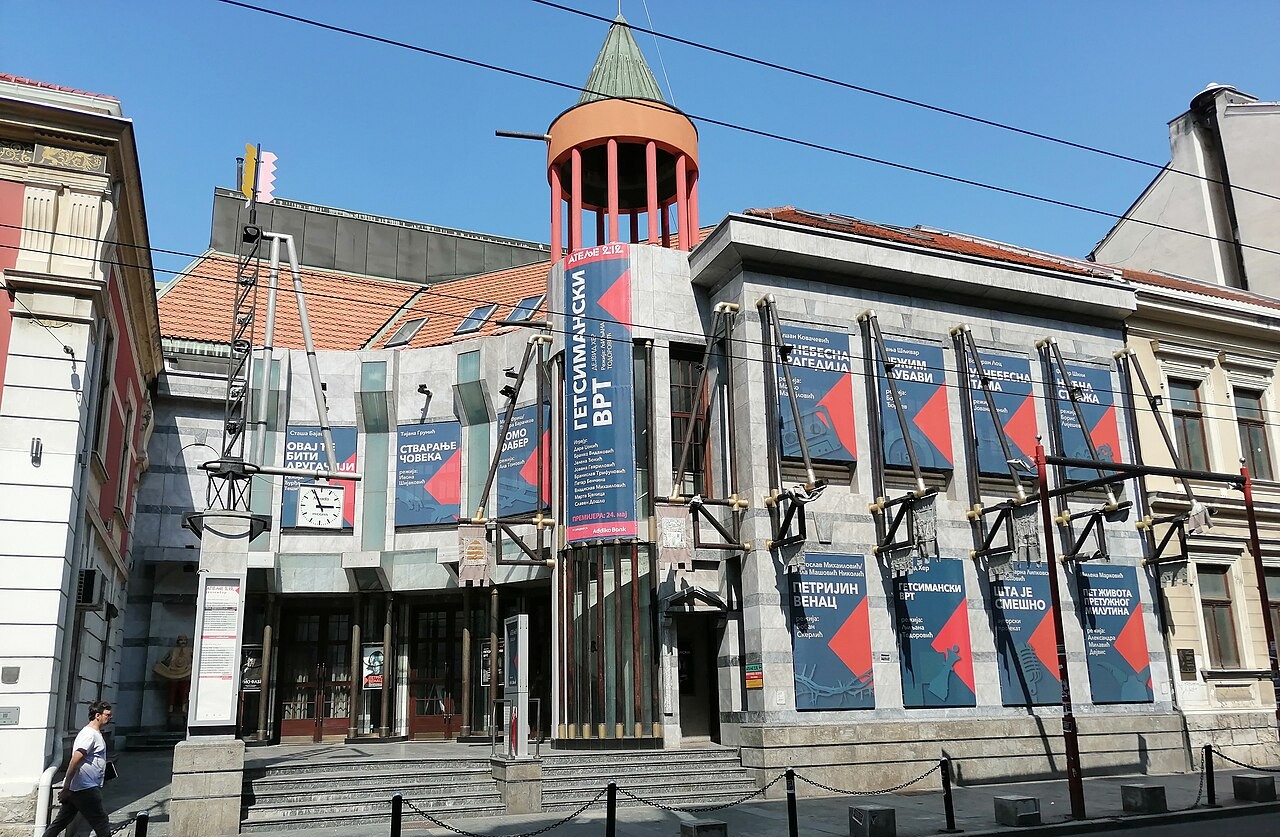
Belgrade’s Atelje 212 theatre has a new acting director. Ljubiša Ristić was appointed by Belgrade City Assembly, replacing the former manager, dramaturg Gordana Goncić.
Ristić (79 years old) has for decades been regarded as one of the region’s best-known avant-garde directors. He graduated with a production of Georges Feydeau’s A Flea in Her Ear, which went on to become the longest-running show in the history of the Yugoslav Drama Theatre. In 1977, together with Nada Kokotović, he founded the theatre KPGT (an acronym combining the words for theatre in Croatian, Serbian and Slovenian: Kazalište, Pozorište, Gledališče, Teatar). Conceived as an avant-garde, experimental movement, KPGT was known for its multicultural approach, its break with traditional theatrical conventions, and its staging of productions in unconventional industrial spaces.
His name, however, is just as closely associated with the political landscape of the 1990s, a turbulent time when Serbia was engulfed in wars, enduring forced mobilisation of reservists, and suffering from hyperinflation and poverty. The country was plagued by daily violence, corruption, and smuggling. Ristić served as the de jure president of the Yugoslav United Left (JUL), a party founded in 1994 by Mira Marković (Slobodan Milošević’s wife), who acted as the de facto president of JUL. Slobodan Milošević, the president of Serbia at the time, and Mira Marković formed a unique political partnership, with both leading their respective political parties. Their parties participated together in elections for the next six years. JUL’s rhetoric was nationalist, and pro-regime media amplified its propaganda. Today, Ristić remains a frequent guest on programs that promote a pro-regime agenda.
Atelje 212 itself has a very different history: it was founded in 1956 by a group of directors, actors and writers who set out to build a theatre of avant-garde repertoire, in contrast to the classical stages that dominated Belgrade at the time.
Commenting on his appointment, Ristić said he had been asked to help a theatre facing “all sorts of” problems, and that this is simply a duty. His goal, he stressed, is to “save Atelje 212, nothing else.” He added that he believes numerous institutions today are under threat, from theatres to universities, and that this trend needs to be stopped.
Actor Tihomir Stanić told Radar: “I don’t know what to say, except that the people in power have truly lost their minds and don’t know what they’re doing. […] Fifty years ago, this would have been welcome news. Ljubiša Ristić is well along in years, and this is simply a disgrace. He was once an exceptionally important author, and I remember his grand productions, but that’s in the past. This is proof that those in power have decided to settle scores with culture. […] Things can always get worse, but this really is the end.”
As a reminder, theatres and other cultural institutions in Serbia, along with artists and cultural workers themselves, have been facing pressure from the regime following a wave of protests and disagreements with the authorities. This situation was further inflamed by the fact that no one has been held accountable for the deaths of 16 people in the collapse of a canopy in Novi Sad on November 1, 2024
Further reading: The international community resists the state capture of BITEF
Further reading: Serbian theatre: Between resistance and appeasement

Divna Stojanov is a dramaturg and playwright. She writes mainly for children and young people.