Ivan Vazov National Theatre, Sofia, premiere 28 May 2026
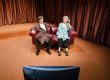
The theatre’s director steps before the audience to introduce a performance that will unfold under observation. She welcomes the important guests whom institutional protocol requires her to acknowledge and, with ceremonial seriousness, presents the special commission who have been invited to observe whether Molière is being performed properly. Before the character of Harpagon appears, the question has already been posed: who decides how a classic should be played? The moment is funny, but beneath the laughter there is a painfully recognisable image of theatrical vanity, cultural hierarchies and the constant need for art to justify itself before some form of authority.
From this opening, Slobodan Unkovski’s production makes it clear that it is not going to tell only the story of Harpagon. This is the first work in Bulgaria of one of North Macedonia’s major theatre directors, whose career extends across the former Yugoslav region and well beyond it. In his hands,The Miser becomes a performance about theatre itself, about the different ways in which a classic text can be played, and about the struggle over who has the right to decide what is permissible, valuable and “correct”.
In Molière’s comedy, the wealthy widower Harpagon is so obsessed with money that he turns even his children’s futures into financial calculations. He wants to marry Élise without paying a dowry, while he himself hopes to marry Mariane, the young woman loved by his son Cléante. Love and resistance oppose his greed, and the disappearance of his hidden cashbox reveals a world in which human relationships have become transactions.
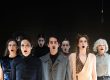
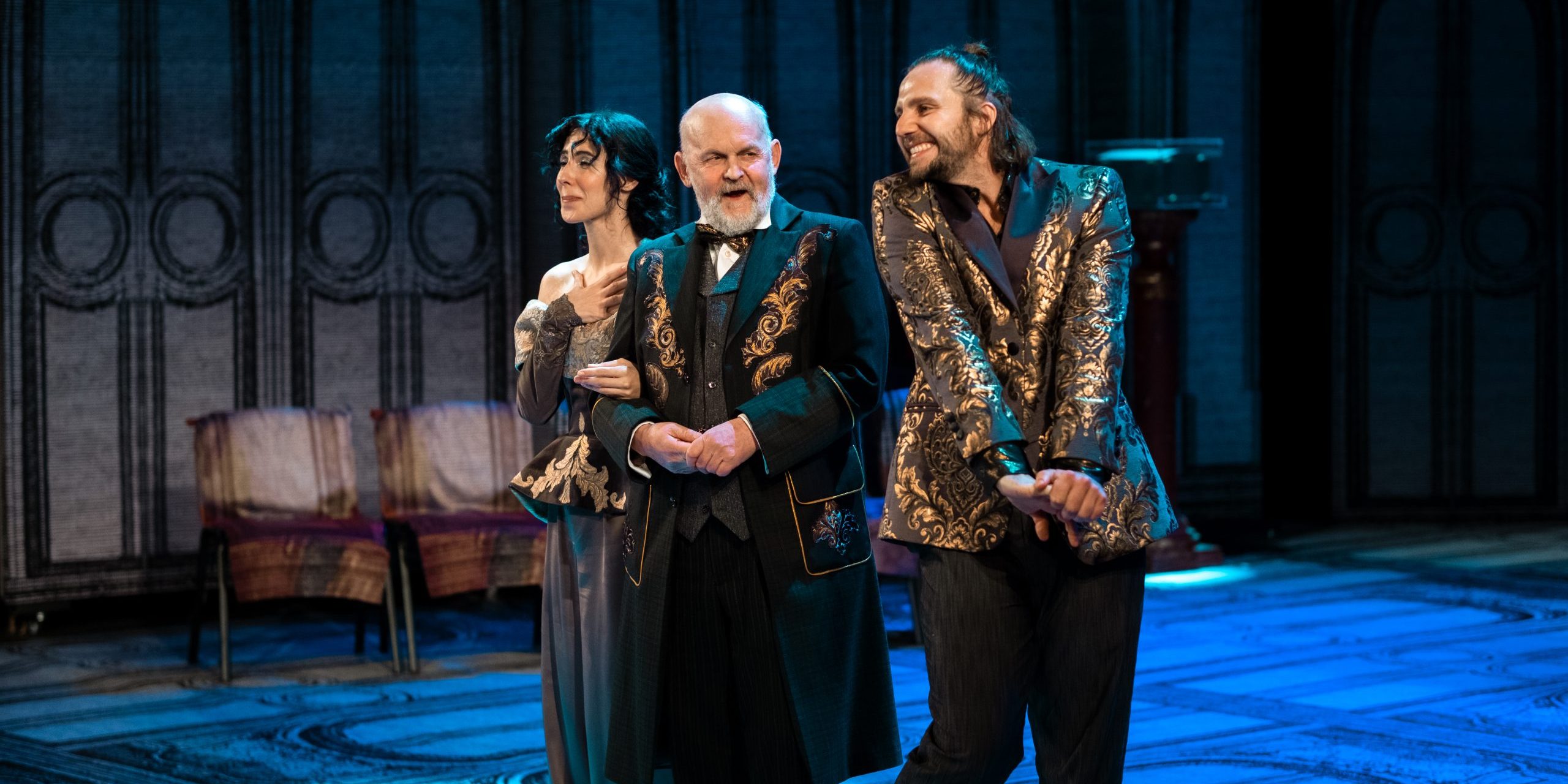
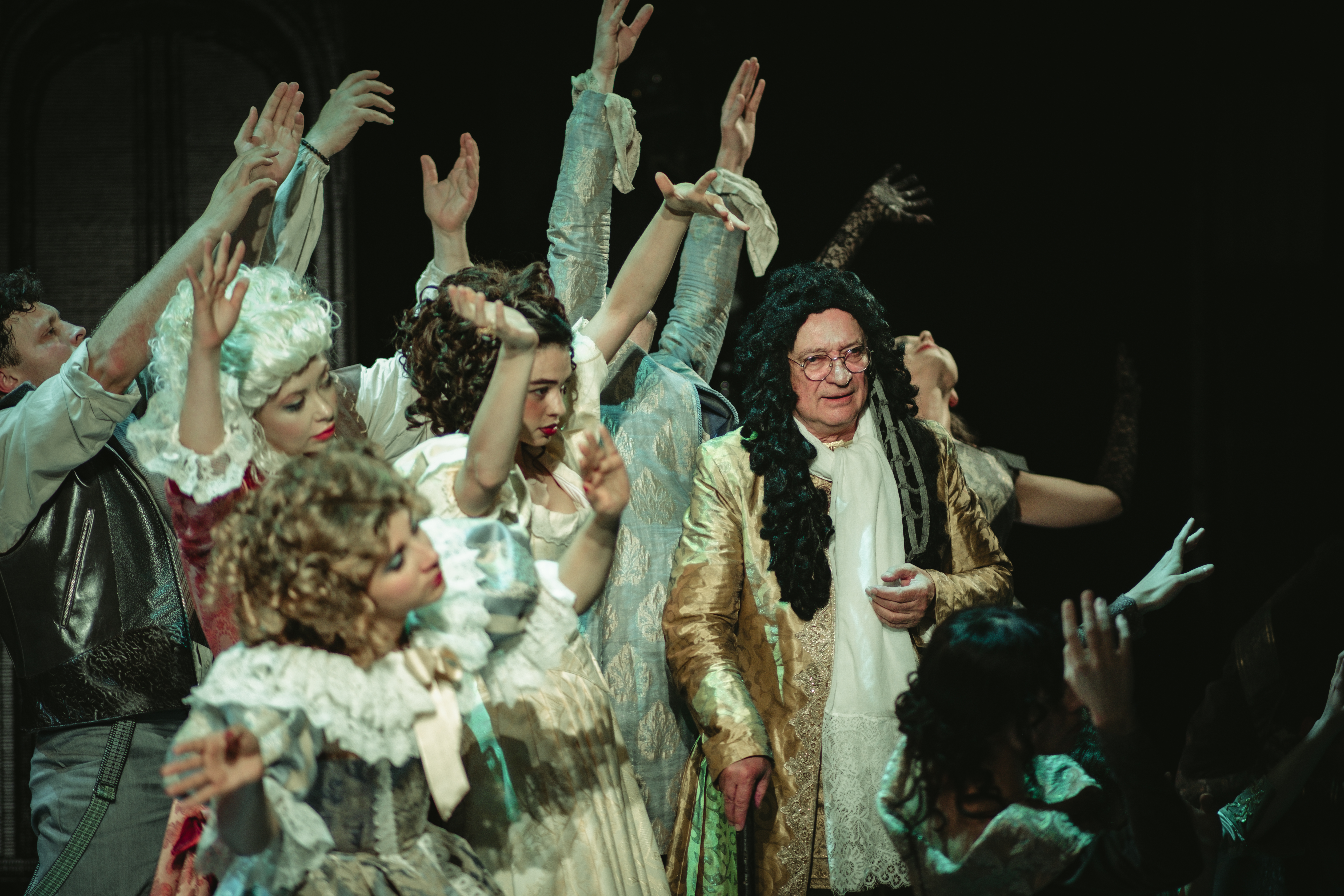
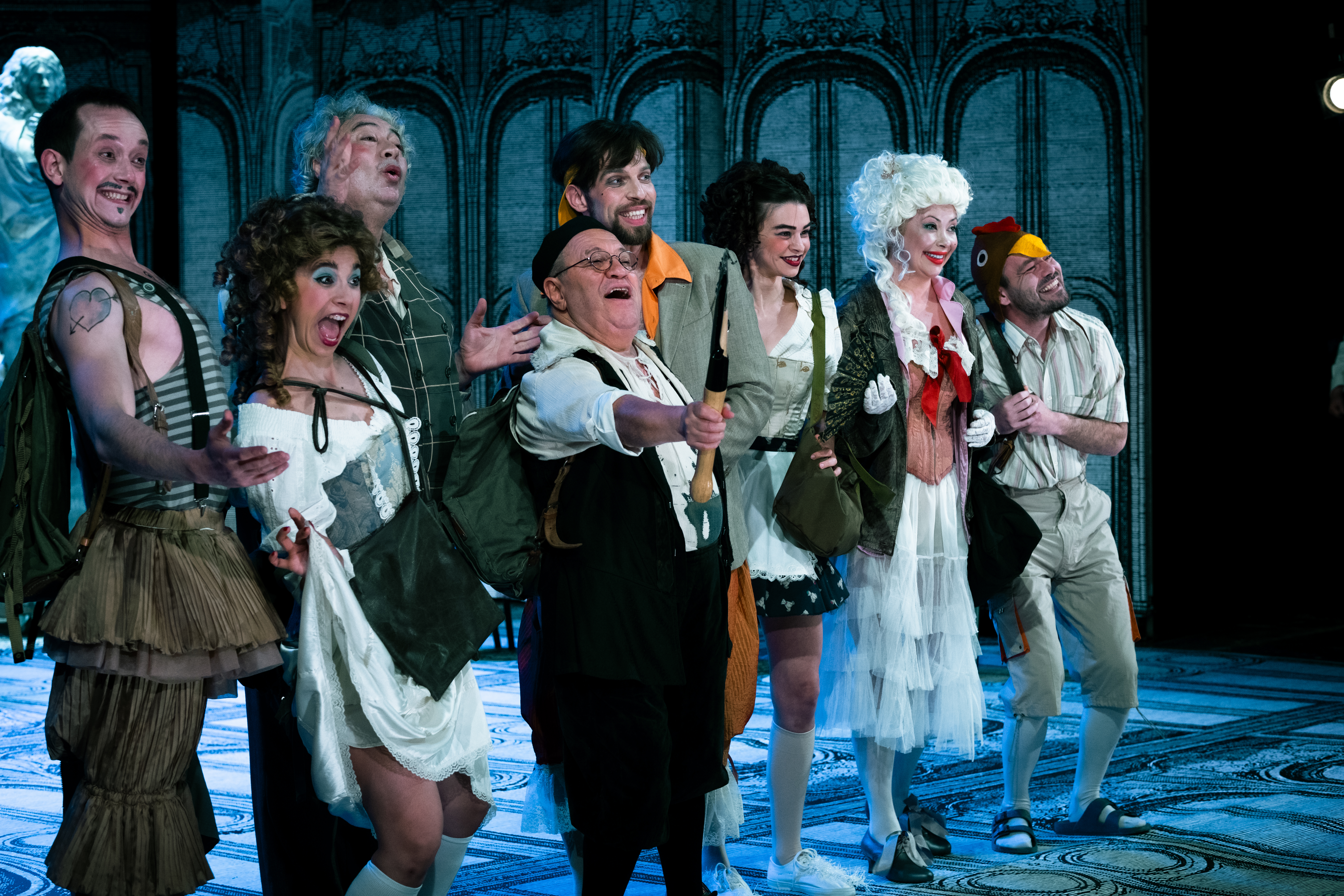
The production preserves this narrative foundation, but places it within a much wider theatrical frame. Two acting ensembles appear on stage at the same time. One performs in a more elevated, classical style, connected to the image of French bourgeois society and to the idea of a canonical Molière. The second resembles a freer travelling troupe, seemingly smuggled into the theatre through the back door and discovered by the official performers only after the performance has already begun. Each first encounter between representatives of the two groups produces a new moment of surprise, as if no one expected the others to be part of the same play.
This doubling is also concentrated in the figure of Harpagon, split between Valentin Ganev and Georgi Mamalev. Through them, the miser becomes not only one character obsessed with possession, but also a contested theatrical role, claimed, repeated and refracted by two different acting worlds.
The Miser, Ivan Vazov National Theatre
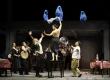
Gradually, competition turns into forced coexistence. The two troupes begin to interact, while never entirely ceasing to outplay one another. Both ensembles step in and out of character before our eyes, keeping visible the boundary between actor and role rather than hiding the theatrical mechanism. The travelling actors treat the text more freely, interrupting it, disturbing its rhythm and approaching the performance with a looser, more improvised energy. The other ensemble remains closer to a solemn and stylised idea of classical acting, yet it too becomes part of the same game of interruption, self-awareness and theatrical rivalry.
At a certain point, however, the repeated encounters between the two main troupes lose some of their initial freshness. The structure remains clear, but the production’s return to the same mechanism occasionally slows the rhythm, and what first appears as a witty theatrical collision begins to feel like a pattern already learned by the audience.
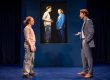
Miodrag Tabački’s scenography frames the action with large printed architectural surfaces that suggest an old theatre interior, but one already flattened into image, facade and backdrop. Within this space, Molière himself becomes both presence and object. His image appears as a statue and as a digital face, watching over what the actors do with his text. The author is at once monument, canon and silent witness, but also an image that contemporary culture can reproduce, use and eventually turn into a brand.
Aleksandar Noshpal’s costumes do not simply mix historical periods; they organise the production’s different theatrical worlds. Baroque wigs, lace, gilded jackets and stylised silhouettes evoke a classical, almost museum-like Molière, associated with elegance, hierarchy and theatrical convention. Against this stands the freer appearance of the travelling troupe, with aprons, sailor stripes, rougher fabrics, comic accessories and exaggerated make-up suggesting performers who build theatre out of whatever is available to them. Gradually, shiny contemporary details, visible labels and show-business glamour begin to infiltrate the stage. The costumes therefore do not only mark time and class; they show how Molière is pulled between canon, carnival and consumer entertainment.
Above this clash of acting styles stands the commission, presented through a deliberately absurd eco-rhetoric, as if Molière’s texts could influence nature itself. It moves across the stage, observes and constantly reminds us of its presence, but never truly intervenes in the action. Part of the irony lies precisely in this passivity. The commission embodies institutional supervision, an authority that claims to protect the work, but whose power is reduced to observing, judging and legitimising what is being performed.
The Miser, Ivan Vazov National Theatre
The stage version by Slobodan Unkovski, Diana Koloini, Pavlina Dublekova and the acting ensemble adds a great deal of new material to the play. The text is interrupted and surrounded by comments on theatre, the acting profession, institutions and contemporary society. These interventions are numerous, but they do not feel arbitrary. They expand Harpagon’s miserliness into a broader greed for money, power, attention, roles, prestige and theatrical superiority.
Near the end, the actors associated with Molière’s commission reappear as figures of entertainment, glamour and consumption. They arrive by private jet, and the stage image of the aircraft makes the shift towards another order of power and taste unmistakable. They do not emerge from the two main troupes, but belong to a world in which theatre moves closer to show business, and show business becomes a product that must be recognisable, loud and marketable. The music, choreographed group movement and collective theatrical overflow all contribute to this transition towards a world of spectacle.
After Molière’s story has seemingly ended, the production makes one final, striking shift. It is announced that the theatre building in which the performance has taken place, and where the commission has come to observe the “proper” performance of a classic, has been sold. In its place, there will be a casino called “Moliere”.
This ending casts the entire performance in a new light. Harpagon’s cashbox is no longer the greatest treasure that can be stolen. The real stake is the theatrical space itself. The casino does not merely replace the theatre; it keeps Moliere’s name, turning cultural authority into a commercial brand. The author remains, but only as decoration for a place governed by profit.
The image also comments on the growing proximity between theatre and the gambling industry, from actors appearing in casino advertisements to shows and cabaret programmes moving into such spaces. Harpagon’s obsession with possession finds its contemporary equivalent in a system that turns even culture into profit. The production asks whether the boundary between cultural event and consumer entertainment has already become almost invisible.
Under Unkovski’s direction, Molière’s comedy becomes more than a contemporary reading of a classic. It becomes a way to examine different traditions of acting, institutional vanity and the position of theatre in a world that measures value through profit. Greed no longer belongs only to Harpagon. It has become a social principle, capable of selling even the stage and then placing the name of a great playwright on the facade of a casino.
Credits:
Director: Slobodan Unkovski//Dramaturg Diana Coloini//Set Designer: Miodrag Tabachki// Costume designer: Alexander Noshpal// Composer: Irena Popovic Dragovic// Choreographer:Antigone Girae
Cast:
Valentin Ganev, Georgi Mamalev, Paraskeva Djukelova, Eva Tepavicharova, Mihail Petrov, Hristo Cheshmedjiev, Nencho Kostov, Martin Dimitrov, Aleksandra Svilenova, Kremena Slavcheva, Irina Miteva, Hristo Terziev, Yavor Valkanov, Sofia Bobcheva, Darin Angelov, Vladislava Nikolova, Darina Radeva, Antonia Kundakova, Gergana Zmiycharova, Martina Peneva, Ivan Nikolov, Aleksandar Tonev, Aleksandar Kanev, Dimitar Krumov, Stefan Saraivanov, Marin Rangelov
For further information, visit: Nationaltheatre.bg

Katerina Markoska is a translator, theatre critic, and emerging author from North Macedonia, living between Skopje and Sofia. She is currently completing a master’s
degree in Theatre Arts and Dramaturgy at the National Academy for Theatre and Film Arts “Kr. Sarafov” in Sofia. Her translations of contemporary drama have been
recognized by Eurodram, and her creative texts have been published in collective books in Bulgaria.