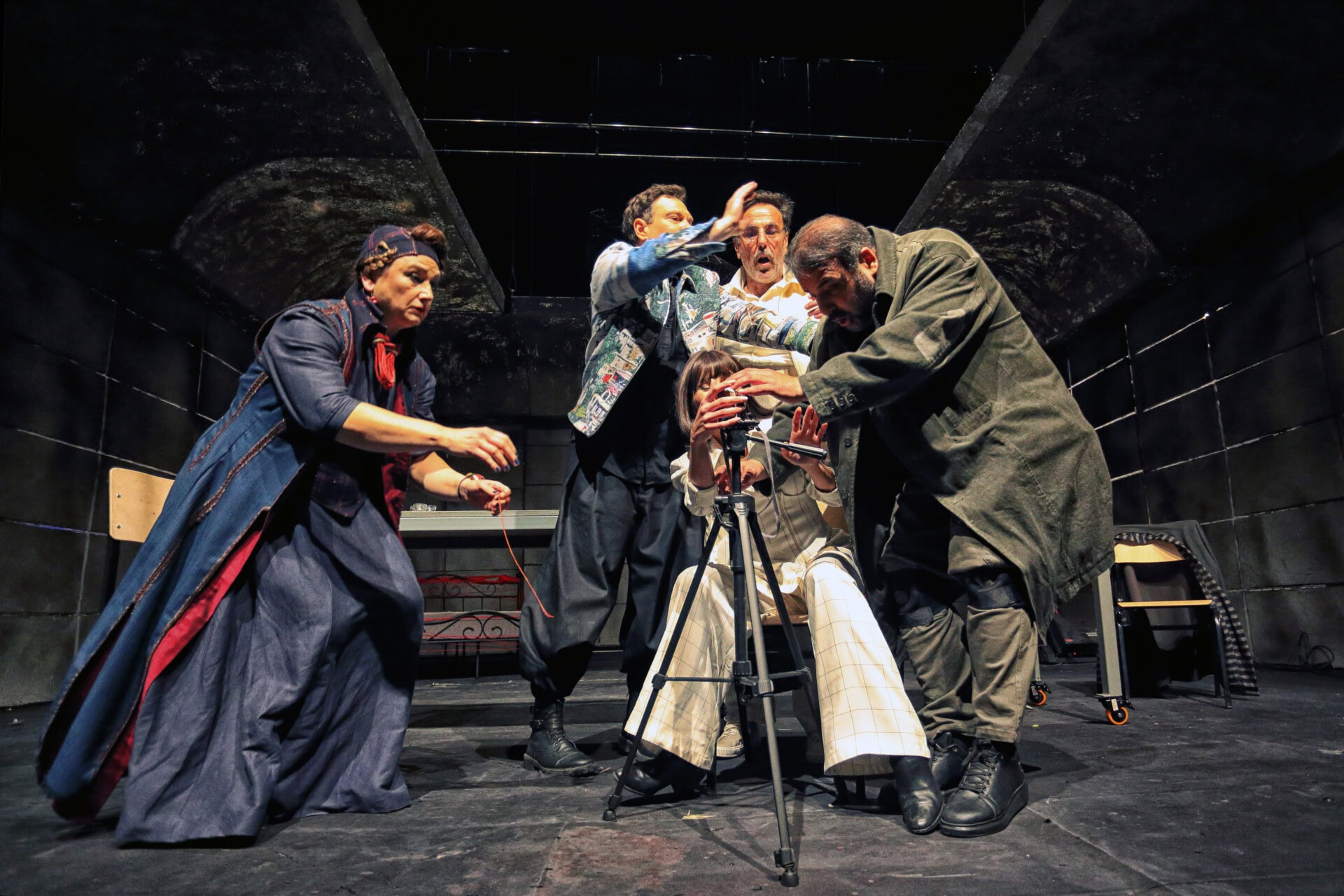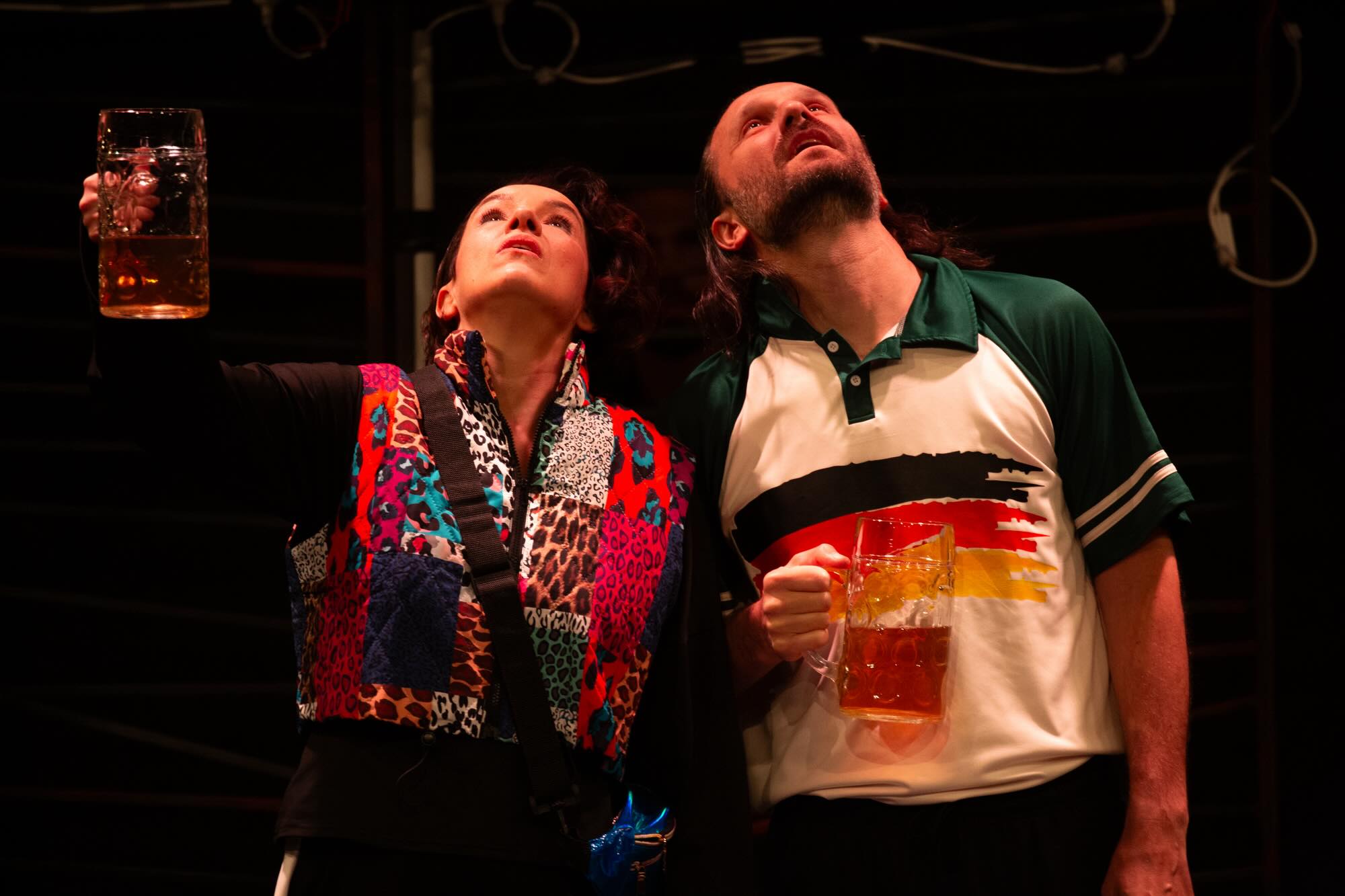
Istrian National Theatre Pula (INK), Sarajevo War Theatre, Sarajevo premiere 2nd April 2026
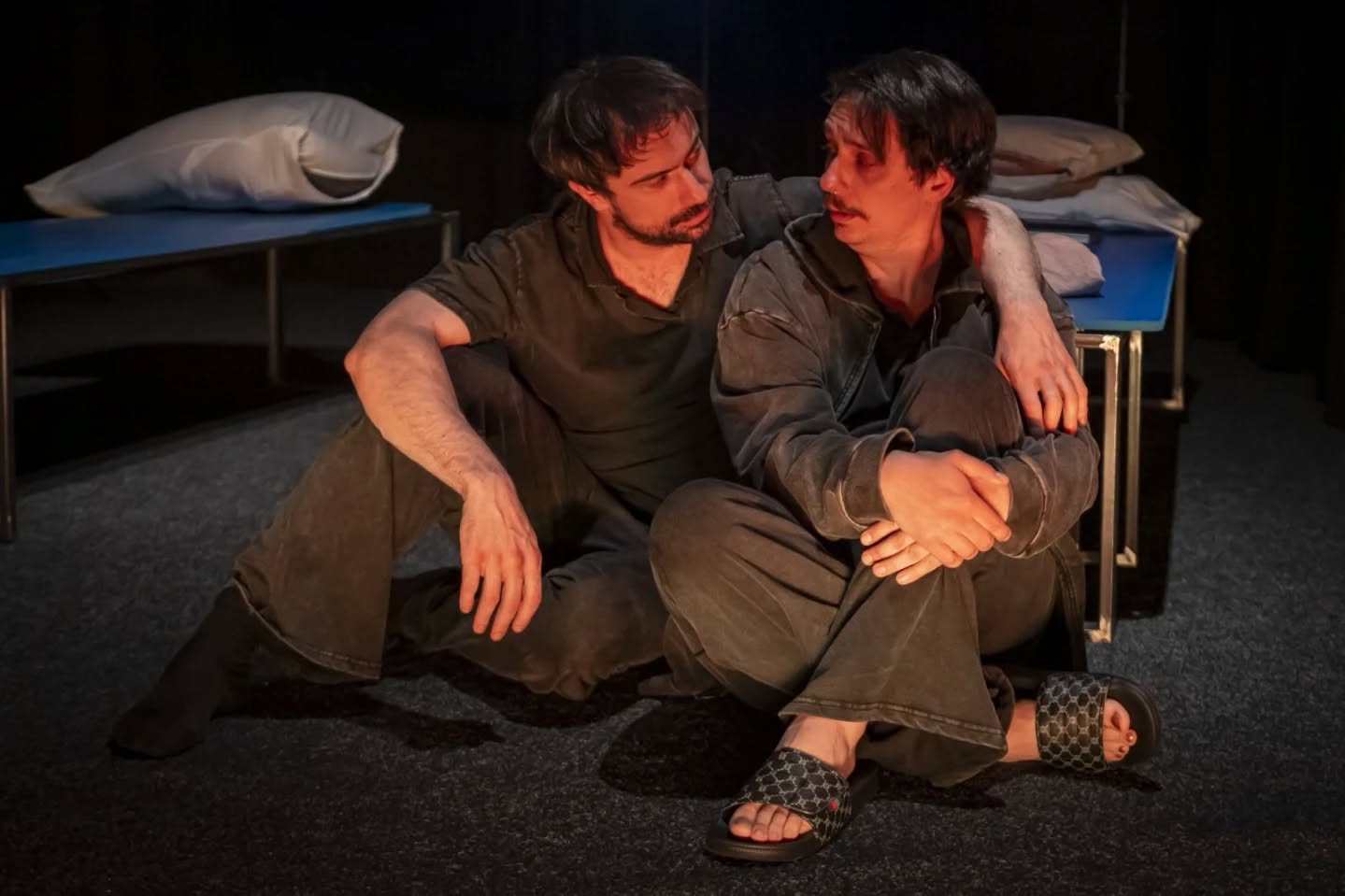
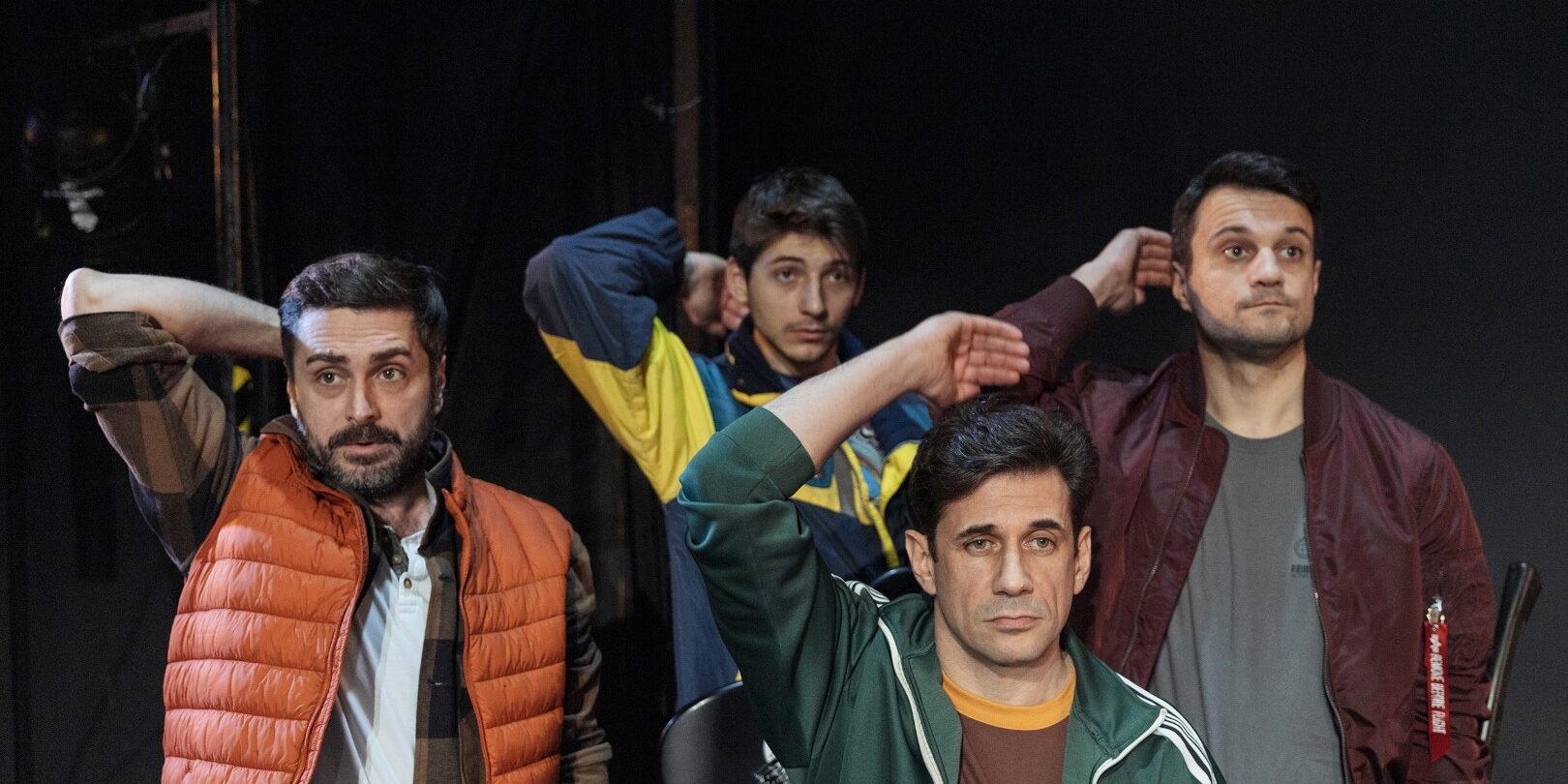
This is a play about four brothers on the verge of a potential war outbreak. The oldest is wise and rackety; in his dreams, he grows wings between his shoulder blades, swiftly sweeping off the earthly ground. Another is cowardly, yet good-hearted, constantly torn between fear and moral responsibility. The third is strong and stubborn, carrying within himself a silent but palpable rage. And the youngest brother is playful and naïve, someone who would rather impersonate Spiderman than play soldier with others who do not even know the rules of the game. If a third world war were to become a real possibility, how would this generation of men, inherently diverse and perhaps still capable of empathy, respond?
Softness is an author-driven project directed and written by Selma Spahić together with her dramaturg and co-author Emina Omerović. As the play itself emerged organically throughout the rehearsal process, all cast members — Alban Ukaj, Boris Ler, Kemal Rizvanović and Josip Stapić — are also credited as co-authors. This makes the project not only deeply personal and collaborative, but also a kind of intimate microcosm the ensemble wishes to share with the rest of the world in response to its political and societal harshness.
As is often the case in Spahić’s work, the production is marked by a strong formalism that ultimately demands a more active mental engagement from the spectator. Yet this very approach occasionally makes Softness feel distant, almost deliberately inaccessible, as if the microcosm she and her artistic team created so devotedly were slightly too personal for outsiders to fully comprehend. From the very beginning, the four actors establish a direct relationship with the audience, one based on sensory and informational overload. They have not even entered the stage when all four begin speaking simultaneously, interrupting, overlapping, and competing with one another. Then, after introducing themselves with their real names, Alban, Boris, Kemal and Josip proceed to explain the set design and props. Literally. No stage semiotics, no hidden meanings, no performative ambiguity. In this production, a pipe really is simply a pipe. The same goes for the guitar, axe, clamp, extension cable, and other tools that become important devices for moving the plot forward, almost as if they themselves were characters or puppets that had wandered out of an object-theatre performance.
And that is precisely where the paradox begins: even though nothing on stage is supposed to represent anything other than itself, the spectator’s imagination inevitably starts to unravel. It is like telling somebody not to think about a giant pink elephant. The more insistently the performance denies symbolism, the more symbolic everything becomes. This is something that, on this level and with such intensity, only live theatre in its most magnificent form can achieve. Watching Softness is intellectually highly stimulating but, due to the constant sensual and informational overload, exhausting as well.
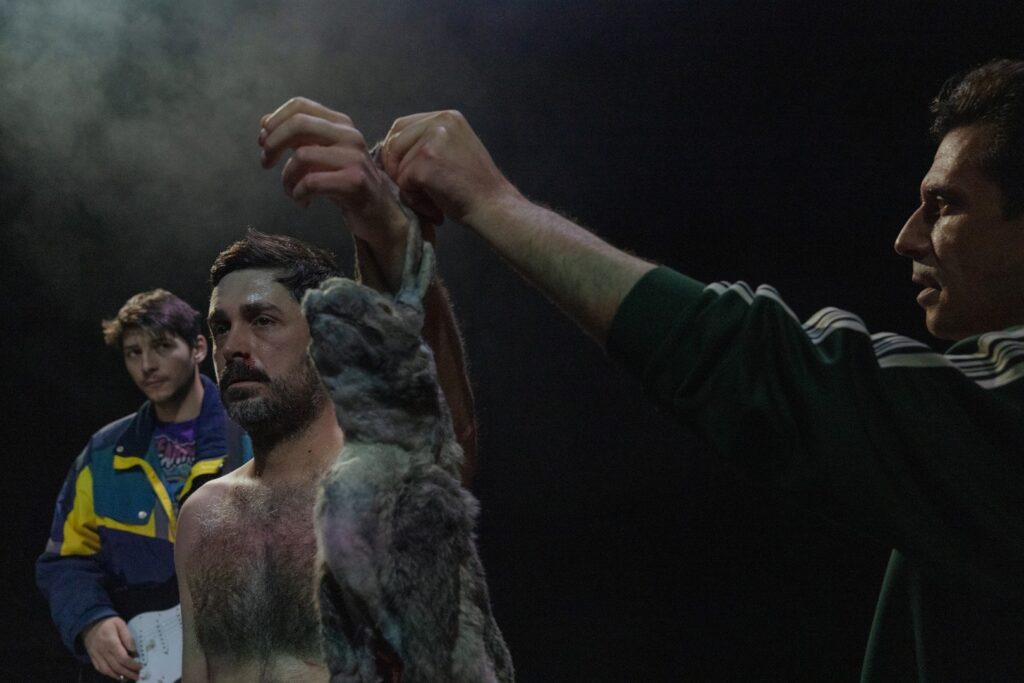
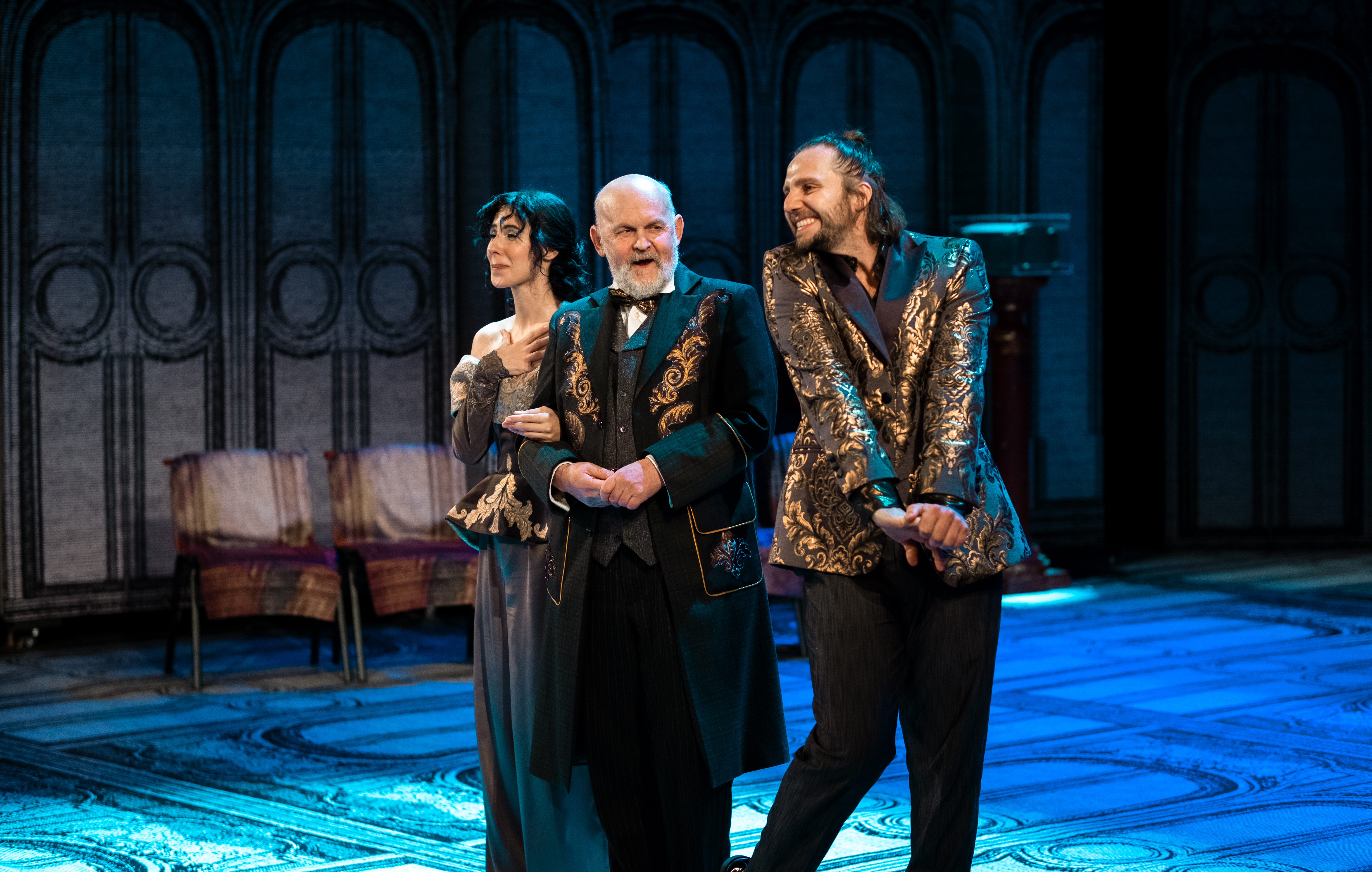
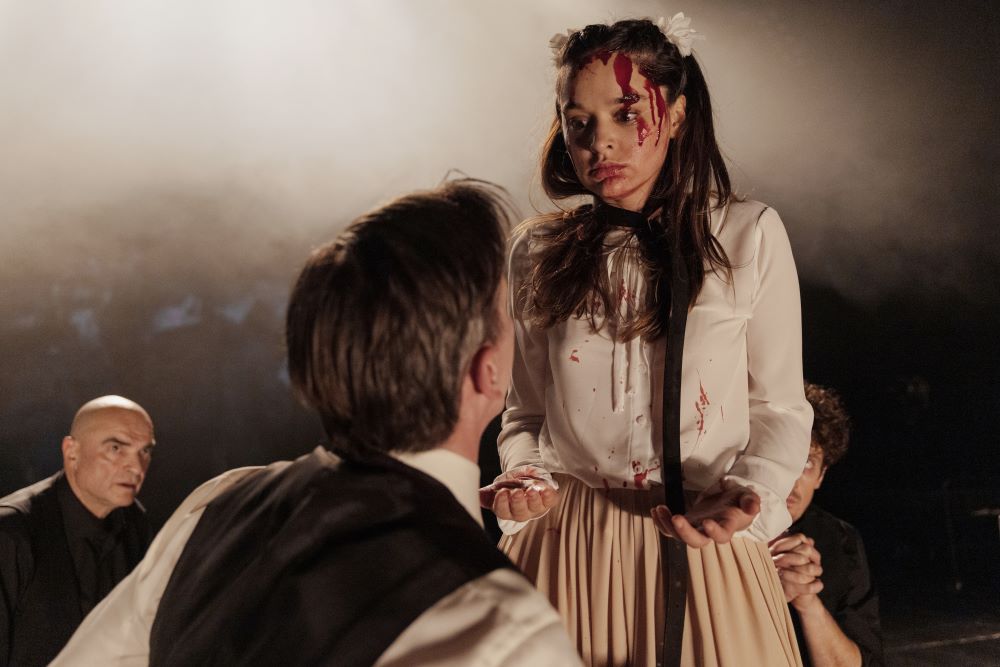
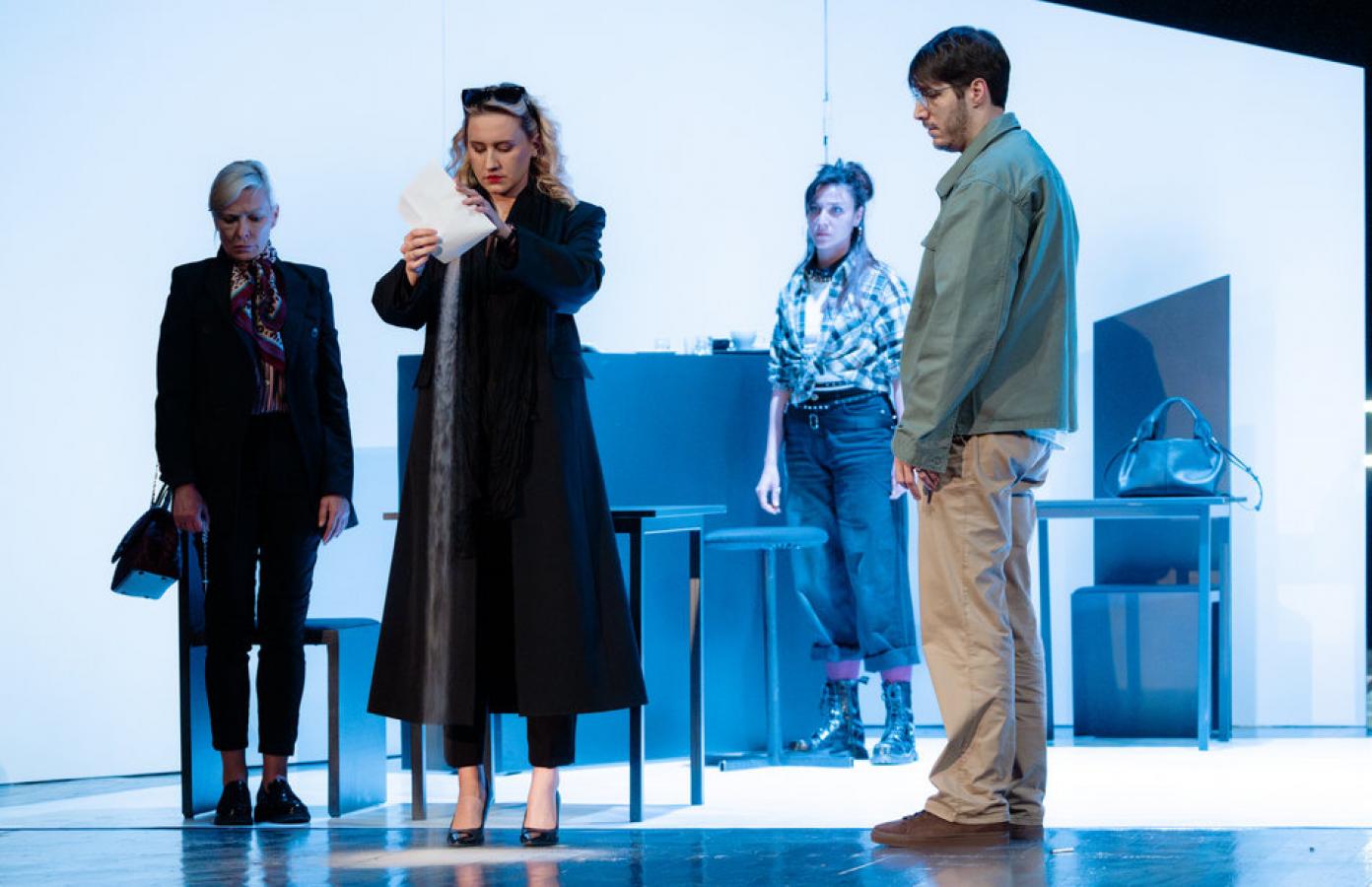
Softness, INK Pula. Photos: Jelena Janković
There is, however, one dramaturgical issue that occasionally threatens to scatter the audience’s attention into confusion. In itself, the play does not follow a classical narrative structure, nor does it move much further beyond its central premise: four brothers arguing and coping with the possibility of war. In its essence, Softness is a beautifully composed collage of images and sounds, theatrical études, fragments, and emotional states rather than a conventionally developed storyline.
Nevertheless, in the third act, the phrase “World War III” is finally uttered. Suddenly, what had previously seemed like an abstract atmosphere of anxiety transforms into a concrete and tangible fear, one unmistakably stolen from contemporary reality. If this was indeed the intention, to build a bridge between the play, however abstract, and contemporary reality, it would have helped to learn earlier in which time and place this story unfolds. By withholding that information for too long, the production risks turning emotional ambiguity into mere confusion, postponing the moment in which the spectator can fully connect the stage world with their own.
Still, without revealing too much, the grand finale of Softness ultimately explains its opacity. It is as if the entire performance had been preparing the audience for one final image which, through its rich associativeness, once again challenges the spectator to actively participate in the creation of meaning. This time, however, that process leads toward a surprisingly fruitful emotion: hope. And with it comes the idea of history as a circular movement — something that never truly ends, but continuously renews itself.
Alban Ukaj, already well known in the region for his magnetic stage presence, once again proves that he can carry even the most fragmented scenes with ease and charisma. In that sense, the line “Njemu se može” (“He can get away with it”) is clearly written with him in mind. Kemal Rizvanović remains stoic and truthful to the role; without excessive dialogue or overt emotional exposition, his body does most of the talking. The youngest of the brothers, Josip Stapić, masters his first professional theatre production with remarkable confidence. As a third-year student at the Academy of Performing Arts in Sarajevo, his performance reveals both precision and instinctive stage intelligence. Although all four actors deliver excellent performances, the most memorable is undoubtedly that of Boris Ler. His interpretation balances emotional restraint with moments of comedic relief and vulnerability, giving the character unusual depth.
In a way, Softness remains elusive, even resistant to easy interpretation. The context — when, where, and why — is deliberately withheld until late in the performance, creating a persistent sense of disorientation. Yet it is precisely this ambiguity that shapes the play’s haunting atmosphere: war no longer appears as a distant historical event or a concrete political reality, but as an internal state, something already embedded in the consciousness, bodies, and dreams of these four men — and perhaps a whole consciousness, too.
Credits
Director & Author: Selma Spahić//Dramaturg & Co-author: Emina Omerović//Set designer: Paolo Lugarić Benzia//Costume designer: Manuela Paladin Šabanović//Composer: Draško Adžić//Light designer: Dario Družeta//Choreographer: Ana Kreitmeyer/
Cast: Alban Ukaj, Boris Ler, Kemal Rizvanović and Josip Stapić
For more information, visit: ink.hr
Further reading: Interview with Selma Spahić: “Resistance in the arts is a necessity”
Berina Musa is a writer, dramaturg, and critic based in Sarajevo and Freiburg. She studied German linguistics, literary studies, and art history at the University of Freiburg and is currently completing a second degree in dramaturgy at the Academy of Performing Arts in Sarajevo. Her plays and short films have been presented at the Bosnian National Theatre Zenica, MESS, the Sarajevo Film Festival, and the Mostra Internazionale del Nuovo Cinema di Pesaro.