What did this year’s Sterijino Pozorje reveal about the state of contemporary theatre rooted in domestic dramatic writing? Critics Andrej Čanji and Divna Stojanov discuss the productions, trends, and tensions that shaped the festival’s 71st edition.
Andrej: Svetislav Goncić’s position as selector of the 71st Sterijino Pozorje is problematic for two reasons. First, as far as I am aware, he did not see all the productions eligible for selection. Second, there is an obvious conflict of interest. The programme includes Humor Central, produced during his tenure as director of the National Theatre in Belgrade, as well as My Theatre, produced by Atelje 212, whose director is his wife. I am not suggesting that these productions did not deserve to be included. Rather, my point is that Svetislav Goncić should not have served as selector at this particular moment. His appointment appears to have been a political compromise designed to avoid an even more problematic alternative.
Divna: This selection, titled Our Stories: Memories and Suffering, did not include the international programme, known as the Circles (Krugovi) selection. The Pozorje mladih was also absent, although a reading of dramatic texts by students from the Academy of Arts in Novi Sad and the Academy of Arts in Banja Luka was formally presented as Pozorje mladih. In previous years, Pozorje mladih showcasted performances by drama students from across the country and the region.
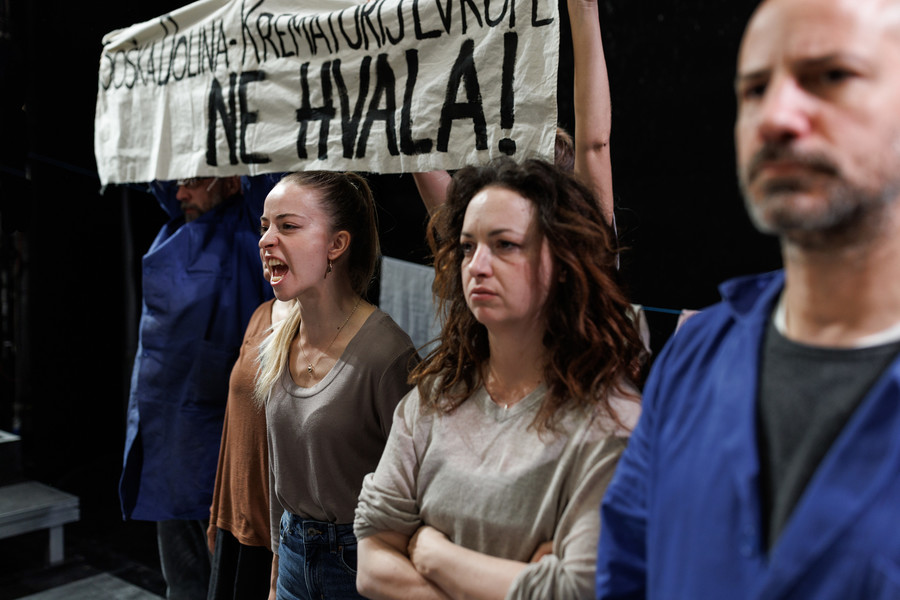
Andrej: I have not seen all the productions that could have been selected, but I did see one that directly engages with what I consider the most important contemporary story of memory and suffering. It is DORA or Who’s Going to Stitch the Vests, directed by Andreja Karčagin. Her play explores the experiences of student and civic protests following the Novi Sad canopy collapse and the fate of young people accused of attempting to overthrow the constitutional order. There were no productions of this kind at this year’s Sterijino Pozorje, which is precisely why I found the festival’s slogan hypocritical. Unlike last year’s edition, which was strongly marked by the protests, this year’s festival took place without that spirit of resistance and without the programmes you mentioned, after it had lost part of its public funding. I see that as a form of political intimidation and retaliation.
Divna: Yes, the protests by students and civic groups are the defining story of our time, alongside the collective memory of the tragedy in which 16 people lost their lives on November 1, 2024, due to a canopy collapse in Novi Sad. While political affiliation is almost inevitable today, it becomes challenging to take a clear artistic stance on a situation that is still ongoing. This makes the lack of plays that directly address our political reality understandable. However, the title Our Stories prompts us to question whether the themes being presented are truly the most relevant to us today.
Andrej: I do not believe this is the intention of our theatre-makers, but within the context of a festival framed in this way, one gets the impression that certain peripheral stories are being presented to us as the stories that should matter, while the stories we collectively live through here and now are being left aside. This is reflected in the productions themselves. Artists are encouraged to engage with the past or with personal concerns, while our shared contemporary reality remains largely absent.
My Theater
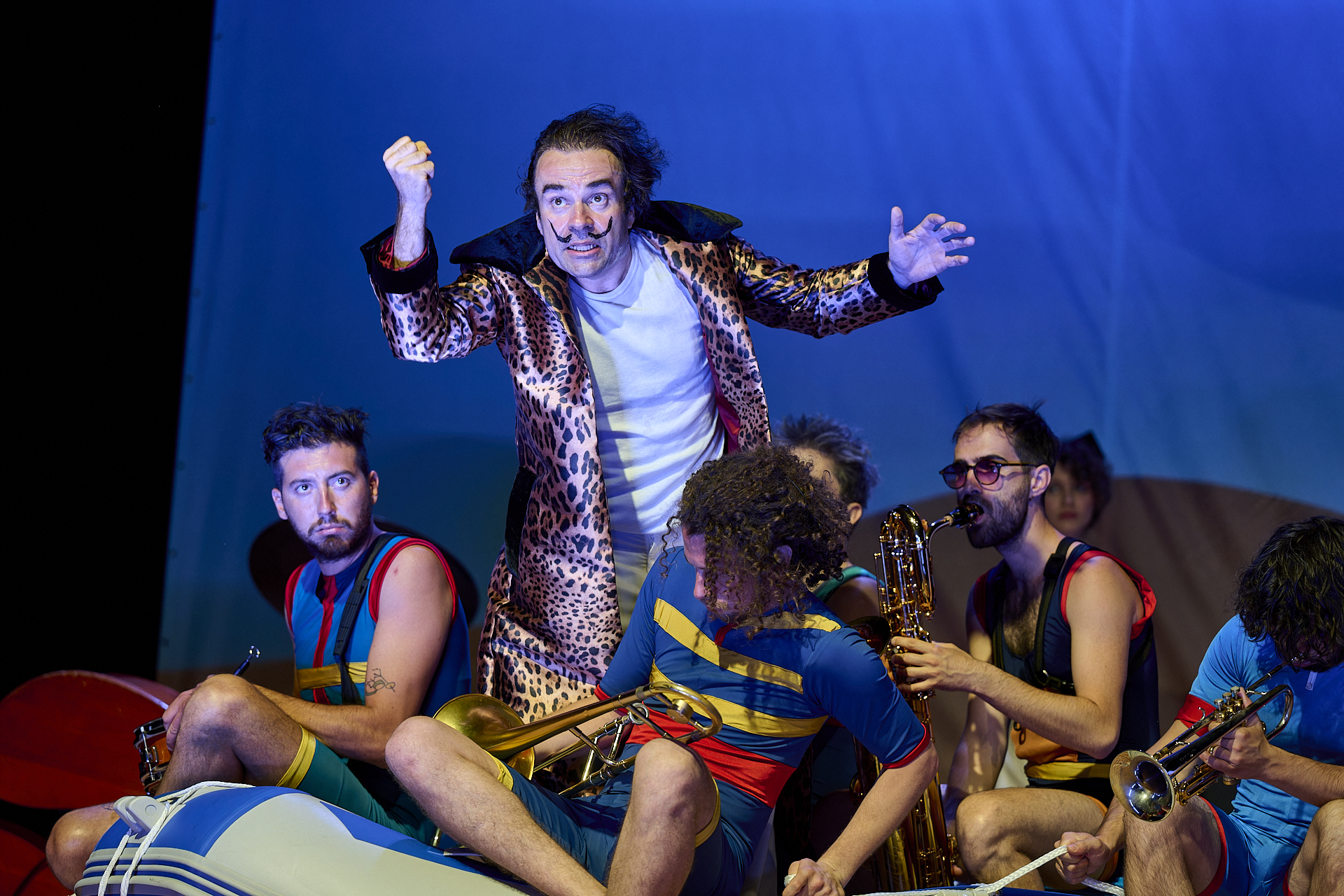
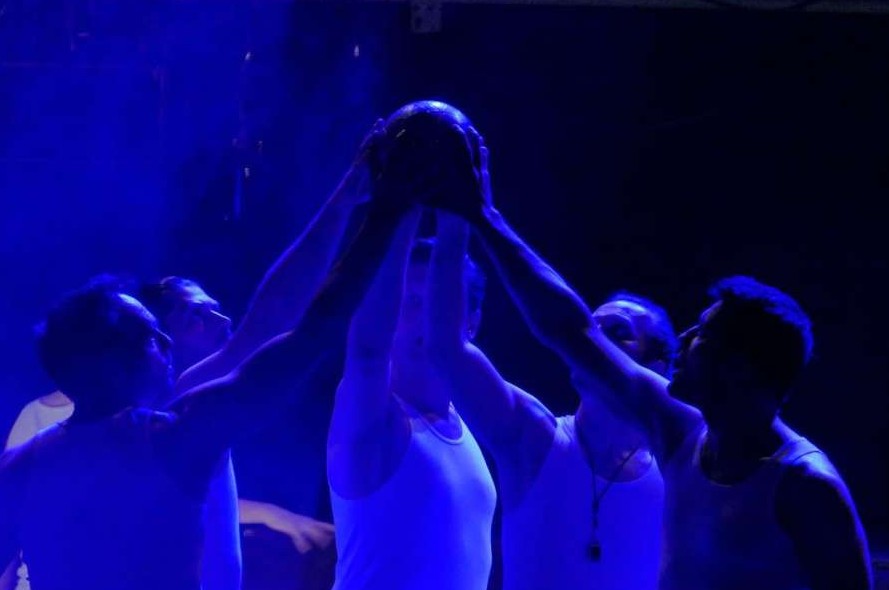
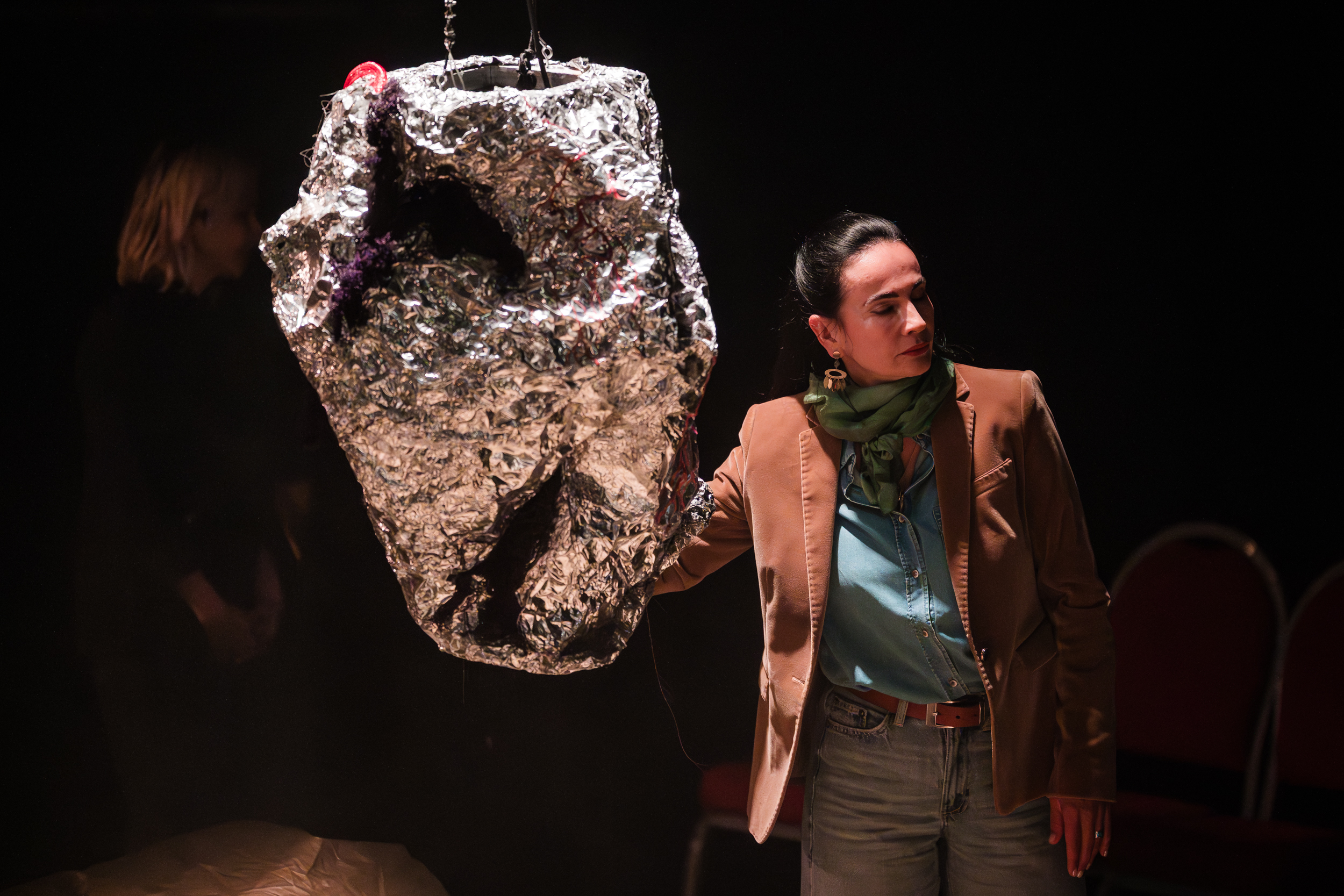
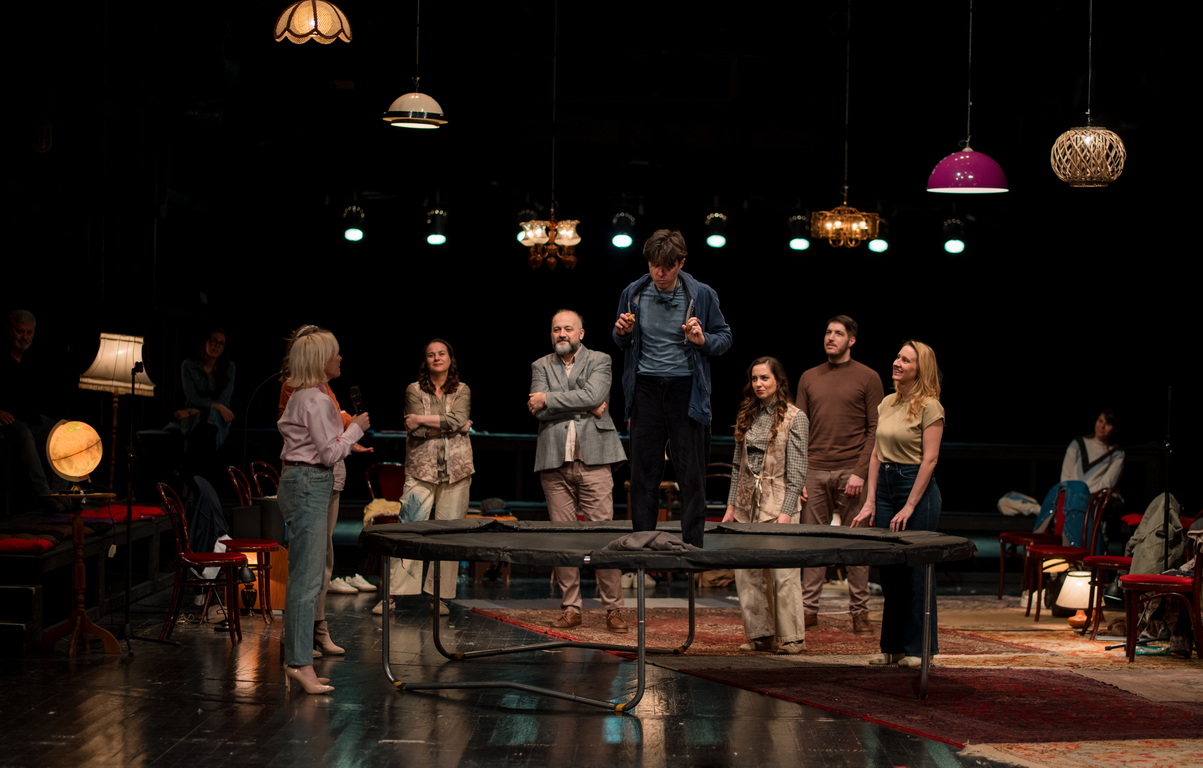
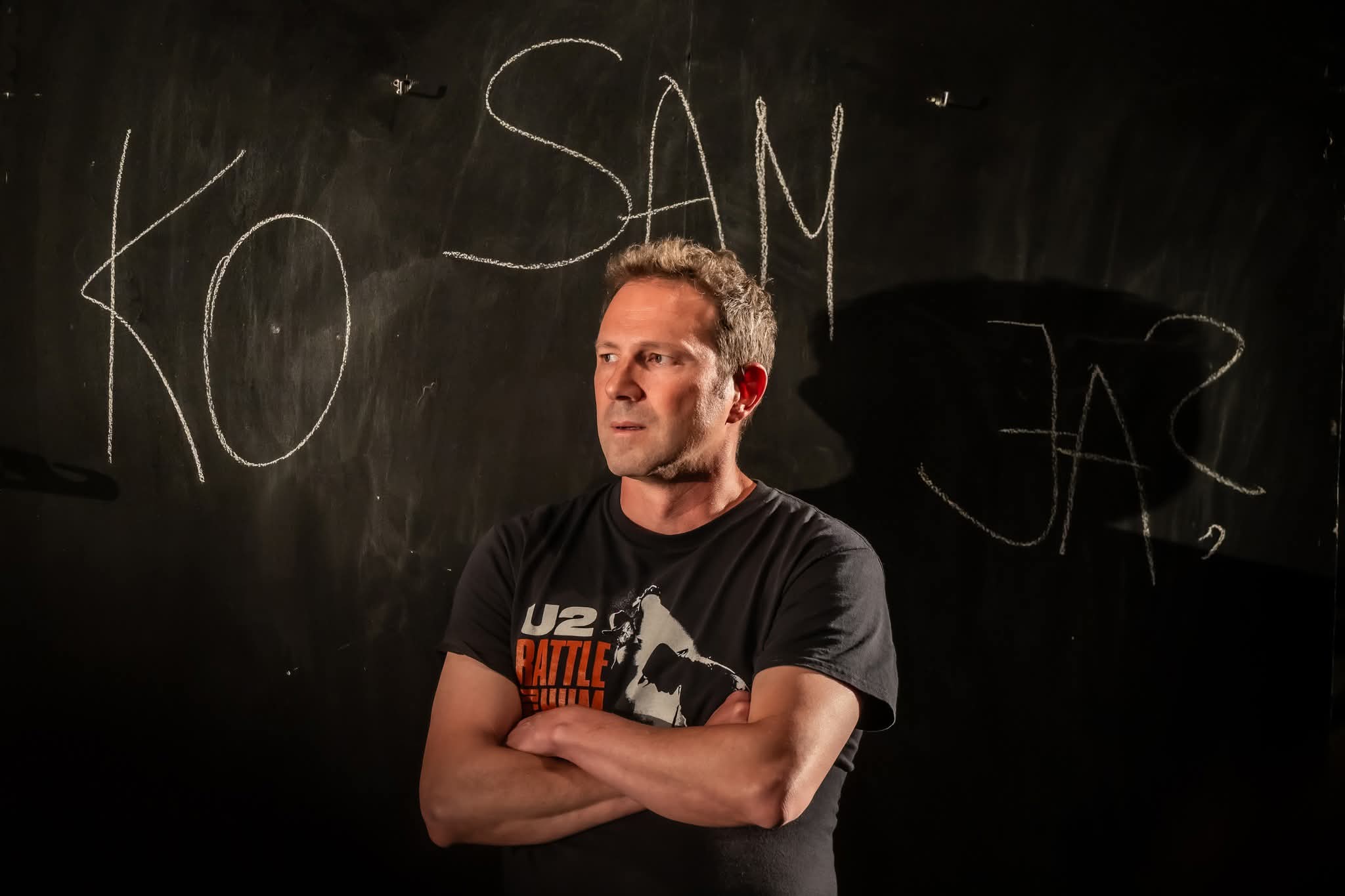
Divna: We agreed that the plays My Theatre (directed by Boris Liješević, Atelje 212) and Why Is He Laughing? (directed by Đorđe Nešović, National Theatre Sombor), were the best. What made these two authorial projects stand out?
Andrej: These were undoubtedly the most accomplished and compelling productions at this year’s Sterijino Pozorje. Both directors draw on deeply personal material. In My Theatre, Boris Liješević reflects on his relationship to theatre through the prism of his relationship with his parents, largely in a psychodramatic mode. Đorđe Nešović, on the other hand, begins with the story of his brother, who has a form of nonverbal autism. He then weaves in two additional narratives: one drawn from Milena Marković’s book Children, which explores the experience of raising a child with autism, and another based on the testimonies of parents associated with the Maslačak organisation in Sombor. The result is an authorial project that brings together different experiences into a shared thematic framework.
Divna: When it comes to processing personal experiences in theatre, the play Why Is He Laughing? successfully universalizes a personal story. It transcends the confines of an autobiographical framework and instead creates a universally relatable experience from the material. With Liješević’s performance, however, I had the impression that the interest in his personal story stemmed mainly from the fact that it was his own.
Andrej: What troubled me about Liješević’s play was that, although it sets out to reflect on his theatremaking, it ultimately reduces the scope of his artistic practice to his relationship with his parents and to his own understanding of artistic gift.
Divna: I can understand this to some extent. The main character in the play bears a significant burden due to his mother, who devoted her entire life to the theater. He mentions that his father resented his mother for her dedication to theatre. As a result, he now fears for his own family, worried that the same fate may befall him.
Andrej: One aspect that remains underdeveloped in the play, despite being hinted at throughout, is the relationship between artistic gift and profession. Liješević seems to reduce theatre-making to artistic gift, overlooking the fact that it is also shaped by tradition, artistic influences, professional standards, production conditions, and the concrete circumstances of work. At moments, the play suggests that a director’s artistic voice emerges not only from artistic gift and personal history, but also from an encounter with the material conditions of production. Yet this line of inquiry remains largely unexplored. My Theatre is an immensely charismatic and engaging work, but once its seductive surface is stripped away, what remains is a rather superficial reflection on theatre. I wonder whether you had a similar impression.
Divna: I completely agree with the question you raised about whether we can only engage with ourselves through personal stories. Throughout his career, Boris Liješević has successfully staged numerous adaptations of classic works. It is through these adaptations that his aesthetics and worldview become evident. Although the characters in his other plays are not named after family members and do not directly reflect his biographical experiences, the plays still resonate on a personal level.
Andrej: As for My Theatre, I was left without a clear sense of what constitutes Liješević’s theatrical voice. The play is far more concerned with family history and personal anxieties than with his aesthetics, artistic influences, or working methods. As a result, I felt that we learn a great deal about Boris Liješević as a son, but very little about Boris Liješević as a director.
But turning to Why Is He Laughing?, what did you find particularly valuable in that production?
Divna: The play successfully avoids manipulating the audience through emotional appeals. Not for a single moment did I feel it was trying to evoke pity for people with autism, which is often the case in similar works. However, Why Is He Laughing? is a play about love and acceptance of differences. It does not romanticise individuals with autism or their families; rather, it candidly addresses the immense patience and strength that are required.
Furthermore, this play serves as an ode to theatre, similar to the film Hamnet. At one point, the author expresses his struggle with reality by stating that he didn’t know how to deal with it, so he created a play. This highlights theatre as a space for processing, understanding, and confronting reality. The play culminates in a powerful moment when the brother with autism is given the opportunity to speak on stage. This image beautifully exemplifies the power of theatre!
Andrej: Yes, that is indeed a beautiful moment. Yet I felt that his point about making reality manageable through theatre risks becoming a convenient explanation for some of the play’s dramaturgical shortcomings. In my view, the most successful strand is Nešović’s personal story. The second narrative introduces doubled pairs of parents and sons, with three characters being played by six actors, but it is never entirely clear what this device achieves. The play suggests that it serves to multiply perspectives, yet I did not find that to be the case. The third narrative, based on a text by Milena Marković, is told in her distinctive poetic language. I had no objection to that. On the contrary. What I struggled to understand was why this particular story had been included in the first place. At times, it felt as though the production was simply accumulating material around a shared theme, without a clear sense of what it ultimately wanted to achieve with any of its narrative strands.
Divna: The issue for me lies in the choice of the second and third stories, as they convey nearly the same message on a thematic level: both address the parents’ struggle to accept or understand their situation. The main story lacks a defined conflict, concentrating instead on the daily life of a family. It feels as though the other two stories were introduced primarily to provide dramatic reinforcement, creating balance and injecting some extra conflict.
After these authorial projects, we return to plays and adaptations, which mainly feature old stories referencing contemporary times in various ways. The approaches to modernization vary: ranging from performing historical material almost unchanged, to selecting themes that implicitly evoke the present, to incorporating contemporary motifs and characters into adaptations. Let’s start with The Professional (written and directed by Dušan Kovačević, Zvezdara Theatre). The script remained virtually untouched, with only a few added anecdotes about Zoran Radmilović and the poet Ljubiša Baja Bačić.
Andrej: For ten years, a police officer keeps surveillance on the dissident Teodor Teja Kraj. He records his public appearances and drunken conversations, reads the books he reads, learns his literary references, and gradually stops mistaking philosophers for foreign spies. The play takes place in Kraj’s office after the fall of the regime. The former dissident is now the director of a publishing house, while the police officer works as a taxi driver.
When I saw Teja speaking on a modern cordless phone at the beginning of the performance, I briefly thought I was about to see an updated reading of the play. As it progressed, however, it became clear that this was merely an unintended and rather amateurish anachronism. I soon realised that the production follows a familiar middlebrow formula: a beloved playwright directing his own popular text, performed by well-known actors and presented in the safest manner imaginable.
Divna: It is unclear what is gained by staging this text without a clear connection to the present. Two aspects were particularly concerning: the ending, which appears defeatist and implies that political and social engagement is futile, as both Teja Kraj and Luka Laban end up miserable, isolated, and estranged from their families; and the direction, which relied heavily on static sitting, straightforward line delivery, and minimal movement.
Tracks, directed by Milan Nešković at the National Theatre of Republika Srpska in Banja Luka, is based on Milena Marković’s 24-year-old play. Both the production and the play retain a strong connection to the 1990s, highlighting the war’s impact on the generation that came of age during that period and their continued cycle of violence. However, cuts mad in the script have diminished the depth of Marković’s characters, resulting in excessive noise, shouting, and brutality. The ballads between scenes seem intended to provide rhythmic relief, but in my opinion, they were not enough for emotional satisfaction.
Andrej: It seems to me that time has eroded not only the play’s plot, but also its poetics. When Milena Marković wrote Tracks, the aesthetics of the so-called New Brutality and in-yer-face theatre offered an important way of artistically processing the experience of violence and the legacy of the 1990s. Today, however, these devices no longer produce the same effect. On the contrary, I often felt that this very aesthetic distanced me from the subject matter itself. Nor does the production offer a compelling reason to revisit the play today. Instead, Milan Nešković relies on a rather generic contrast: acts of violence unfold within a space marked by a large green classroom blackboard. I also think that the production’s central concept is undermined by performances and directorial choices that rarely rise above the level of illustration.
Divna: Yes. I think there is also a certain generational misunderstanding at play.
The next production, The Cabinet Minister’s Wife (directed by Veljko Mićunović, SNG Maribor), offers a new perspective on a frequently staged domestic play. Notably, this is only its third staging in Slovenia, where it holds a different cultural significance than in Serbia. This difference prompts questions about its selection for Sterijino Pozorje. While its production is relevant in Slovenia, its inclusion in this festival is less certain.
The Cabinet Minister’s Wife
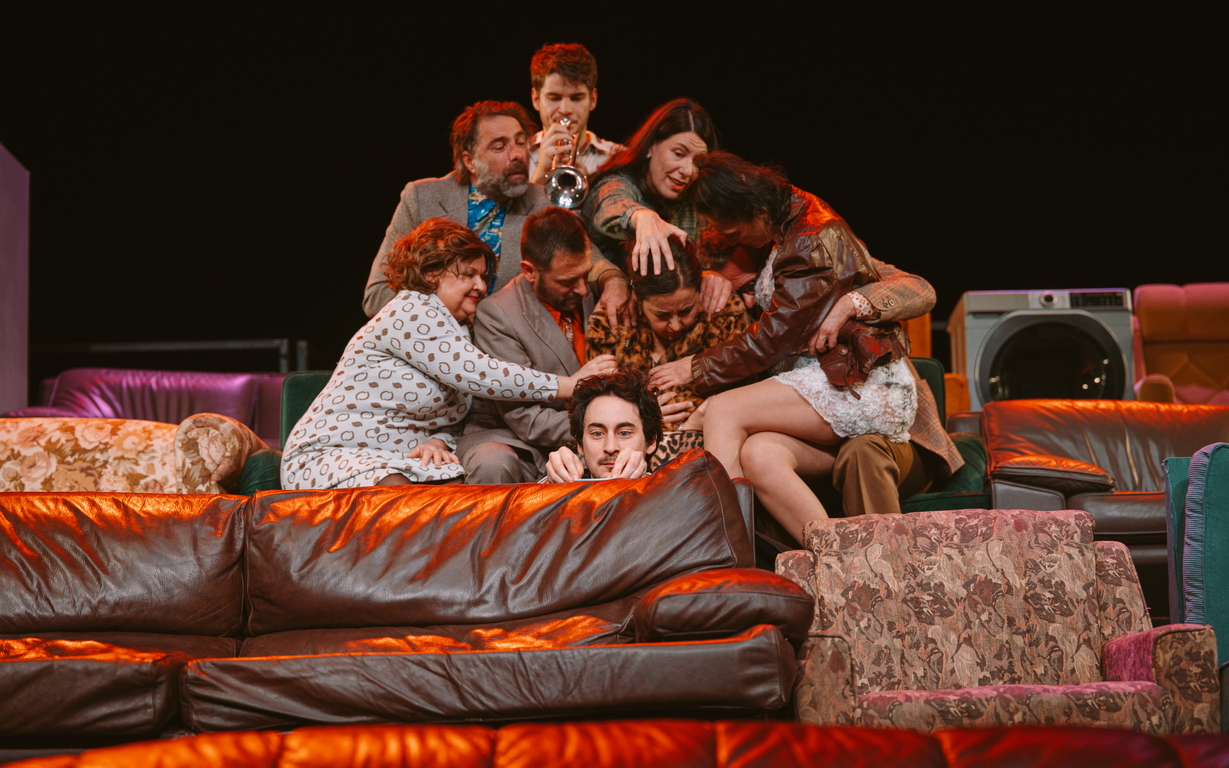
Andrej: I understand why the production was included in the festival programme. Above all, it offers a distinctive directorial reading of a play that is staged almost continuously in Serbia. There is hardly a moment when some production of The Cabinet Minister’s Wife is not playing somewhere in the country. Yet this version differs markedly from most others. It bears a strong resemblance to some of Mićunović’s earlier productions, particularly Fathers and Forefathers. Once again, we encounter a cascading set design that evokes a shared space of intergenerational encounter, highly coordinated ensemble acting, and the atmospheric music of Nevena Glušica. Armchairs, sofas, a washing machine, a refrigerator, and an electric piano are arranged across three cascading levels. The actors emerge from the furniture, climb over it, sit on it, and lie across it, all accompanied by an almost continuous musical score. Glušica’s ethereal music functions as a counterpoint to Nušić’s sparkling comic text. The Cabinet Minister’s Wife is, by its very nature, fast-paced, witty, and vibrant. The music constantly draws it into a different register, creating a kind of counterpoint between the comic vitality of the text and the melancholic atmosphere of the staging.
Divna: I wouldn’t call this a mere counterpoint, but rather a shift in genre: this production of The Cabinet Minister’s Wife is not played as a classic comedy, nor is Živka portrayed as a distinctly comic figure. The level of theatricality has been toned down, pushing the play closer to a tragic tone, enhanced by Nevena Glušica’s score, which occasionally creates an almost horror-like atmosphere. The audience laughs, but there are no massive outbursts; instead, there are occasional, subdued chuckles that further heighten the sense of a shifted perspective. In classic stagings, the ending brings a comic twist and Živka’s final monologue about returning to power, whereas here, both her downfall and the finale are stripped of comedy, carrying a nearly tragic weight.
Andrej: I agree. Here, too, much like in Fathers and Forefathers, a kind of collective character emerges. Although the figures are more individualised than in that earlier production, there is still a clear tendency for them to dissolve into a shared social body by the end. Seated together in their armchairs, they resemble a kind of chorus. The central heroine is no longer clearly distinguishable. Instead, they become a homogenised community, a group of people endlessly moving between periods of holding power and periods of waiting to regain it. What emerges is a social mechanism that constantly reproduces itself: a democratic rotation of power that turns society into a stagnant waiting room for political office, where some can comfortably make a living while others are left waiting for their turn.
Divna: Also, the modernization in this work is not achieved through script changes; only minor details have been updated, such as the scandalous article about the Minister’s Wife being published online instead of in a newspaper. However, the production effectively establishes a clear connection to contemporary political figures by including photographs of women associated with power, such as Melania Trump, Mira Marković, Jovanka Broz, Queen Elizabeth II, and Brigitte Macron. This approach places Živka within a broader political context.
Slobodan Obradović’s adaptation of the drama is particularly effective. By incorporating scenes and lines from Nušić’s other plays, such as The Doctor, Power, and The Parliamentarian, he adds an extra layer of complexity to the production. Raka, Živka’s son, benefits the most from this approach, as it seamlessly weaves in subplots involving a purchased university degree, a luxurious lifestyle, and alcohol consumption.
Andrej: When we say that a performance feels long, we often mistakenly think only of its running time. I have seen four-hour productions that I wished had lasted even longer. The real question is whether form and content are capable of sustaining our attention. And it seems to me that this is precisely where Lady Nola (directed by Sonja Petrović, Serbian National Theatre) runs into difficulties.
Based on a short story by Isidora Sekulić, the production follows the life of a woman who has no children of her own but adopts three. We follow her from childhood to old age. Running parallel to this is the story of a contemporary woman who is unable to conceive, a narrative that periodically interrupts the main story of Lady Nola. And this is where my problem with the production begins. I am not convinced that Lady Nola is really a story about the challenges of pregnancy. In fact, we do not know whether Lady Nola can or cannot have children. We do not even know whether she wants biological children in the first place.
Divna: Both the story and the play do not address this topic.
Andrej: This is why the dramaturgical addition of the storyline involving a contemporary woman undergoing IVF treatment seemed insufficiently grounded to me. I struggled to find a convincing connection between the two narrative strands and often felt as though I were watching two different productions. Even their encounter at the end failed to persuade me why they had been brought together in the first place. But that is not even my main objection. After nearly three hours, I was still left without a clear answer to the question of what the production was ultimately trying to achieve.
Divna: We follow decades of a single life, how this woman lives, raises children, and how time passes. In Isidora Sekulić’s Chronicle of a Provincial Graveyard, each story stands as a testament to a human life, with every single existence inherently worth narrating. However, during the performance, I was not quite sure of its thematic focus.
Andrej: The directorial concept also remained unclear to me. The constant presence of the entire cast on stage, the use of columns of light, the contemporary electronic score… all of it ultimately struck me as underdeveloped and overly drawn out.
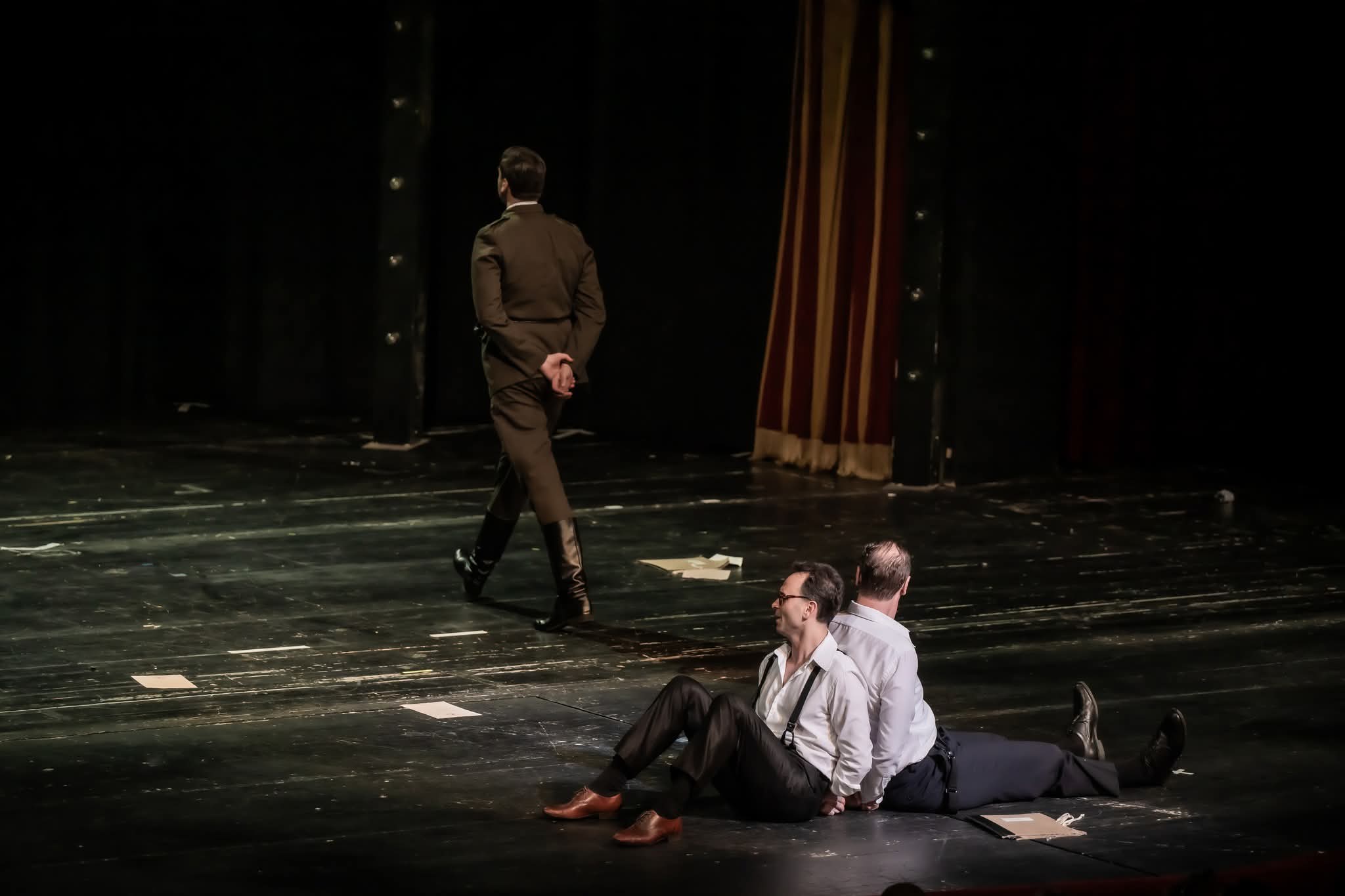
Let us move on to Humor Central at the National Theatre in Belgrade, based on a text by Đorđe Kosić and directed by Olja Đorđević. The production focuses on an episode from the lives of the actors Aleksandar Cvetković, Jovan Tane Jovanović, Ljubinka Bobić, Žanka Stokić, Nikola Popović, and Mirko Milisavljević. Kosić chooses a particularly compelling historical moment: Belgrade under Nazi occupation during the Second World War. The actors find themselves divided over whether they should continue performing comedies for audiences in an occupied city. In other words, the play raises the question of what an artist should do in a time of crisis and conflict, a question many of us are asking ourselves today.
Divna: This production serves as an excellent example of how a historical event can be connected to contemporary issues without including modern characters or overtly updating the narrative. Its theme aligns seamlessly with the festival’s slogan, “Our Stories.” The actors’ dilemma about whether to perfo
Humor Central
rm mirrors the recent tensions within the Serbian theater community over the past year and a half, marked by work stoppages and diverse reactions to protests.
Andrej: Yes, but the production also has a major flaw. It lies in the way it selects and organises its historical material. The occupiers never appear on stage. Everything is filtered through the perspective of the actors, and particularly through that of a young performer who, before the occupation, is treated as an object of ridicule by his older colleagues. After the war, he returns as a partisan and liberator, only to carry out a form of personal and ideological revenge against those actors who continued performing during the occupation.
Divna: I would just add that it’s not just about getting revenge on the colleagues who teased him, but also about taking revenge on the actress who didn’t want to be with him.
Andrej: Exactly. And that is where the problem begins. The way the production selects and frames its historical material ultimately functions as a justification of conformity. Artistic opportunism is justified as a necessary condition of professional survival. By deliberately omitting the fact that Nikola Popović actually performed in the Theatre of National Liberation during the war, the production withholds from the audience both a historical fact and an example of genuine resistance. Instead, he remains little more than a resentful partisan. In doing so, the production humanises collaboration while reducing resistance to either personal frustration or ideological blindness. I find it difficult to separate such a reading of history from the present moment and from the ways in which we speak about civic and student resistance today.
Divna: I find it problematic that the Partisans are portrayed in such a one-dimensional and mocking way. At a time when various forms of fascism are gaining ground across Europe and the world, I believe it is problematic to present the anti-fascist movement, specifically, its sole representative in this context, in such a manner.
Andrej: While the actors are allowed a range of conflicting viewpoints, no comparable diversity is granted to the partisans. They are portrayed exclusively as vengeful executioners and agents of retribution.
Divna: In addition to the previously mentioned text, we also featured a contemporary play by the young playwright Sofija Dimitrijević, titled Quiet Hours from 2 to 6. This marks the first time that Heartefact has participated in the selection for Sterijino Pozorje. After a long hiatus, we finally have a non-institutional production included in the official selection. This is a refreshing change, and I hope to see this trend continue. The selector should give equal attention to productions coming from outside of institutional theatres.
Andrej: I completely agree with that. Yet I also think the play has certain weaknesses. It opens with a monologue by the president of the tenants’ association, after which we enter the apartment of a woman visited by a sex worker. At first, it almost feels like a lesbian version of Good Luck to You, Leo Grande. We soon discover, however, that the visit has nothing to do with sex. The woman has invited her guest in order to learn the truth about her late husband. It gradually emerges that her husband, a judge, had been abusive towards the sex worker. The woman is forced to confront the fact that she never truly knew the man she lived with, yet she seems remarkably unconcerned by the disapproval of the tenants’ association, which views the visits with suspicion. And that is, essentially, the entire plot. What follows is a rather unconvincing twist in which the protagonist suddenly begins laughing and running around the apartment, as though the problem had somehow resolved itself.
Divna: In several productions at this year’s Festival, we have encountered the theme of the petty bourgeoisie and their tendency to meddle in others’ lives. However, here I found the characterization of the building council president to be unclear. From beginning to end, he remains excessively aggressive, lacking any development. This leaves the audience uncertain about the source of his aggression.
Andrej: Yes, but it seems to me that this character is drawn in very specific terms. He comes across as someone obsessed with rules, order, cleanliness, and control. The problem is that the production never develops these traits any further. They remain characteristics without consequences. I often had the impression that the play’s two narrative strands function almost independently of one another. On the one hand, we have the story of Mirjana and Lana; on the other, the story of the president of the tenants’ association and the building’s residents. In a way, it reminded me of the problem we discussed in relation to Lady Nola, where two stories are brought together through rather tenuous connection
Divna: This was the final play. What are our wishes for next year’s festival? I would love to see more contemporary domestic plays. This would mean greater productions based on contemporary plays in our theatres. Additionally, I would like us to watch Pozorje mladih and Krugovi.
Andrej: I would like to see that as well, together with a few productions for children and young audiences, and the occasional intelligent and inventive reimagining of a classic. I often find myself imagining a Sterijino Pozorje taking place in a time that does not place pressure on freedom of expression, does not generate conflicts of interest, and does not suffocate the theatre that ought to remain a space where people can breathe freely.
Further reading: Serbian theatre – Between resistance and appeasement
Further reading: 70th Sterijino pozorje: a critica dialogue

Andrej Čanji is a theatre critic and theatrologist based in Belgrade.
Divna Stojanov is a dramaturg and playwright. She writes mainly for children and young people.