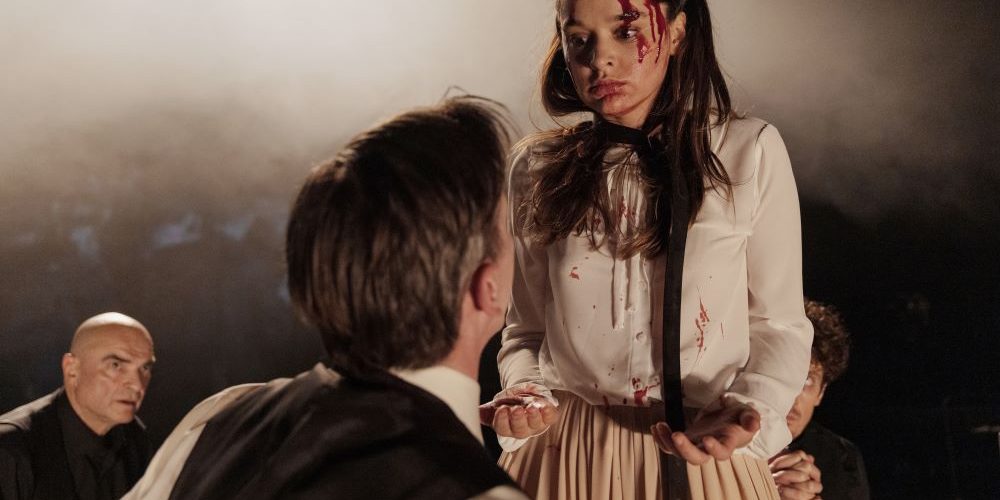
Zagreb Youth Theatre, premiere 22nd May 2026
Every time Oliver Frljić makes an appearance in Croatia, much less works on a new play, you would think a convicted criminal was out on the streets, judging by the reactions of the media and the general public. According to several local news outlets, the police was present at this premiere and subsequent shows (not at the one I saw, as far as I’m aware) because there was a genuine fear for safety for actors and the authorial team. If it wasn’t so ironic and funny, it would be sad, but it seems that fear of violence has found its home in our cultural life.
Frljić’s latest show at ZKM, Witches of Salem, which is based on Arthur Miller’s The Crucible, is fitting given this tense state of affairs. He is a witch too, so to speak. His last piece in Croatia, also staged at ZKM, was the two-part show Brothers Karamazov in 2022, remains one of the best productions I’ve seen from a Croatian institutional theatre – so, the bar is set pretty high.
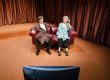
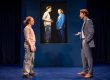
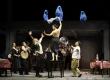
Aesthetically, Witches is very reminiscent of Karamazov’s stage design, the blackness and emptiness of the Istra hall visually dominates the scene, with a single lamp hanging low above the proscenium. The scenography by Igor Pauška and sculptural works by Branimir Boban are all mobile which adds to the fast pace Frljić’s plays are known for, especially in these cases where the play’s narrative is often disrupted by frequent ironic commentaries, entertaining choreographies (Matea Bilosnić) and pop-culture songs or even longer intermezzos that here explores a wider cultural context of Miller’s life and work. The back wall functions as a screen for video projections (Ivor Tamarut) that also mostly work as director’s witty political remarks which at times switch so quickly it’s almost impossible to catch all the references. The lighting design (Marino Frankola) perfectly fits the dark vast empty stage with high light-dark contrasts that remind me of chiaroscuro technique and add to the performance’s dramatics.
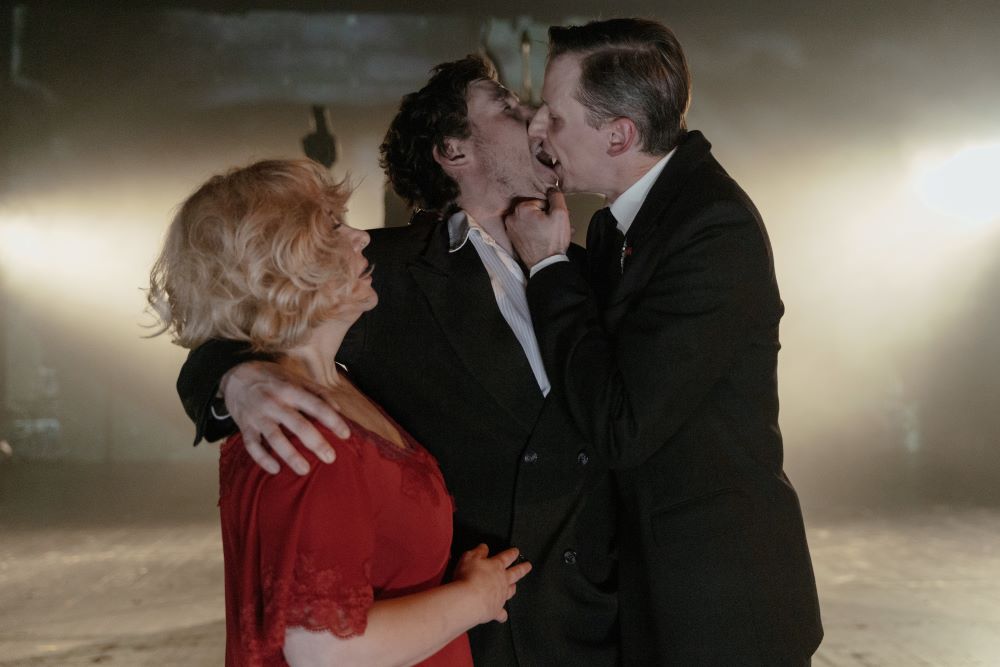
Witches of Salem, ZKM
As per usual when it comes to Frljić’s adaptations, the play falls behind everything else, the commentary and the more amusing bits. Miller’s Witches are the base for a more direct and explicit critique of the local far-right extremists and politicians that are all too well known to the audience. However, the piece also draws from the drama that was Miller’s life and marriage with Marilyn Monroe. The Crucible was inspired by Miller’s own experience being a persona non grata because of the accusations he had connections with communists during the ‘red scare’ hysteria in the States. That said, after his questioning scene, the focus shifts more to Monroe; her abortions, insecurities and infidelity she had with Yves Montand who was married to Simone Signoret, another brilliant actress that, unlike Monroe, wasn’t perceived only through her body as a dumb funny blonde. This decision to give that much space to Monroe’s struggles is somewhat redundant and takes away focus from the established dramatic and referential frame.
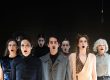
The drama itself is a great example of how an orchestrated hysteria caused by lies can deeply disrupt a community which is perfectly executed by the acting ensemble. Nikolina Prkačin takes on the role of Abigail Williams, the central character and the main conspirator of the play who starts spreading the rumours of Satan taking control over women in Salem. Prkačin easily shifts from a spiteful and manipulative teenage girl to a God-feared Devil’s victim. Ugo Korani plays John Proctor, a hypocritical husband who refuses to take any responsibility for having an affair with underage Abigail, until his wife Elizabeth is accused of witchcraft. When he faced with authority figures (Adrian Pezdirc as Mr Hale, Dado Ćosić as Parris and Ivan Jurković as Danforth) and forced to confess he’s seen and conversed with Satan, he signs his name in large font as ‘Frljić’ with white chalk while giving praise to Lord. Through this scene, Frljić in a way mocks his opponents by faking defeat but, more importantly, demonstrates the power of physical violence and force it takes to break (or make?) a man’ faith.
I’d be remiss if I don’t give praise to my favourite acting performances of the shows: Adrian Pezdirc and Linda Begonja. Pezdirc plays Mr Hale similarly to Prkačin’s Abigail – he skilfully manages to be creepy towards young girls and a convincing ‘exorcist’ among the adults. He’s always very entertaining when he plays mischievous characters, you could almost imagine little horns spiking up from his forehead every time he grins. Begonja, meanwhile, never fails to deliver a superb performance in roles which allow her to be her fully energetic self, a rightful tour de force scene stealer. Unlike Pezdirc, her playfulness reflects in her fast speech, she spits her lines so quickly like she’s shooting bullets at other actors, all while adding a touch of hysterical laugh.
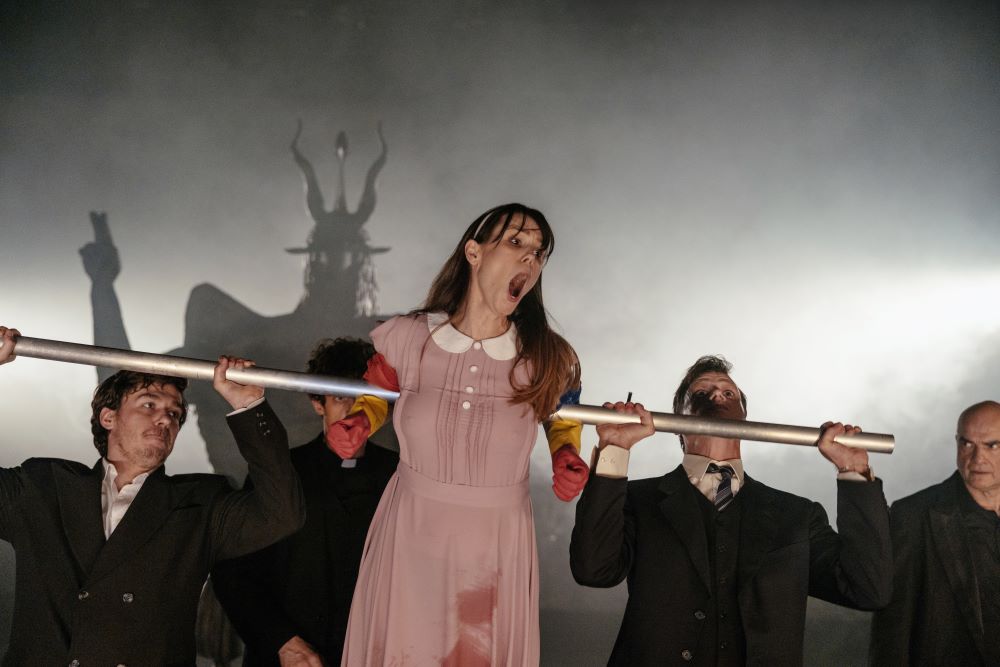
Witches of Salem, ZKM
Even though this isn’t my favourite Frljić piece, my expectations were more or less met. I loved the humour, especially the theatre references in sketches like ‘Brecht for idiots’ or ‘Stanislavski for monkeys’. The ironical tone and dark humour that constantly breaks away from the plays’ dramatic tone keeps the audience at a critical distance from the characters and the plot. The irony and humour culminates in the final scene, my favourite part, where all four actress take on the ceremonial roles to finish the show. Besides briefly telling us how the play ends, where female characters either end up dead or in a brothel like Abigail did, ominously reminding the audience one of the messages on the video wall, ‘Only a dead woman is a good woman’. This final ‘feministic’ part, as they call it, also serves to explain that the purpose of the show was to check the audience’s ideological compliance and to analyse the insides of the director’s rectum.
The show ends with a ritual killing of Alojzije, a stuffed bald eagle, while the actresses shout ‘God bless America’. Per usual, Frljić holds up a mirror to the audience to genuinely show just how our reality is messed up and dark, while giving us no fake hope for a better tomorrow – but at least his shows are a fun ride, rich with references and energetic performances. At this point in time of bleakness and apocalyptic visions of future, we can also laugh through tears about it, right?
Credits:
Director: Oliver Frljić//Translation: Oliver Frljić//Adaptation: Oliver Frljić and Marin Lisjak//Dramaturg: Marin Lisjak// Scenography: Igor Pauška// Costumes: Belinda Radulović
For more information, visit: ZeKaEm.hr
Further reading: Review of Oliver Frljić’s Black Gold
Further reading: Review of Oliver Frljić’s Brothers Karamazov

Nora Čulić Matošić (1998) is a student of Comparative Literature (MA) at the Faculty of Humanities and Social Sciences in Zagreb. She has written theatre criticism for the Croatian radio programme Theatralia and web portal Kulturpunkt.hr. Besides theatre, her interests are other forms of performing arts (particularly dance performances) and film.