Polip, Prishtina’s annual literary festival, has been reconceptualized as a festival for the performing arts. Borisav Matić reports on this year’s programme which focused on ecological theatre.
For 15 years, Qendra Multimedia organized and hosted the Polip Festival in Prishtina as an international cultural event focused primarily on literature. The festival served as an annual hub for regional writers and cultural workers to exchange ideas and discuss their recent work, while also providing international guests with an opportunity to present their work to audiences in Prishtina. The festival played a significant role in strengthening ties between cultural scenes across the once war-afflicted region and in connecting them internationally.
In 2026, however, the organizers felt the need to reconceptualize the event as a theatre festival, reflecting the main focus of Qendra Multimedia’s artistic production. Although art forms other than literature had been present in previous editions, this marked the first year that the festival’s theme was dedicated solely to the performing arts – specifically, ecological theatre. Or, as the title of one panel discussion framing the 2026 edition of Polip – which took place between 14-16 May – put it: The Ecology Question on Stage Across Contexts.
Kosovo and its neighbouring countries are areas where ecological questions should be at the forefront of public conversation because of the substantial and ongoing environmental damage being done to the region. The capital cities of the Balkans are frequently ranked among the most polluted cities in the world during winter, while both foreign and domestic predatory companies continue to pollute the soil and water. At the same time, the region is on track to become one of the areas hardest hit by climate change in Europe in the coming decades. Yet environmental issues remain far from the centre of government policy.
Similarly, local theatre scenes have shown relatively little interest in ecological themes, with important exceptions such as the work of Slovenian theatre director Žiga Divjak or the Serbian festivals Festival of Ecological Theatre and Mater Terra Festival. However, even when eco-minded initiatives do emerge in theatre, they are often confined to the independent scene or to theatre for children and youth, while institutional and mainstream theatres continue to grapple with what are perceived as “more serious” topics.
Bringing three international performances to this year’s Polip Festival was certainly a curatorial decision aimed at presenting works from other parts of Europe to the local audience, but it also reflected the lack of recent eco-theatre productions in Kosovo and the surrounding.
Two different approaches to eco-theatre were represented by two productions: one from Belgium, Judit Seeks (produced by Het nieuwstedelijk), and the other from Austria, Zoe (produced by UniT Graz).
Judit Seeks
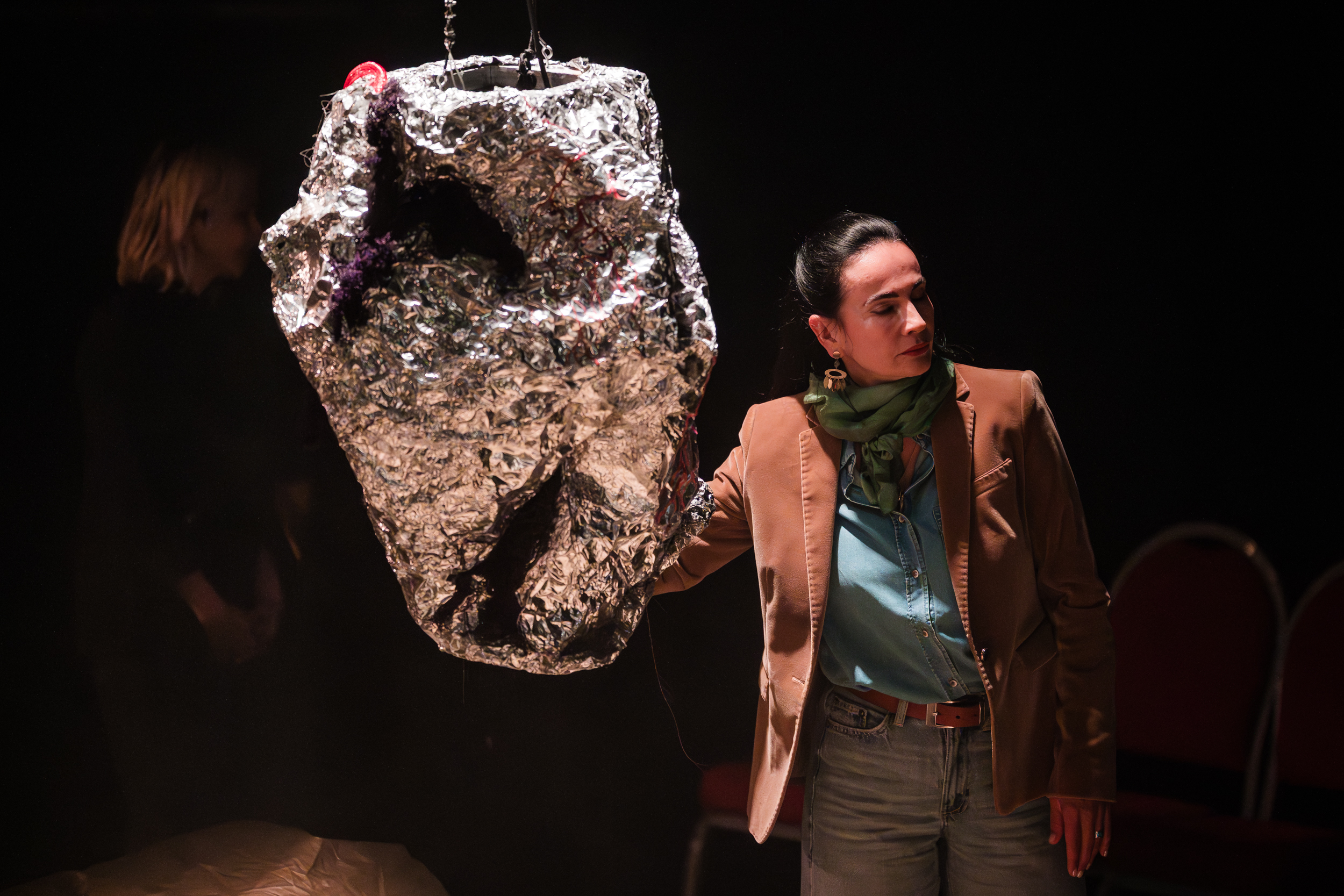
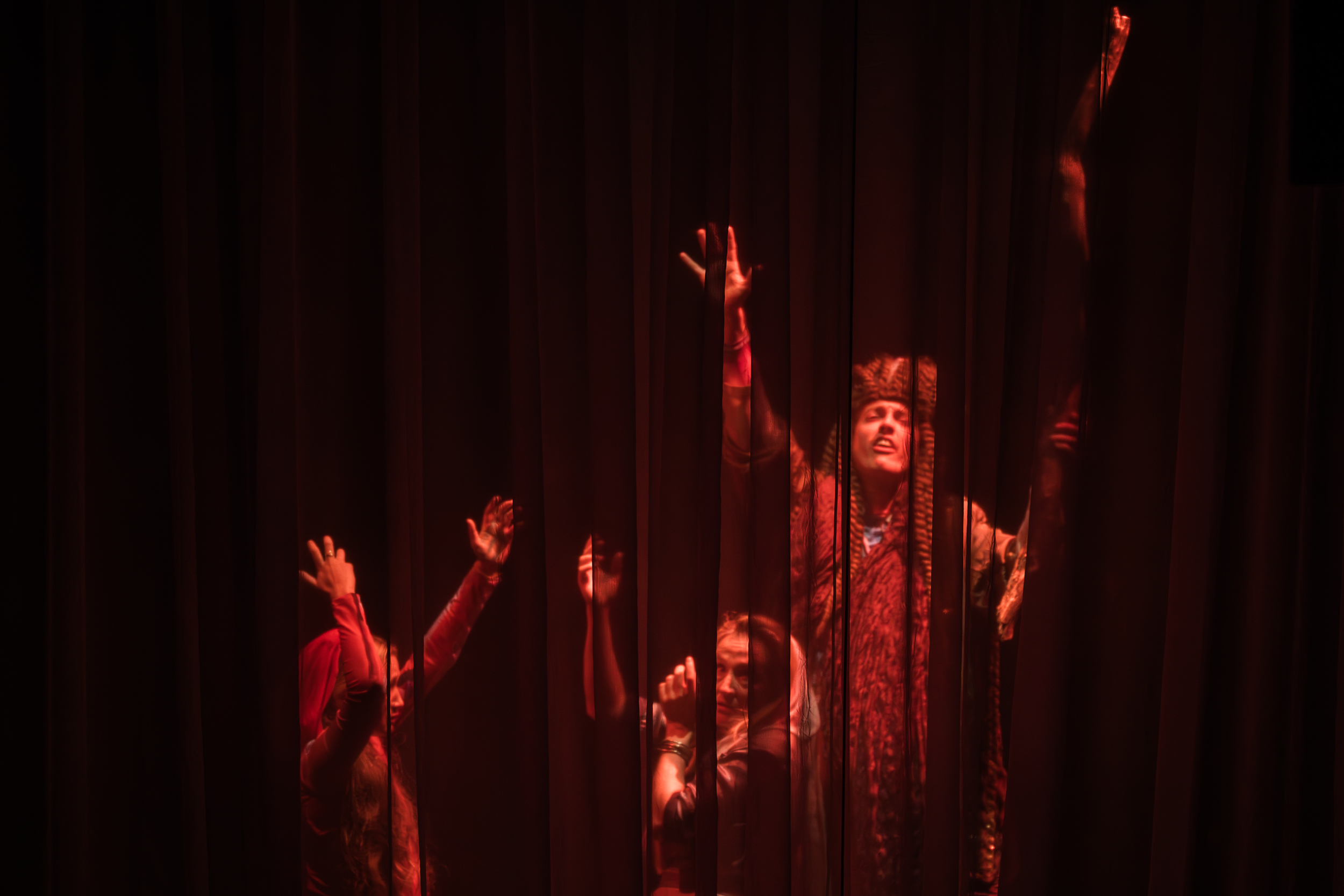
Judit Seeks is a more text-based play and a character study of its titular protagonist, a young woman grappling with existential anxiety caused by the prospect of environmental collapse. Written by Femke Van der Steen and directed by Christophe Aussems, the show introduces Judit through psychotherapy sessions and scenes from her everyday life, which she increasingly neglects because of her concerns. The play also veers into the fantastic, as the protagonist searches for meaning in Bible stories and internet memes, both of which materialize on stage. As a result, the performance constantly shifts between contrasting images of realism and fantasy.
There is a moment in Judit Seeks when the character explains that more than 50 percent of the human body is composed of non-human organisms such as bacteria and viruses, thereby complicating the conventional understanding of the human subject as something clearly separable from “the other” – that is, from the environment. It is almost as if Lisa Horvath, the author of the Austrian production Zoe, took that idea and built an entire performance around it.
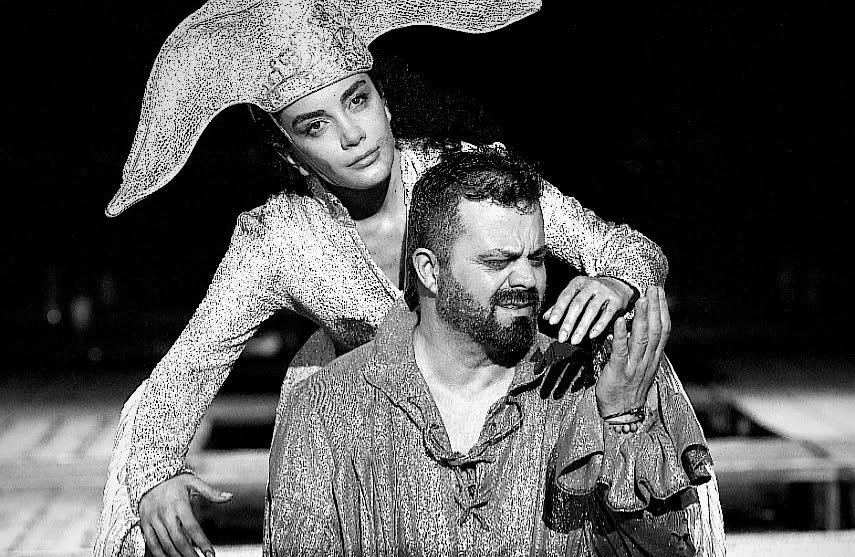
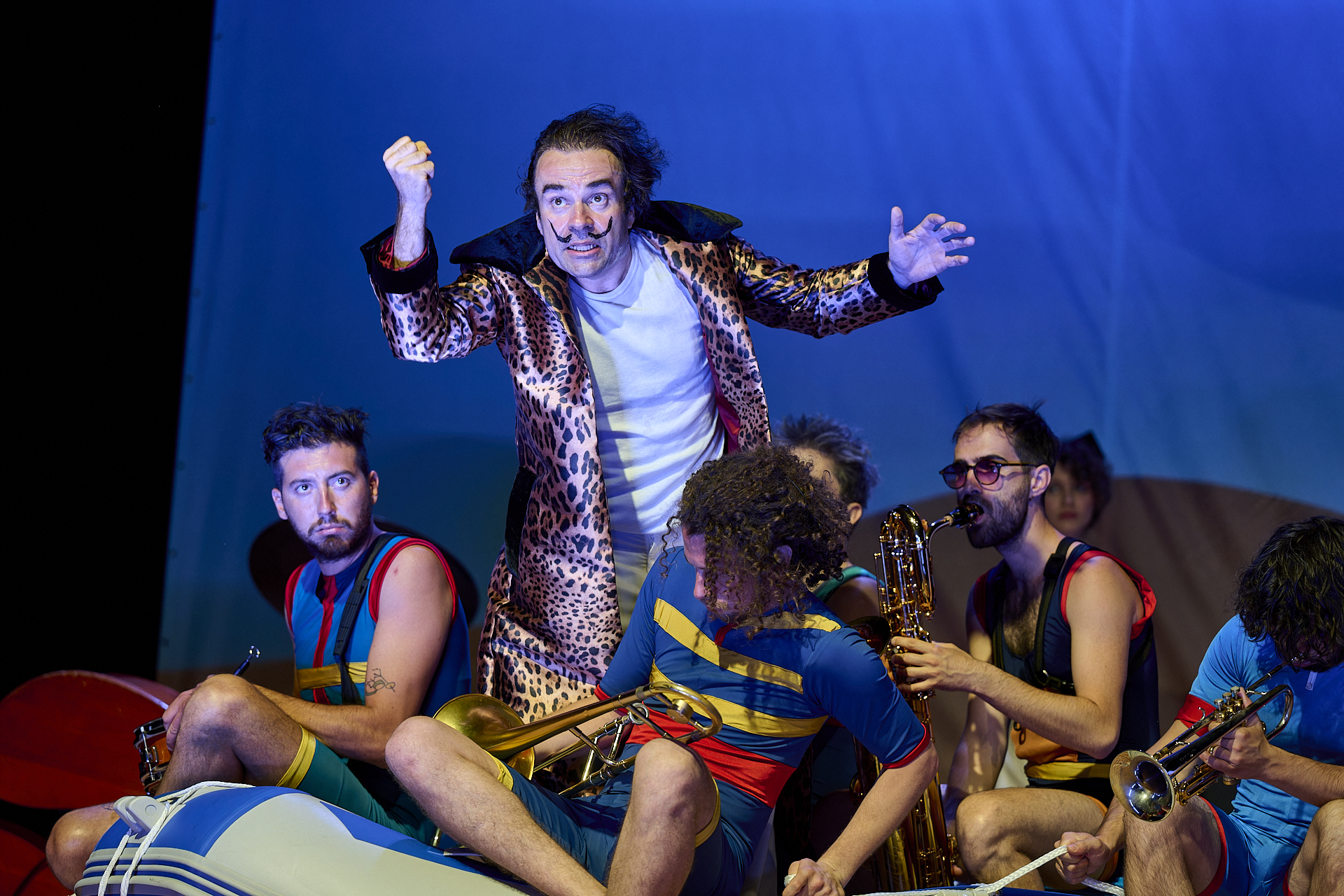
The set design of Zoe evokes an otherworldly landscape, the kind one might have seen in the early Star Trek series. Huge inflatables and artificial costumes are used to create an ecosystem that is partly biological and partly mechanical, vividly elaborating the show’s post-humanist and ecological stance. The performers sing songs with science-fiction themes, and at the beginning of the performance the audience is invited to move through the staged environment, creating an immersive effect.
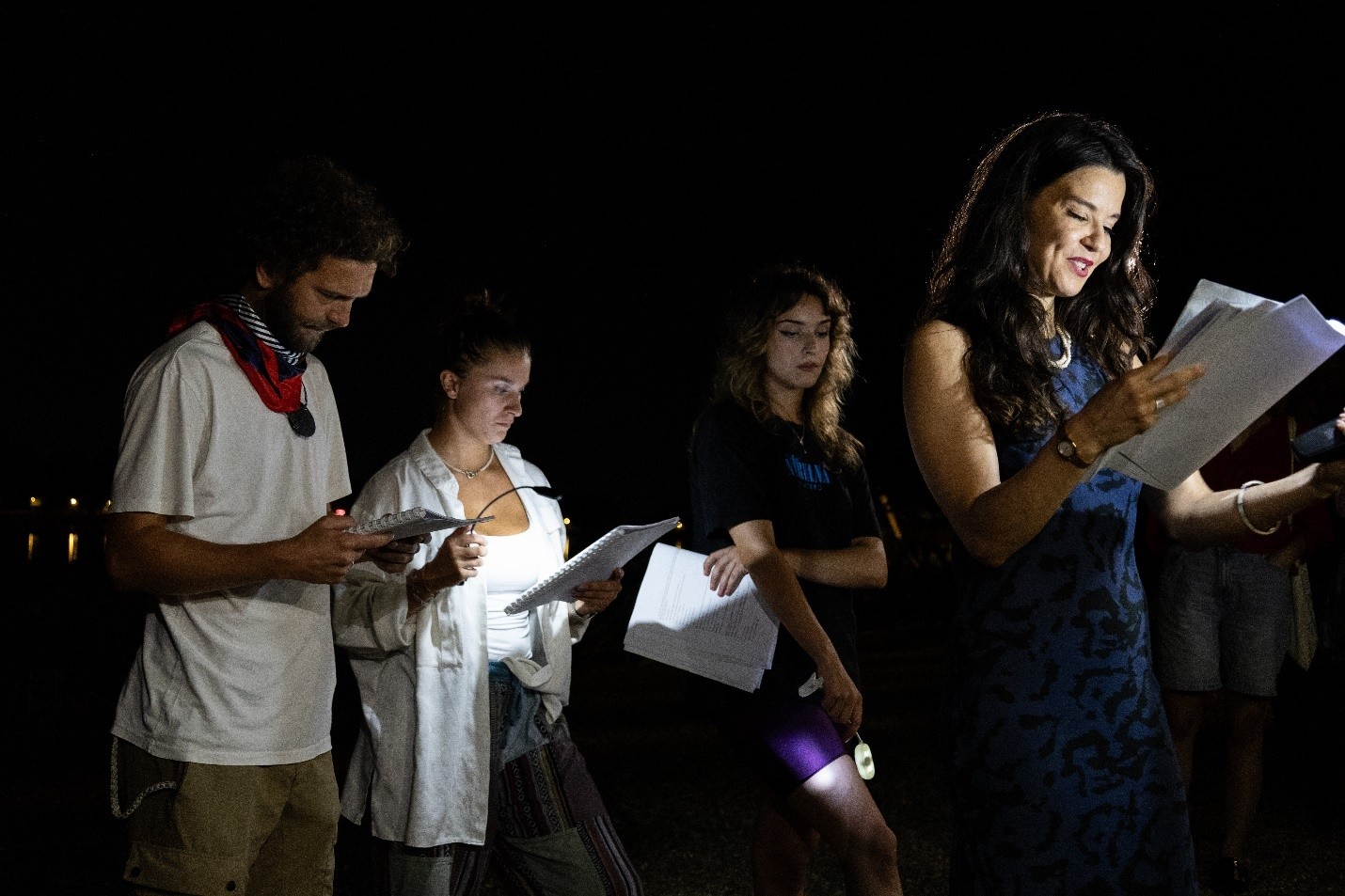
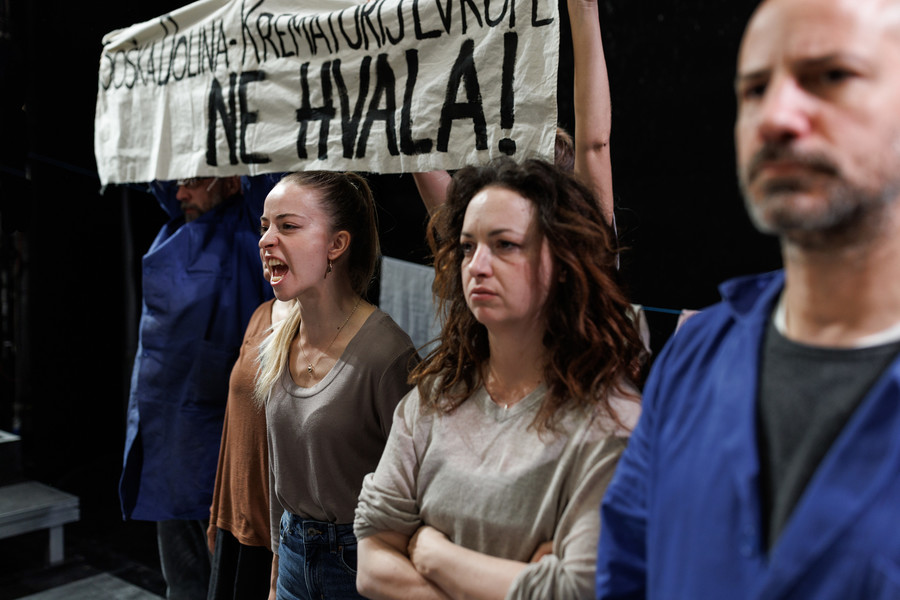
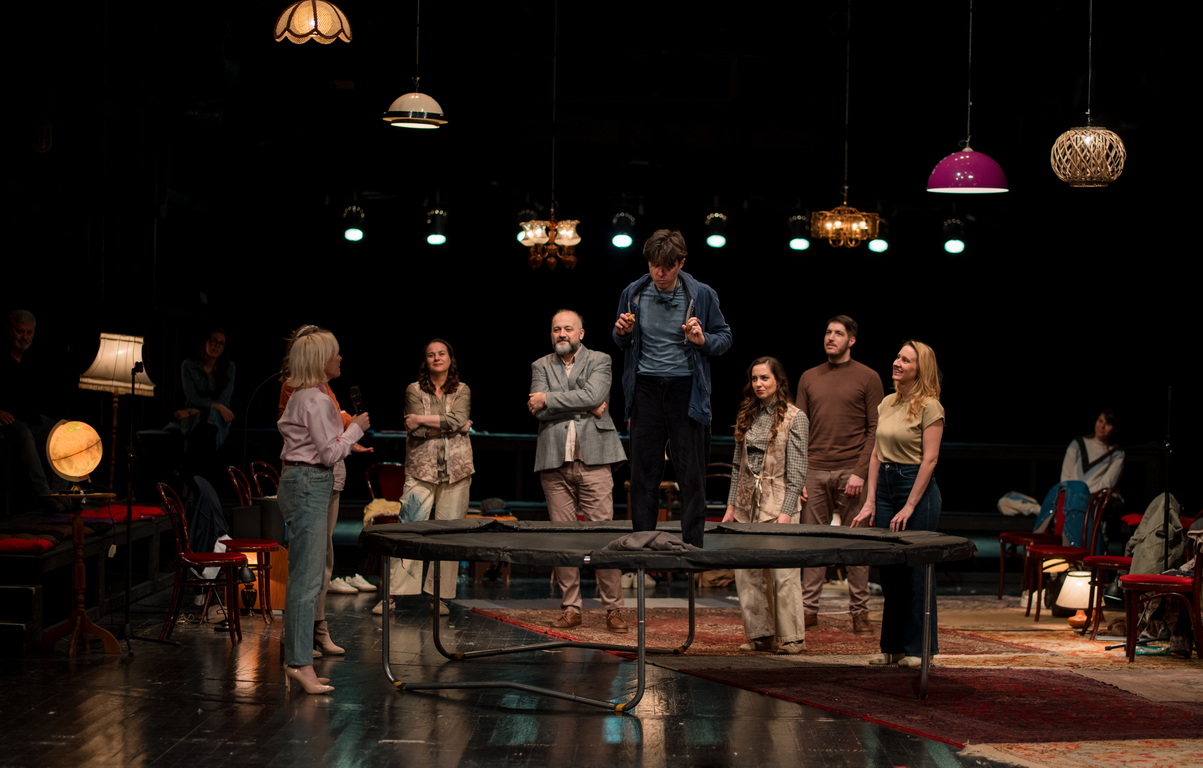
The production presented on the festival’s second day, between the two ecologically themed performances, functioned almost as comic relief from the seriousness of the rest of the program. Order of the Day, produced by Het NUT and Qendra Multimedia, is a cabaret-style performance that is always created within a single day, regardless of where it is staged. This time in Prishtina, director Greg Nottrot worked with an ensemble of Dutch and Kosovan actors and playwrights who met in the morning to decide which recent news events they would adapt, then spent the day staging them before performing the show in the evening. The result was a production that was both intentionally comical, through the sketches devised by the ensemble, and unintentionally funny in moments when improvisation or unexpected mishaps emerged during the performance.
Qendra Multimedia has consistently sought to introduce artistic approaches that are needed but absent from the regional cultural scene, whether through provocative socially engaged theatre or art that contributes to post-war reconciliation. Through this year’s Polip Festival, it offered audiences possible ways of thinking about ecology through theatre.
For more info on Qendra Multimedia, visit: qendra.org

Borisav Matić is a critic and dramaturg from Serbia. He is the Regional Managing Editor at The Theatre Times. He regularly writes about theatre for a range of publications and media.
He’s a member of the feminist collective Rebel Readers with whom he co-edits Bookvica, their platform for literary criticism, and produces literary shows and podcasts. He occasionally works as a dramaturg or a scriptwriter for theatre, TV, radio and other media. He's the administrator of IDEA - the International Drama/Theatre and Education Association.