Dodona Theatre, Prishtina
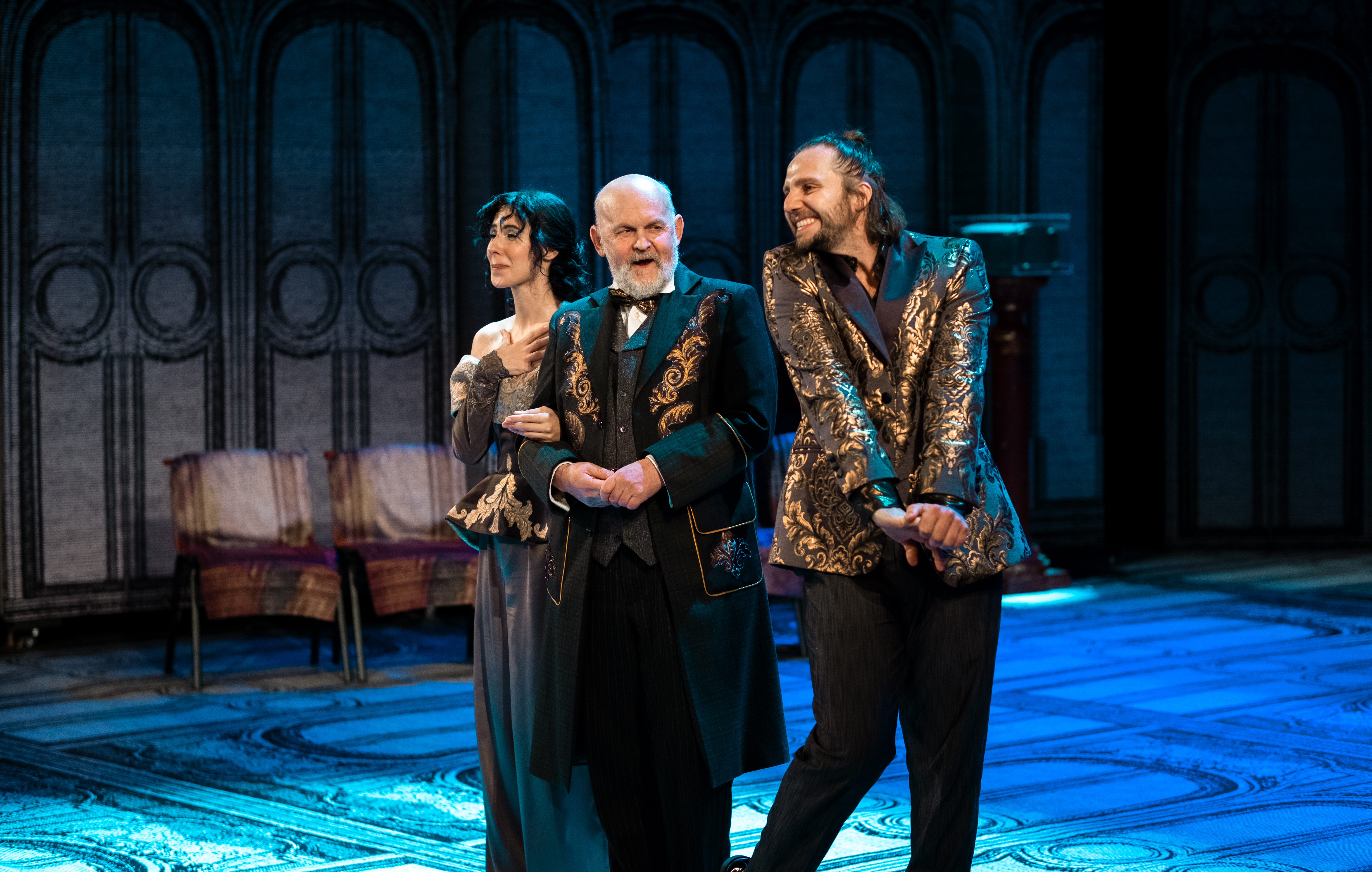
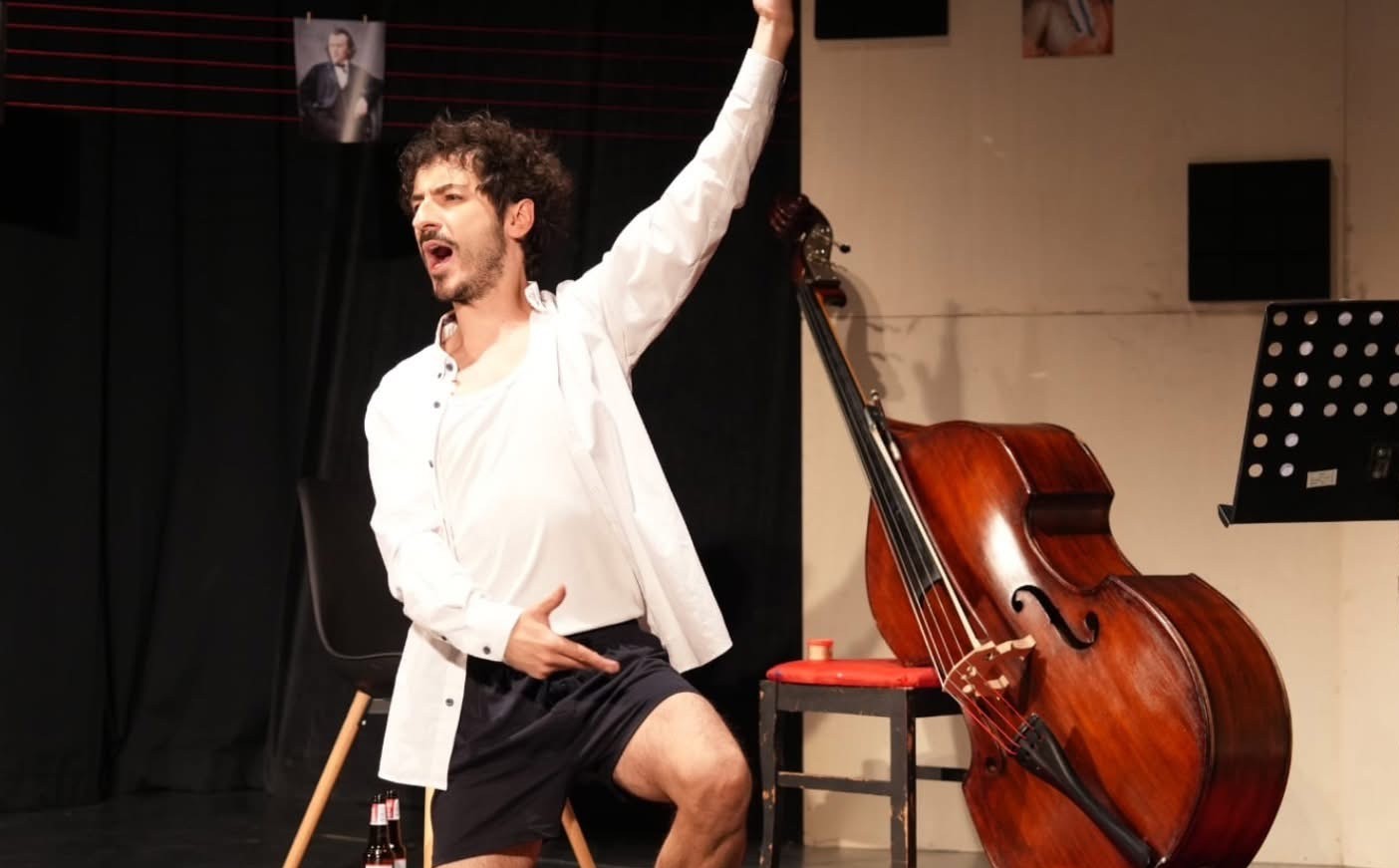
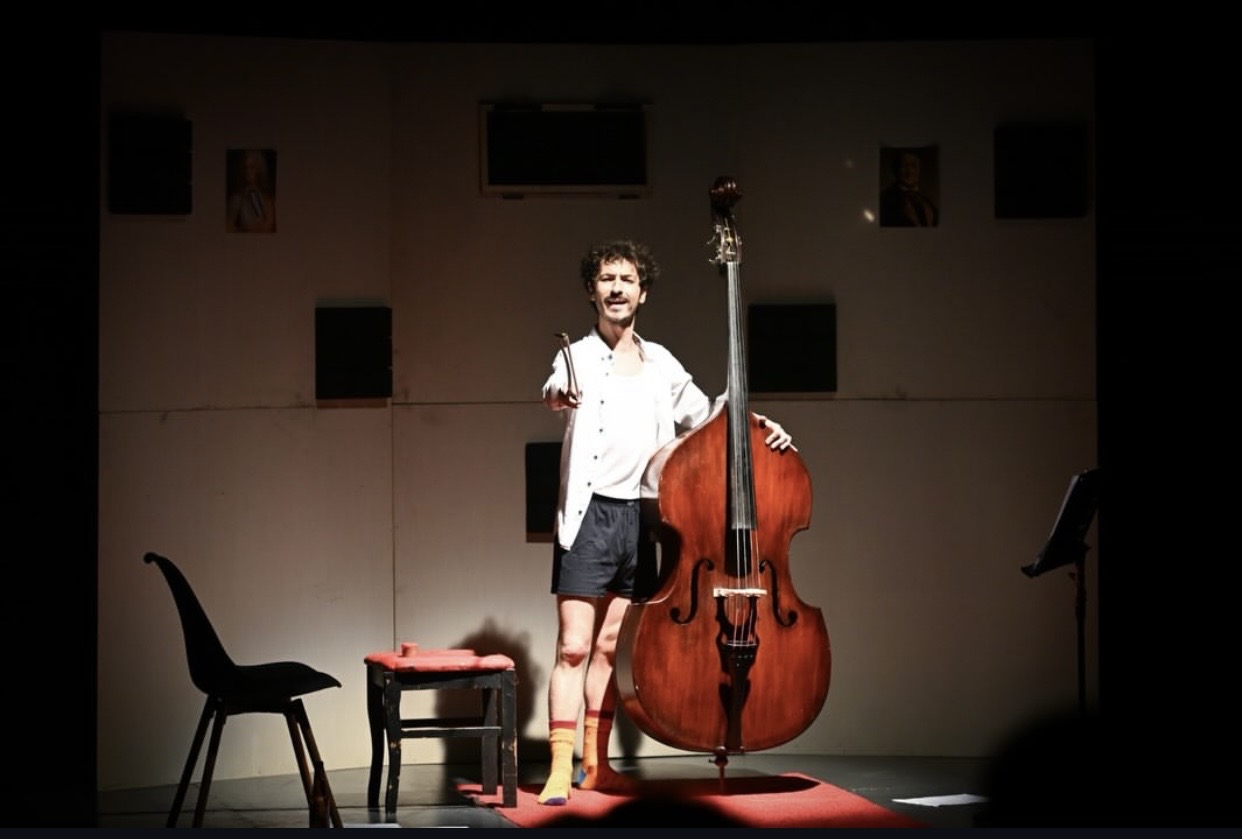
A young man, played by Alban Goranci, sits next to a red double bass. He roams about his apartment in his underwear and an unbuttoned white shirt, an outfit that projects both comfort and negligence. Prancing around, he embarks on a lengthy lecture about the secret wonder that is the double bass. Musical jargon is merged with his passion for the instrument and what it represents. He explains that he plays the double bass in a large orchestra – a secure job with a steady, albeit meagre, income. That ought to make a person happy?
Der Kontrabaß is a 1981 monologue by German writer Patrick Süskind, adapted by Alba Blakaj, directed by Ben Apolloni and staged in the intimate Dodona Theatre. It’s a show well suited to the space. Halfway through the play, the protagonist starts to share his childhood stories. ‘My mother loved my father, my father loved my sister, and nobody loved me’, he says with a teary smile. He discusses the lonely nature of the double bass compared to other instruments in a classical orchestra. Every aspect of his personal and professional life seems to relate in a profound way.
There is also unrequited love, too. Our narrator is in love with Sara, a beautiful soprano who appears to be unaware of his existence. As he explores the unlikely potential of a romance with her, he imagines the words he would say to her to the point of delirium, sat on the floor, eyes glued to the carpet. Simultaneously, his initially proclaimed love for the double bass (often interchangeable with Sara in his mind) slowly turns into a show of hate, first hazy, then intense. It’s quite bizarre to witness the shift from attachment to detachment, to see something with which he was so intimately connected become the object of his resentment.
The Double Bass
At times, the monologue has the quality of dialogue, as Goranci addresses the audience with questions and innuendos that almost prompt the public to answer. In so doing, he creates a connection. There’s a both a warmth and sadness to his performance. Complaining of a dry throat, he downs bottle after bottle of beer, which seems to be a regular occurrence for him. Toward the end, Goranci suits up in a tux. It’s not clear whether that is a failed attempt at cleaning up his act or preparation for a concert. Whatever the case, he soldiers on.
The Albanian translation and adaptation of Süskind’s text by Alba Blakaj is commendable for its clarity and flow. A one-man show is a hard task to take on for any actor but Goranci performs the role with poise. He opens up the character’s bittersweet inner world. The double bass lies regally in the middle of the stage the entire time, its curvy shape bringing to mind a model sitting for an 18th century oil painting. Goranci swirls around the space singing songs of praise to his beloved instrument. He moves with the grace of a dancer. At one point, he picks up the bow and plays a few notes that float about like gloomy bees. It’s an unusual soundtrack to his monologue as the playing is off-key, but it seems to sit well with the overall disposition. Sometimes he stops abruptly and silently distances himself from the bass without explanation, leaving the audience to wonder why.
Ben Apolloni’s directorial touch is light but firm, He also selects the soundtrack selection. Portraits of Mozart, Beethoven, Haydn and Wagner hang around the room, their music chiming in at pivotal moments of the play. Apolloni ensures the contours of the story are always clear and the staging clean although not simple. It’s a deeply heartfelt piece, an account of a friendless and loveless existence performed with delicacy and warmth.
Credits:
Author: Patrick Süskind// Director: Ben Apolloni//Soundtrack selection: Ben Apolloni// Translation: Alba Blakaj// Costumes: Dardana Goranci Iluyaz// Bass trainers: Rona Maloku, Olta Beqa// Lights: Skënder Latifi// Scenography// Bedri Maloku, Fadil Bekteshi, Albert Gashi
Cast: Alban Goranci

Bora Shpuza is a literary translator and freelance art reviewer based in Prishtina,