Belgrade Drama Theatre, premiere 14 March 2026
The European Union, with its ‘Western values’, is often seen as a salvation for the poor, conservative Balkan countries who have yet to join it. Or at least that is what a portion of the local population believes. In recent years, debates over the region’s place within Europe have intensified, as EU accession talks stall and questions resurface about what integration might actually bring. Is it a promised economic growth or a lost sovereignty, identity, and the risk of new dependencies? Whether European integration is truly the solution for societies grappling with corruption, economic hardship, and the legacies of socialism, or whether it simply trades one set of contradictions for another, is at the heart of Black Gold, a dramatic experiment by the Macedonian playwright Dejan Dukovski, directed by one-time enfant terrible Oliver Frljić.
Black Gold begins in a situation where everything has already been lost. The house is dilapidated. The family has disintegrated. The estate has collapsed. There is no money. Debts are mounting. Bailiffs are closing in. The system does not function. The state apparatus has become indistinguishable from a mafia that robs and destroys people who have nothing left to extort.
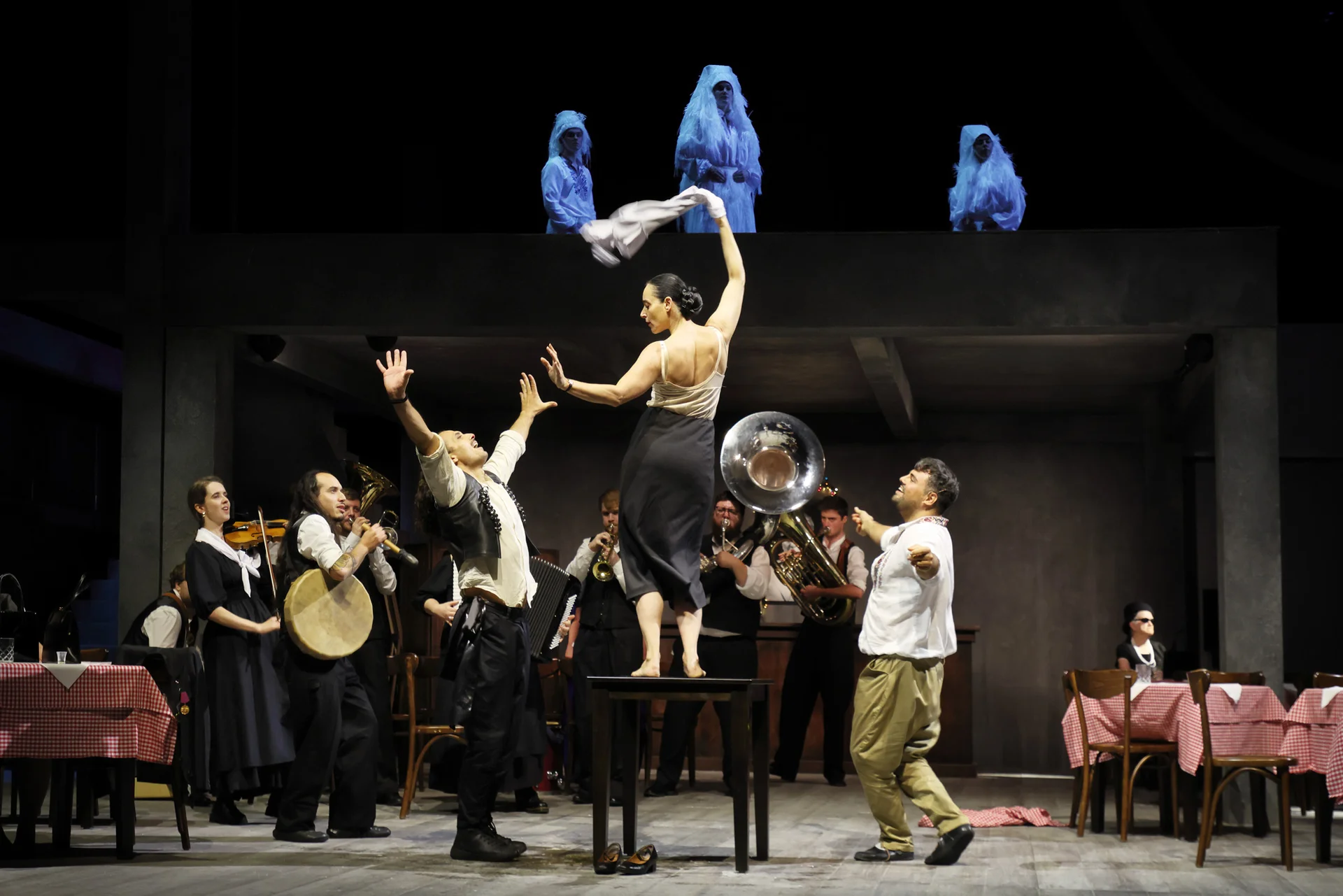
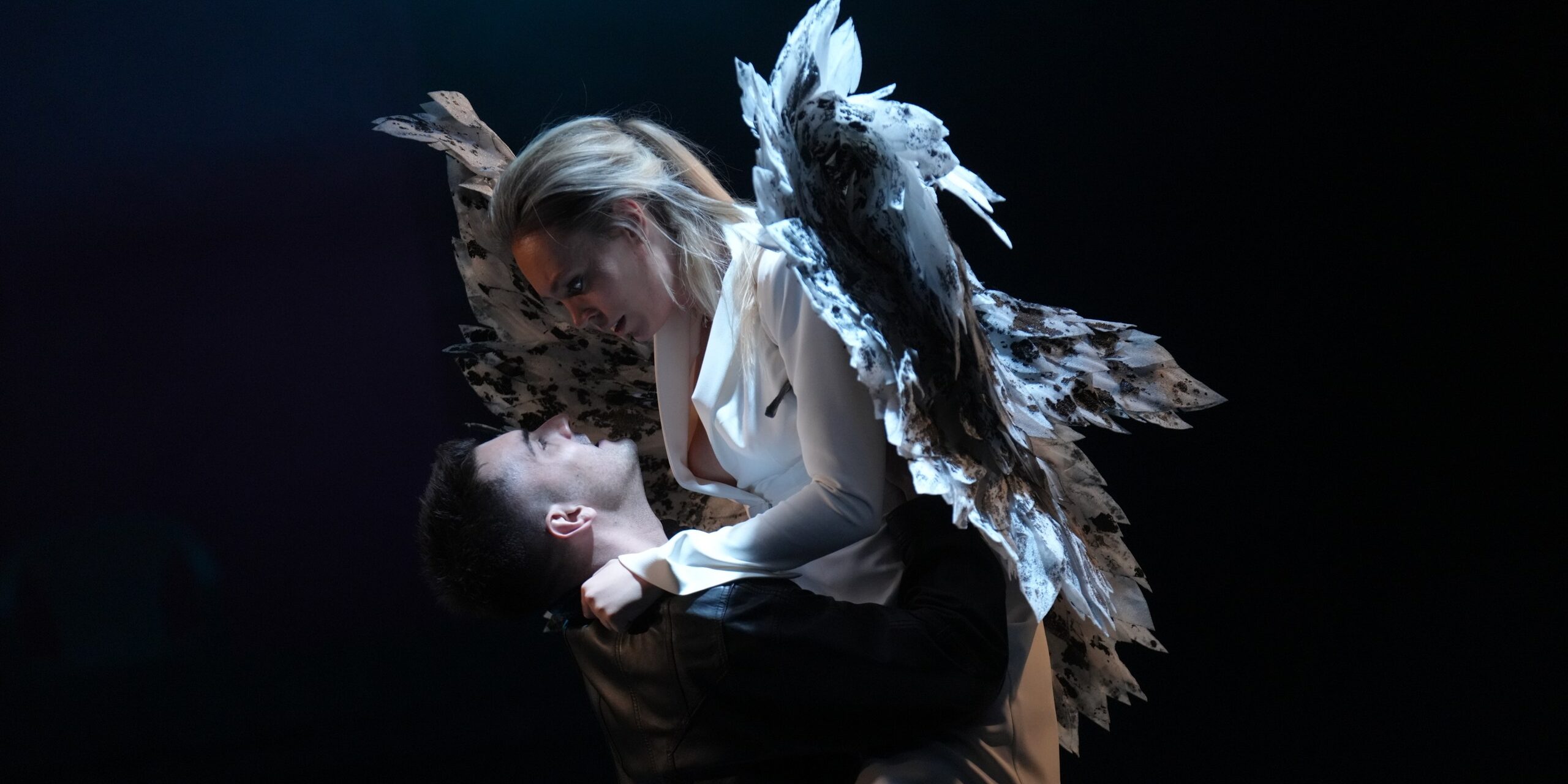
Into this grotesquely rendered situation, where humour and brutality sit side by side as in a Kusturica movie (which the production references) descends Angela, with wings like an angel: an investor with an inexhaustible source of money and an unbreakable will to raise this Balkan nowheresville from the ashes, a place that once cast out her because of her queer identity. Her desire to close one chapter of her life reveals the conflicts of the Balkan collective, embodied in a series of imposed or desired transitions.
The fields of black gold owned by her family, where poppies, oil, and opium were once cultivated, point toward the post-socialist economic transition. A generational transition appears between disoriented parents, trapped in memories, denial, and destructive habits who are in the conflict with their daughters Kata and Angela, who speak the language of investment and adaptation. Angela has also undergone a transition. She was once Angel, a victim of violence; now she is a person whose very existence her father stubbornly denies. A further familial transition lies in the collapse of the patriarchal model and the uncertain negotiations over new forms of kinship. A spatial transition emerges in the attempt to turn the ruined home into a commodity. Together, these elements crystallise into a failed political passage from one system into another that is neither socialist nor liberal, but a hybrid of corruption, private interest, the defeated individual, and the commodification of bodies and property.
Dukovski attempts to contain this web of literal and metaphorical meanings within the framework of a four-member family. The drama accumulates so many social contradictions that their sum occasionally approaches the point of opacity, posing a serious challenge for stage articulation.
Black Gold (Crno Zlato), Belgrade Drama Theatre
Oliver Frljić, a director associated with blunt and provocative political theatre, proves himself a formidable artist here precisely because he does not appear in his familiar guise of a destroyer of the fourth wall and an aggressor against audiences through incendiary interventions. Instead, he largely turns toward more conventional methods of animating the dramatic text. This does not mean restraint. His signature remains politically charged and conflict-ridden, only not in the way audiences remember his project Zoran Đinđić from 2012, when he last worked in Belgrade. Then, actors with bloodied hands accused spectators of complicity in the prime minister’s death, while some viewers stormed out in outrage. Once again, Serbian society is charged with responsibility for its own fate, but this time through the form of classical dramatic characters and a network of symbols that feels far less invasive than the poetics for which Frljić became famous.
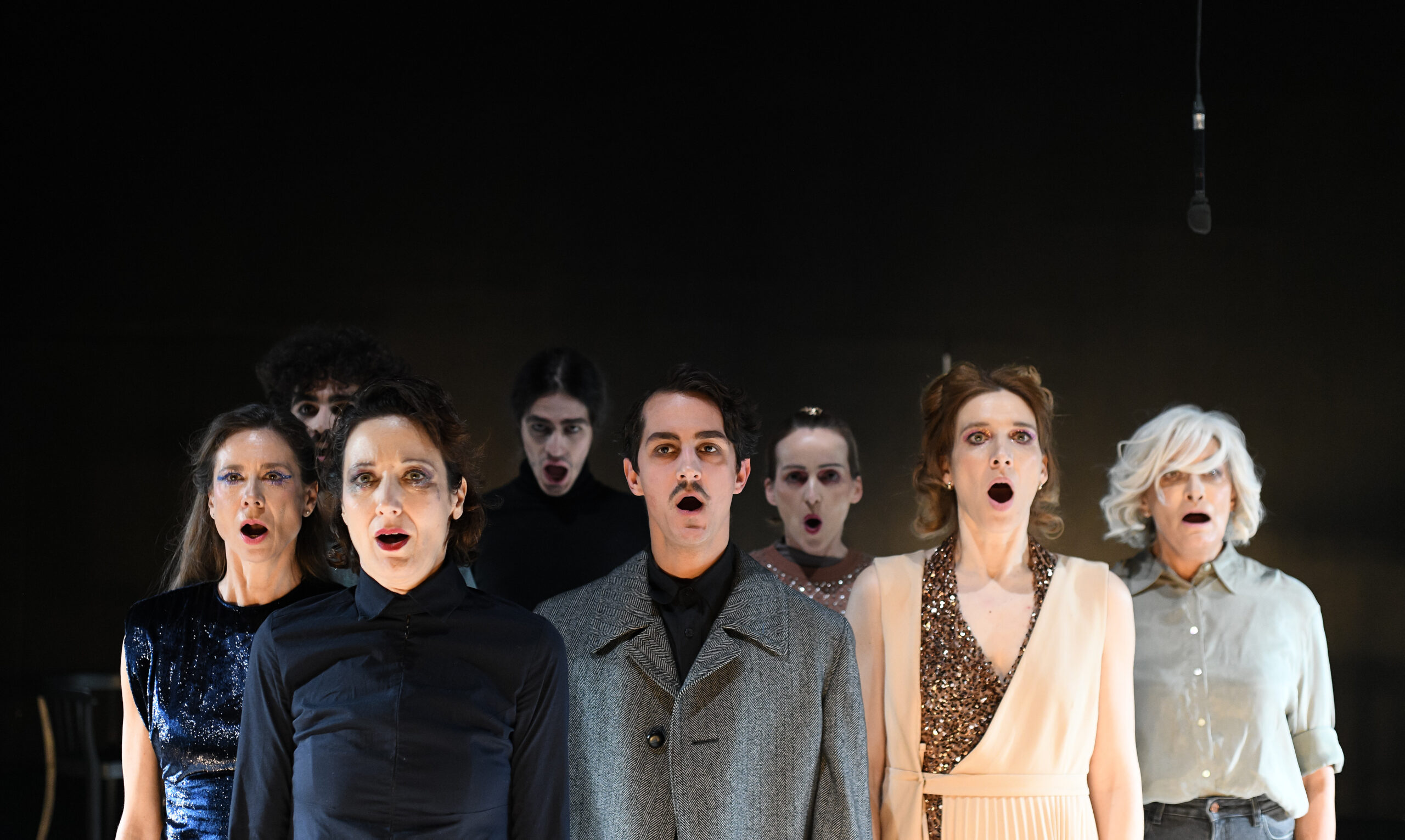
One particularly striking scene involves a corrupt bailiff: after the line that every state has its mafia, but only here does the mafia have its state, the performance freezes as the actors stare into the audience and the house lights come up. Beyond such interventions, Frljić remains within recognisable territory, yet with greater artistic maturity and dynamism than is usually found in the repertory productions of Serbia’s institutional theatres. The direction is brisk and playful, scenes shift furiously, symbolism unfolds gradually, and there is evident committed work with the actors, who demonstrate creative solutions and are encouraged to improvise. His return is provocative in another sense as well: it withholds what is expected of him and offers instead what we already have, only refreshed and technically more accomplished.
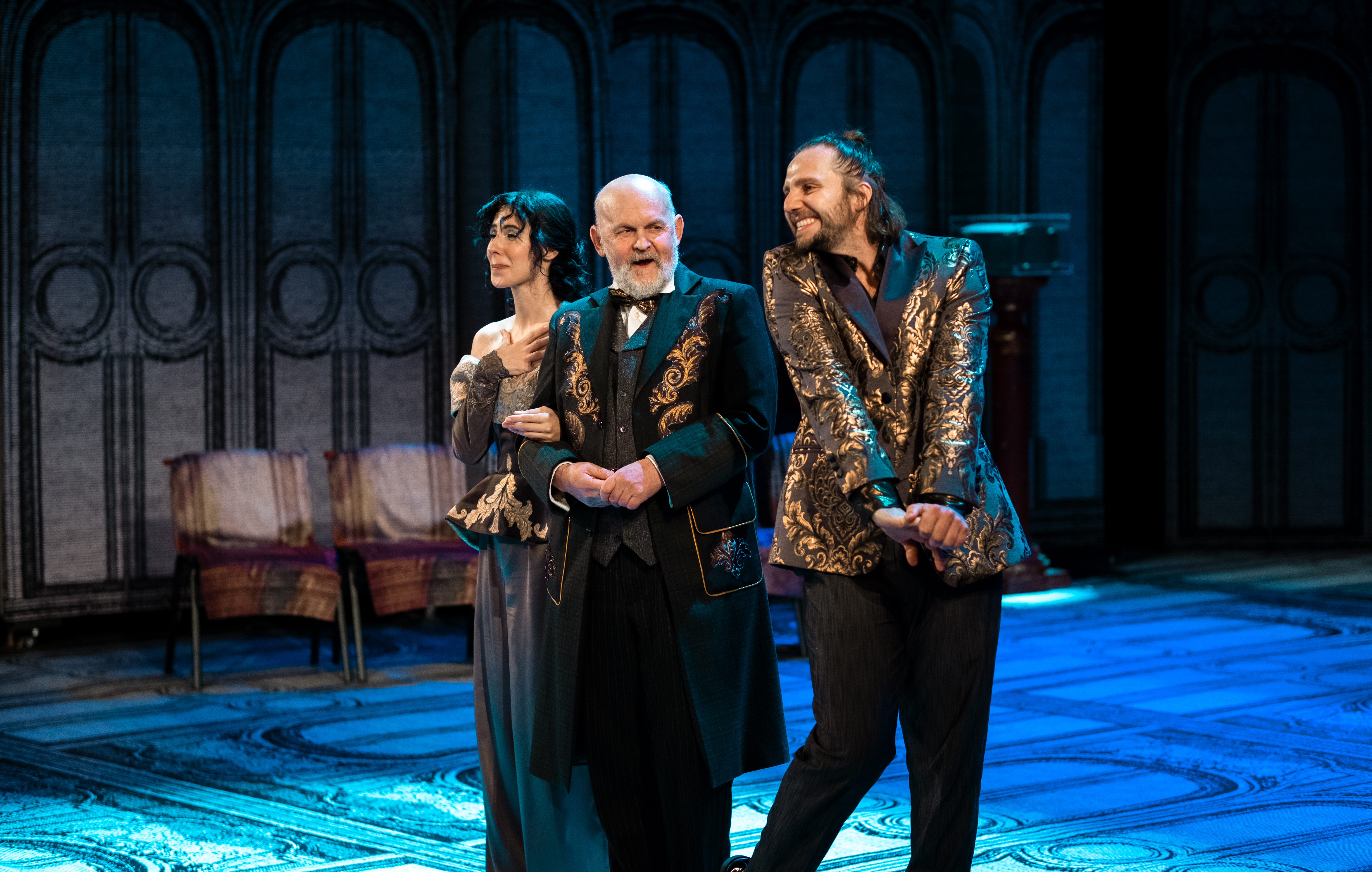
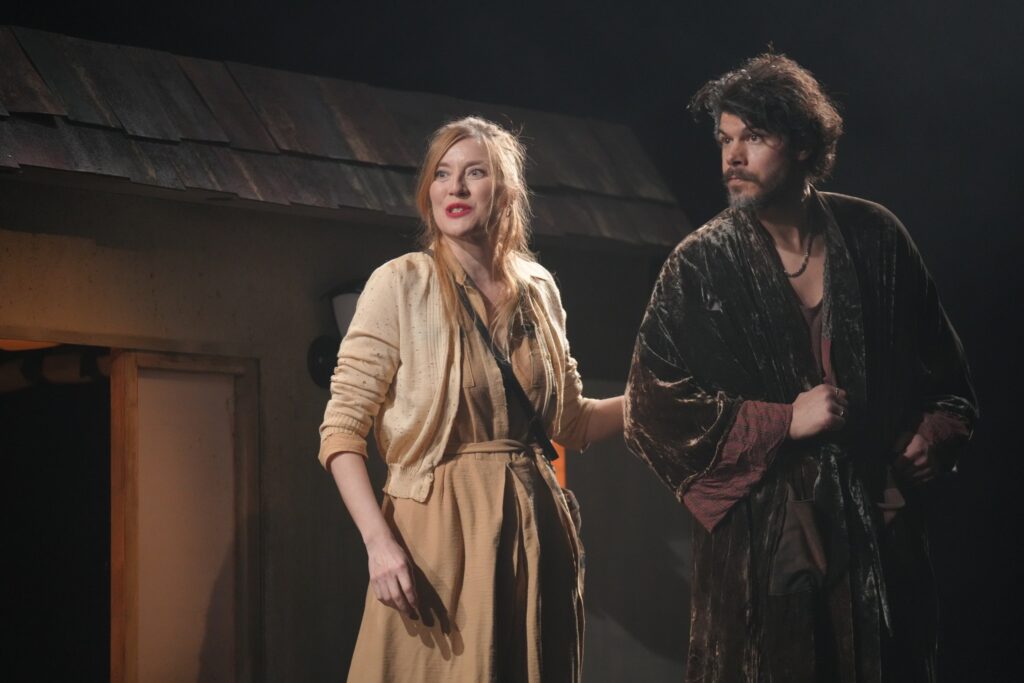
The backbone of Igor Pauška’s set design is a movable boarding-house structure in which no one can stand upright: people wriggle into it and crawl out of it not only through tiny doors but through windows as well. Reduced to crawling through their own living space, father Dimitrije in a worn-out dressing gown and mother Mara in a cheap market sweater, the impoverished parents vent their internalised social trauma on their daughter Kata, who carries herself in an almost militant, masculine fashion, while the child they once rejected returns as a transgender woman.
Milutin Milošević, as Dimitrije, commands the stage with stubborn patriarchal dogma. He recoils from everything outside the value system that shaped him and regards emotion as weakness. As Mara, Nataša Marković carries everyone’s emotions through song, sorrow, care, and pain. Together, they vividly illustrate a diabolical alliance of damaged personalities perversely completing one another through swearing, sex, and drug abuse.
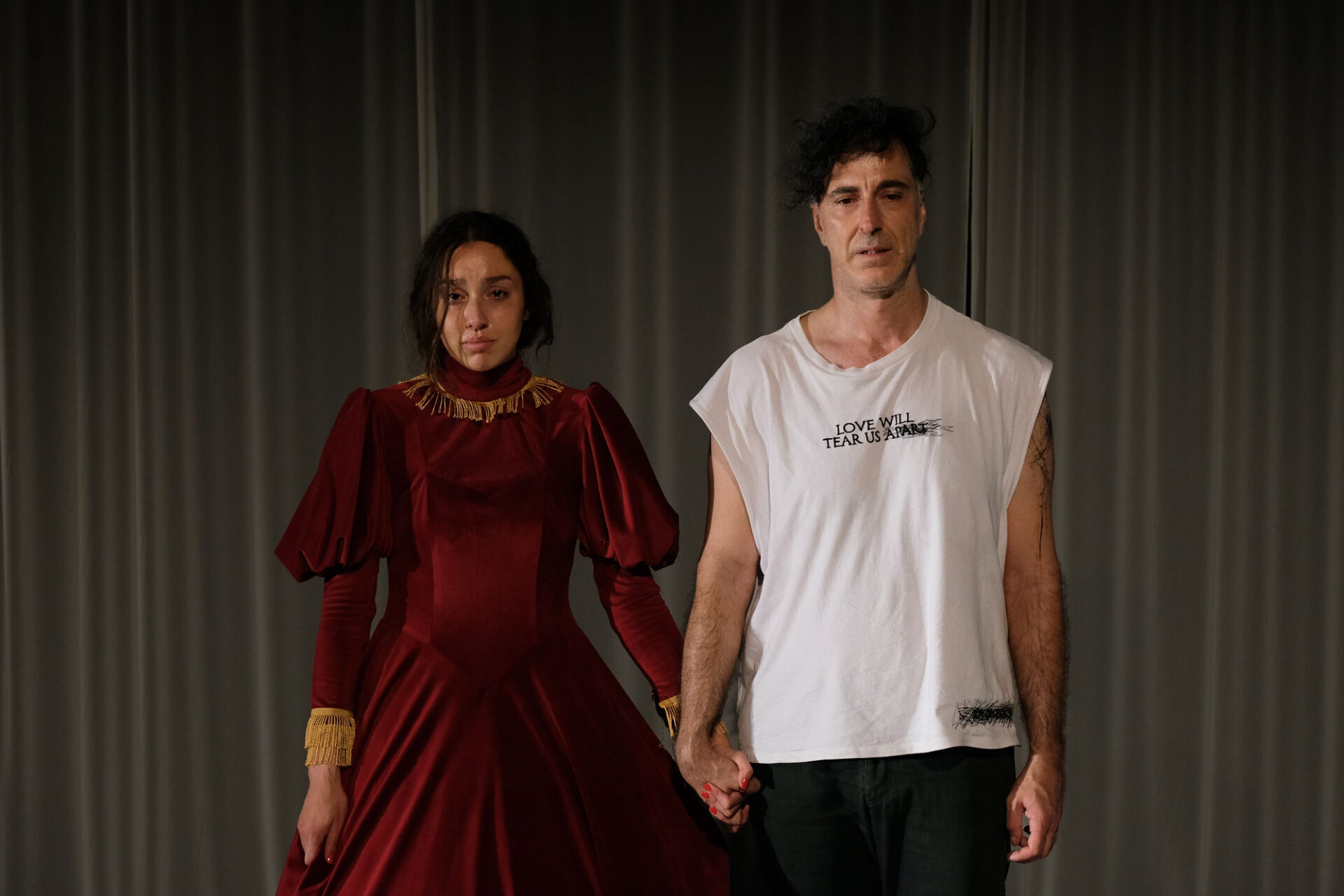
In their attempt to build a viable future out of their parents’ devastated inheritance, the two daughters undergo a new inversion of gender roles. Hoping to marry Semir, a fraud and opportunist played by Amar Ćorović, Kata, convincingly portrayed by Jana Milosavljević, accepts a submissive feminine role, puts on a dress, and prepares to surrender herself to a man who sees only material gain in her. Opposite her, the magnificent Anja Ćurčić as Angela, after taking revenge on her rapist Baraba and experiencing financial power, increasingly discards feminine fragility and adopts the behaviour of the very brutes from whom she fled to Europe. As the central figure through whom all thematic layers of the play intersect, Ćurčić handles an exceptionally complex acting task with ease. She constructs her relationship with each character precisely, variably, and convincingly, displaying a finely tuned command of emotional and semantic nuance.
Bojana Stojković, as the Bailiff, not for the first time, conquers the stage, establishing dominance through a blitzkrieg of self-assured comic weaponry that never runs out of ammunition. When she fires, the audience listens. Ljubomir Bulajić, through more restrained means, portrays the drunken Baraba, a violent man feared by all, until Angela’s vengeful assault transforms him into a repentant lover – only one of several moments in the production that may prompt a more attentive spectator to question its rigid treatment of stereotype.
Gender roles in this production function, above all, as dramaturgical positions through which the values of a “progressive” West and a “conservative” Balkans are distributed. Changes in behaviour follow the flow of money, making capital the true motivator of many relationships. At the same time, the production sidesteps the fact that colonial and exploitative models of investment often participate in the production of poverty, while those same flows of capital frequently sustain repressive regimes inclined – at the very least – toward the cultural degradation of society. Black Gold suggests that money from the West cannot redeem a society immersed in a culture of violence. No investment can cure inherent barbarism and that makes everyone here simultaneously victims and agents of their own ruin.
The tragic ending, in which father and daughter commit suicide together, shifts the burden of guilt further onto relations among ordinary people who will, supposedly, destroy themselves one way or another. Such a defeatist diagnosis reduces a complex story to the commonplace of a local bourgeois dogma of inherent incorrigibility, preventing blame from being directed toward colonial interventions too easily perceived as a salvation. The direction does not register this problem either, instead it reinforces the neatly rounded drama through the repeated appearance of a grotesque rat in human form, with mousetraps attached to its mutilated body as if it had trapped itself. The production is therefore powerful in its imagery, rhythm, and acting energy, yet in its final meaning, it confirms the ideological weaknesses of the text that the Frljić we know from the past would likely recognise and ruthlessly expose.
For more information, visit: bdp.rs
Further reading: Interview with Oliver Frljić: “Theatre is what happens in the heads of the audience”

Andrej Čanji is a theatre critic and theatrologist based in Belgrade.