Premiere 11 February 2026
Is this a monodrama, a comedy stand-up or a roast? Is he an actor, a comedian, or an influencer? Is this art, commercial entertainment or a provocation?
Kerim Čutuna has been polarizing Sarajevo’s artistic scene for about a year now. All he did was start posting videos of himself on social media, in which the professional actor impersonates people who mock him for working at a local fast-food branch of a well-known kebab chain. What started as a single Instagram reel quickly evolved into a series of sharply observed comedic sketches built on imitation, exaggeration, and a keen ear for everyday speech.
He soon became somewhat of an internet phenomenon, gathering nearly 80,000 Instagram followers. This online success translated into theatre: Čutuna developed his viral persona into Nebitno (Unimportant), a 90-minute satirical one-man show, which is both written and performed by him, enhanced by the directional vision of theatre and film director Alen Šimić. The sneak preview at Tershouse sold out completely and is soon to be followed by a national tour across sixteen cities in Bosnia and Herzegovina set to begin on April 10 in Gračanica.
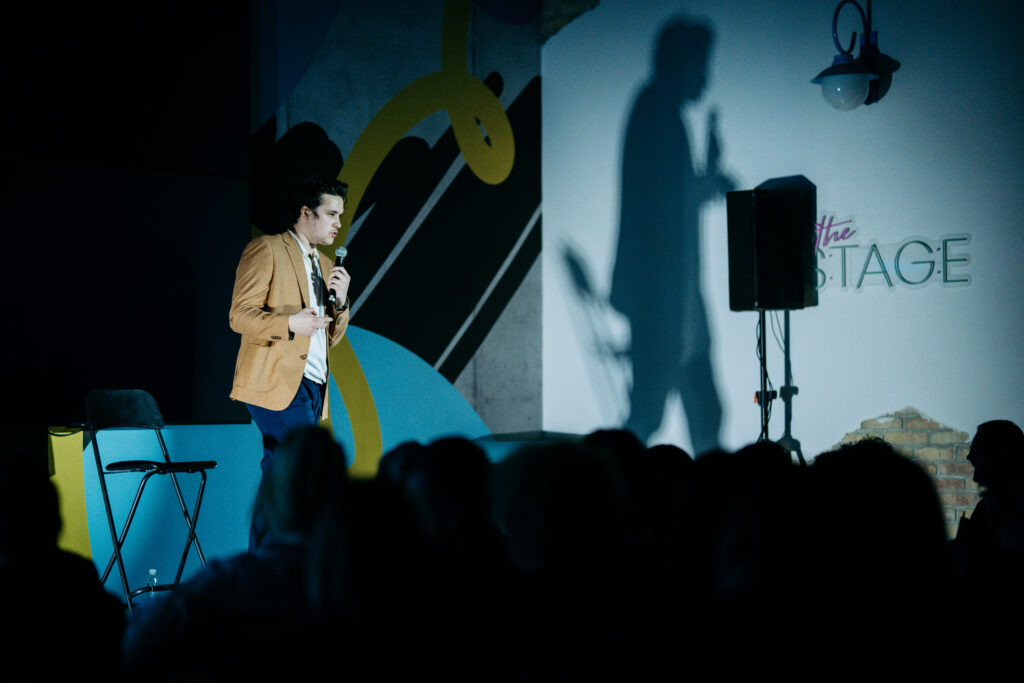
The atmosphere at Tershouse resembled a modern-day variété, bathed in bluish-lilac spotlights, with electronic cigarettes filling the air with smoke and the scent of the evening’s sponsor, IQOS. Originally, Nebitno was scheduled to premiere at the Sarajevo War Theatre, but the staging was cancelled for’ sociopolitical reasons’. Čutuna refers to this repeatedly throughout the performance. It is indeed ironic that a show like this—one that has stirred debate over whether it qualifies as theatre or not, and was deemed unsuitable for a theatre stage—is now premiering in the main hall of a co-working space. Nevertheless, this does nothing to diminish Čutuna’s enthusiasm. Especially when one takes into consideration that the official Sarajevo premiere of Nebitno, set in June this year, will take place at the Bosnian Cultural Center (BKC), one of the city’s most significant venues for cultural events.
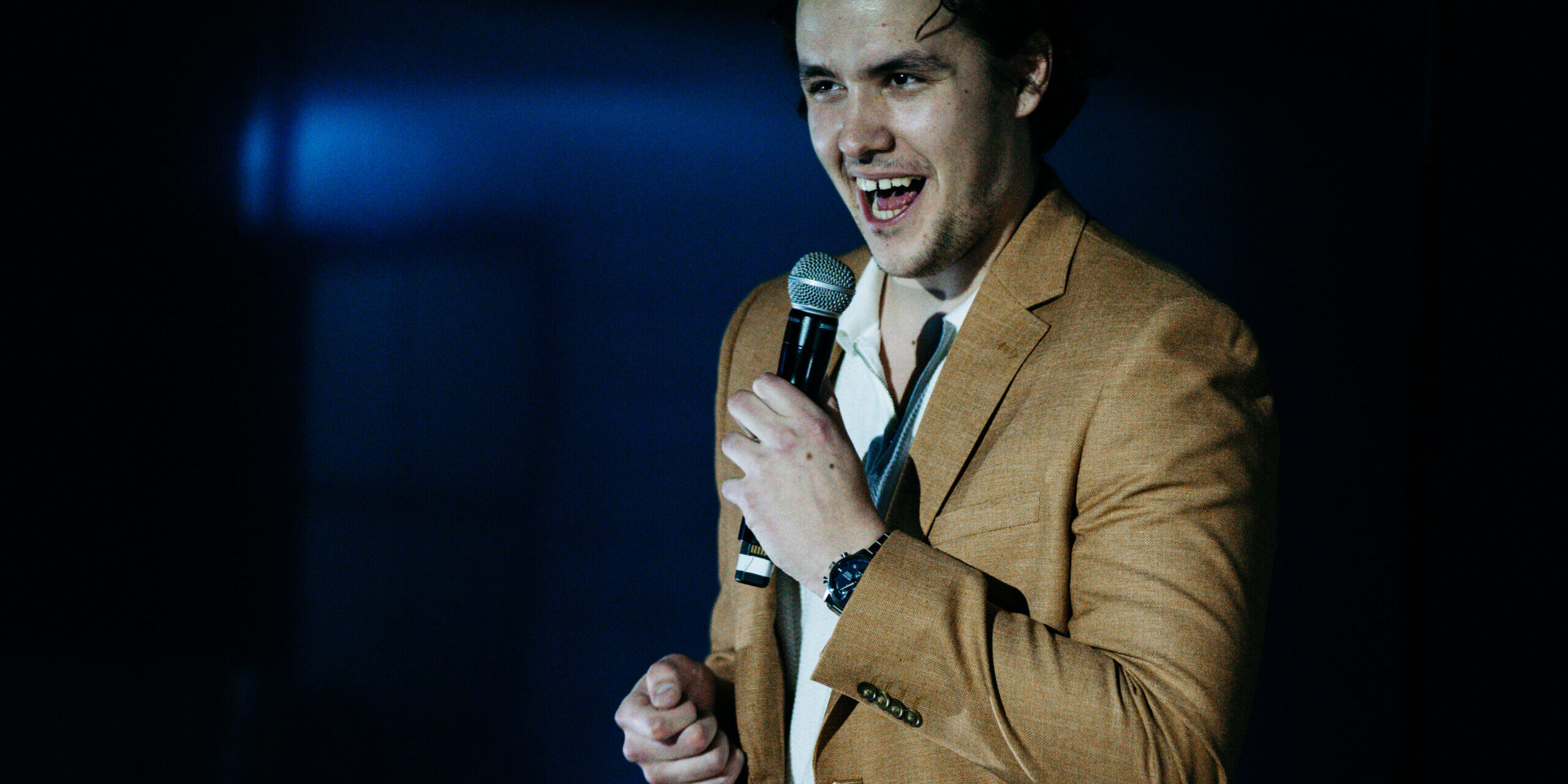
As Čutuna enters the stage, he is visibly nervous. His costume consists of a beige blazer, dark chinos, and polished shoes, clean as a whistle. The scenography is minimal: a single chair, which will later play a vital role in the third act of the performance.
Nebitno is built on character studies. Čutuna examines the people around him—their gestures, speech, and mannerisms—and distills them into vivid stage portraits. What comes alive are instantly recognizable social types: the snobby artist, the pretentious critic, the overzealously “good meaning” acquaintance. Most strikingly, he impersonates no other but himself: the supposedly rundown actor, condemned to slice kebab meat in a fast-food restaurant. In these moments, his humour is sharp, self-aware, and fearless. He demonstrates a key quality of great comedians, which is the ability to make a spectacle of oneself without losing depth or nuance.
Nebitno
Then again, his imitation goes beyond simple parody. He does not merely mock; he conjures archetypes, in the tradition of Theophrastus, capturing universal traits and exposing their absurdities such as those of the coward, the flatterer and many others. The audience’s broad laughter and blustering applause in between acts speak for itself: it is recognition, identification, and delight all at once. In Bergson’s terms, the comedy arises from this collision of the familiar and the exaggerated, the recognizable and the performative. Čutuna succeeds to apply this principle with vigour and a contagious joy of playing.
The title of the performance, Unimportant, references Čutuna’s recurring catchphrase—one he deploys throughout his online sketches. On stage, however, the phrase acquires a different weight. What is declared “unimportant” in the digital sphere—fleeting, humorous, disposable—becomes, in the theatre, a site of attention and duration. The ephemerality of the reel is replaced by the persistence of presence.
Čutuna confounds expectations precisely because he operates in the gap where traditional definitions of performing arts begin to falter. The binary between high art and entertainment, between trained actor and content creator, no longer holds. And perhaps it shouldn’t. As Heiner Müller once suggested, theatre must resist stability; it must remain a space of friction, contradiction, and redefinition.
Yet Čutuna is not merely a product of social media virality. He is a trained actor, a graduate of the Academy of Performing Arts Sarajevo, with appearances in films such as “Deset u pola” (2021) by Oscar winner Danis Tanović, and in theatre productions like “Istina ili izazov” (2023) by Zoe Ibrahimović, staged at the Sarajevo War Theatre and directed by Alen Šimić—the same author that stands behind the one-man play Unimportant.
Despite these credentials, Čutuna is less widely recognized for his institutional work than for the label that followed him into everyday life: “a graduated actor working at a döner kebab shop.” Rather than retreating into self-pity, he did what his training had equipped him to do: he observed, distilled, and performed. All of the theatre reformers and theorists mentioned in this review are not invoked merely for name-dropping or to intellectualise Čutuna’s work, but to clearly illustrate what he is doing and how, as a trained actor, he draws on these principles to create something distinctly his own. He allegedly transformed “social embarrassment” into material. The mockery he encountered became a character which became a format which, finally, became a platform. What might have been perceived as failure was reframed as authorship.
This act of self-production is far from trivial. Self-sufficiency remains a near-impossible demand for artists working in underfunded cultural systems such as those of Southeast Europe. Čutuna’s trajectory suggests a model in which artistic agency is reclaimed through adaptability, where the boundaries between employment, identity, and performance collapse into one another. The result is not only visibility but influence: other professional actors from Sarajevo begin to follow his model, and opportunities emerge precisely because of this hybrid presence.
And yet, despite the apparent clarity of these facts, the local art scene seems uncertain how to categorize him. Is he “serious” enough? Is this theatre, or is it content? In the end, it is not he who fails to be categorized, but the categories that fail to contain him. In other words, what is needed locally is a broader understanding of the term ‘theatre’.
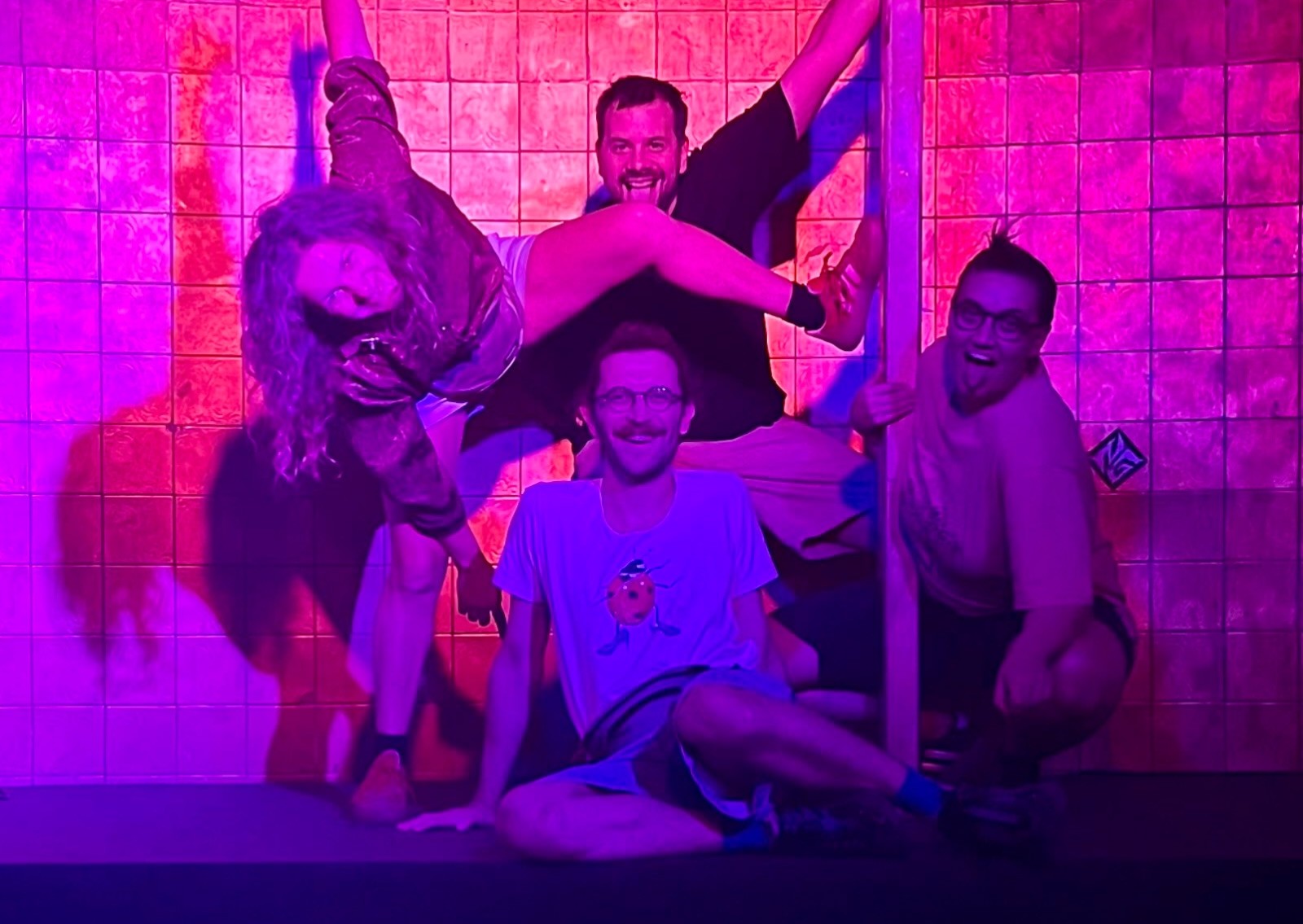
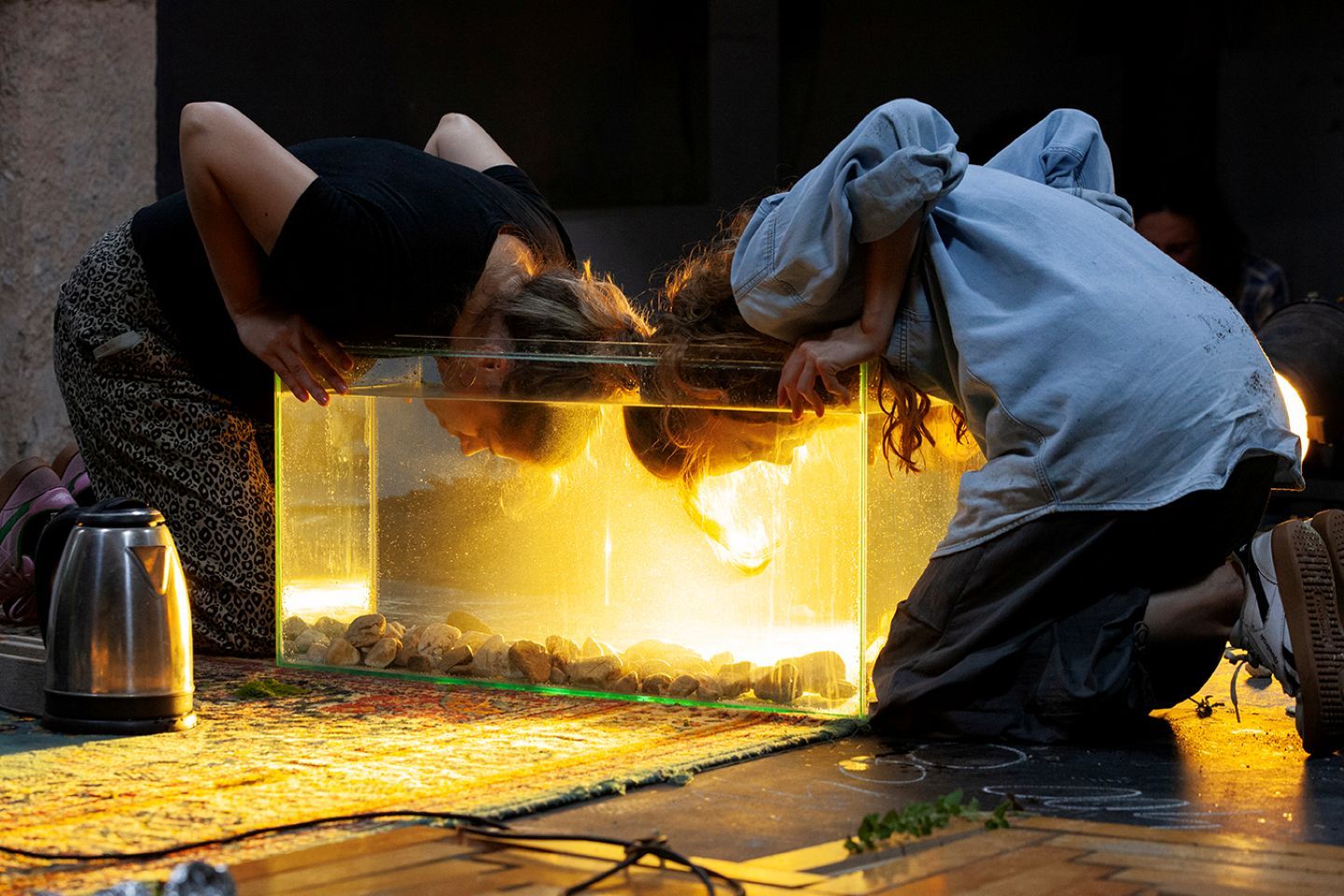
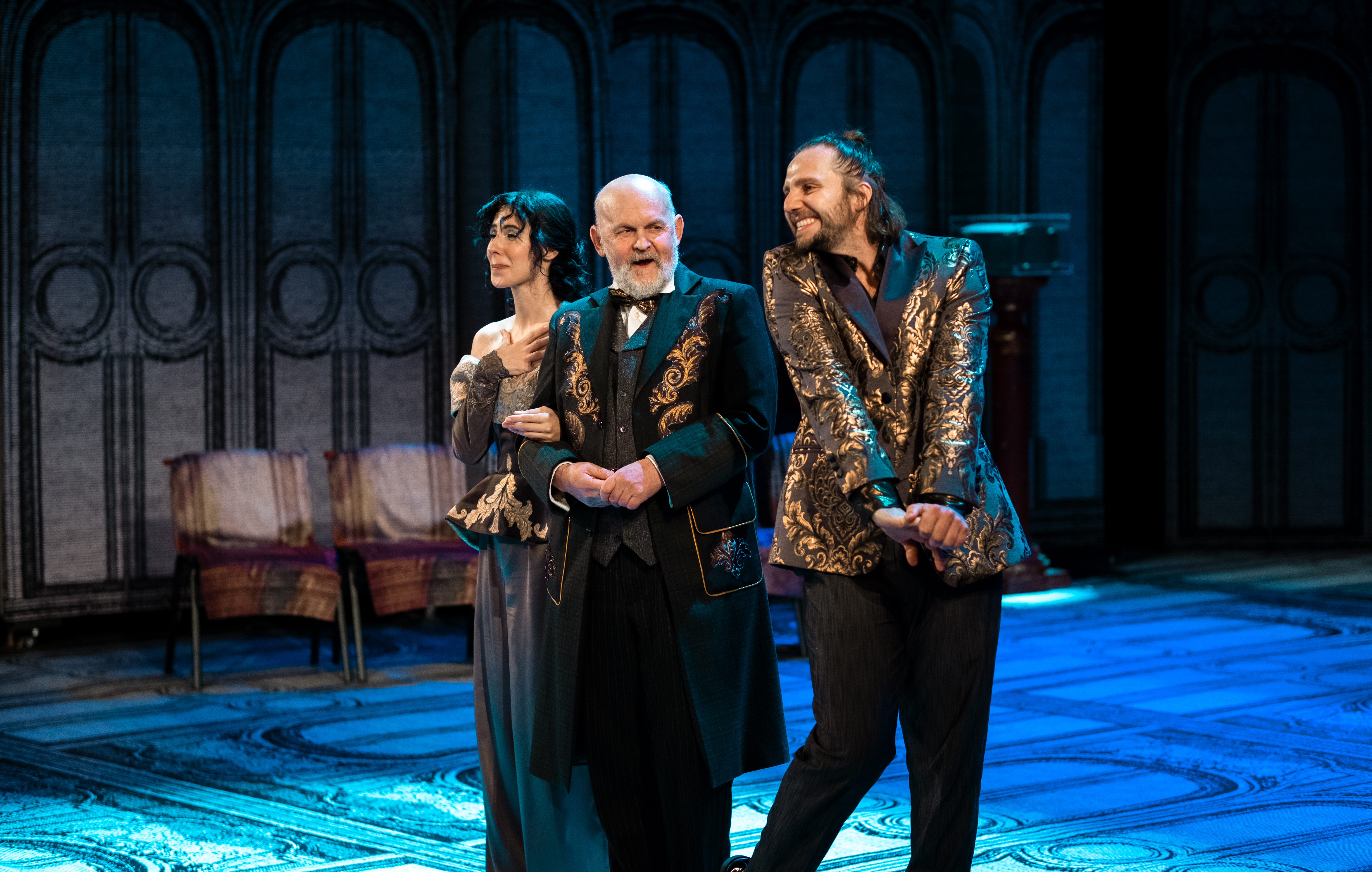
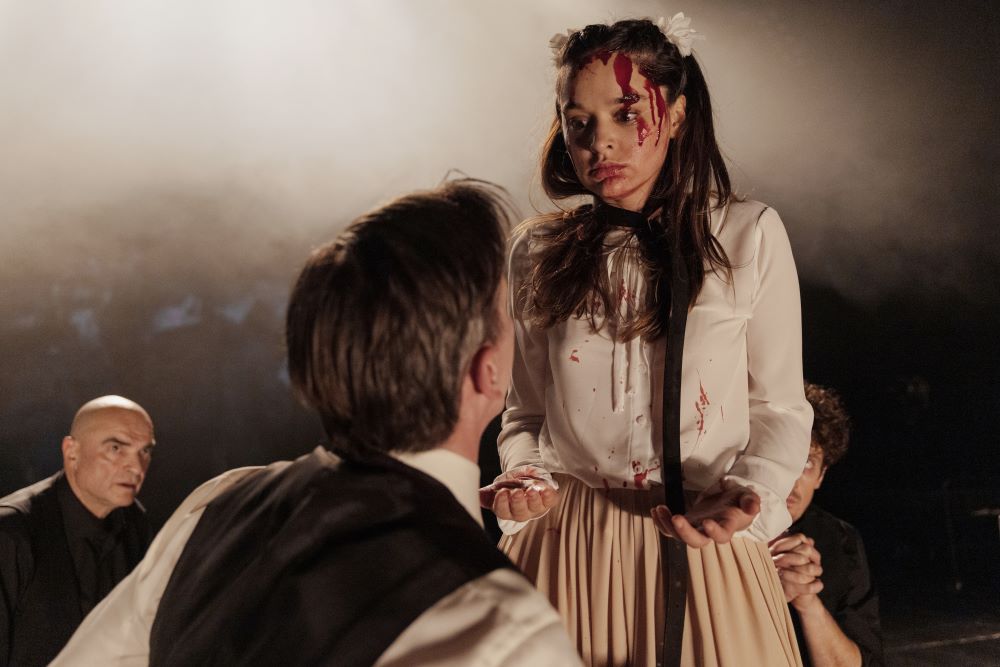
So—is this a play, a stand-up routine, or something else entirely? Perhaps one should rather ask: why insist on choosing? On Čutuna’s behalf, he has done the most outrageous and vital thing the arts can do: he has raised a hell of a lot of questions. Yet a text so entangled with such inquiries should not remain merely rhetorical—it must also be literate. To borrow the words of a man quoted almost daily at the Academy of Performing Arts—the alma mater of many creatives involved in the ongoing debate pictured above: “All that is needed for theatre is an empty space, someone to walk across it, and someone to watch.”
Credits
Director: Alen Šimić//Text: Kerim Čutuna
Performed by Kerim Čutuna

Berina Musa is a writer, dramaturg, and critic based in Sarajevo and Freiburg. She studied German linguistics, literary studies, and art history at the University of Freiburg and is currently completing a second degree in dramaturgy at the Academy of Performing Arts in Sarajevo. Her plays and short films have been presented at the Bosnian National Theatre Zenica, MESS, the Sarajevo Film Festival, and the Mostra Internazionale del Nuovo Cinema di Pesaro.