The inaugural Montenegrin Theatre Showcase took place from 13-17 May this year. Andrej Čanji reports on a diverse and varied programme that reflects the country’s increasingly exciting theatre scene.
The inaugural Montenegrin Theatre Showcase was marked by a fundamental contradiction. Contemporary Montenegrin theatre is developing a remarkably diverse artistic language, ranging from reinterpretations of dramatic heritage to postdramatic poetics and contemporary dance. These tendencies evolve simultaneously across a vibrant independent scene and well-organised public theatres. At the same time, the productions confront audiences with the realities of a society still shaped by patriarchal values, violence against women, corruption at different social levels, unresolved historical conflicts, most notably the nationalist wars of the 1990s, and the long transition that followed the collapse of Yugoslavia. Curated by Serbian theatre critic and theatre scholar Ivan Medenica, the Showcase made this duality clearly visible.
The performances portray a society still negotiating European integration while coming to terms with its own past. They also reveal a theatre culture whose artistic ambitions are closely aligned with contemporary European theatre, even as it continues to grapple with deeply rooted conservatism. Travelling through four Montenegrin cities (Podgorica, Cetinje, Budva and Tivat), the Showcase presented twelve productions created within very different production contexts, of which I saw all but two.
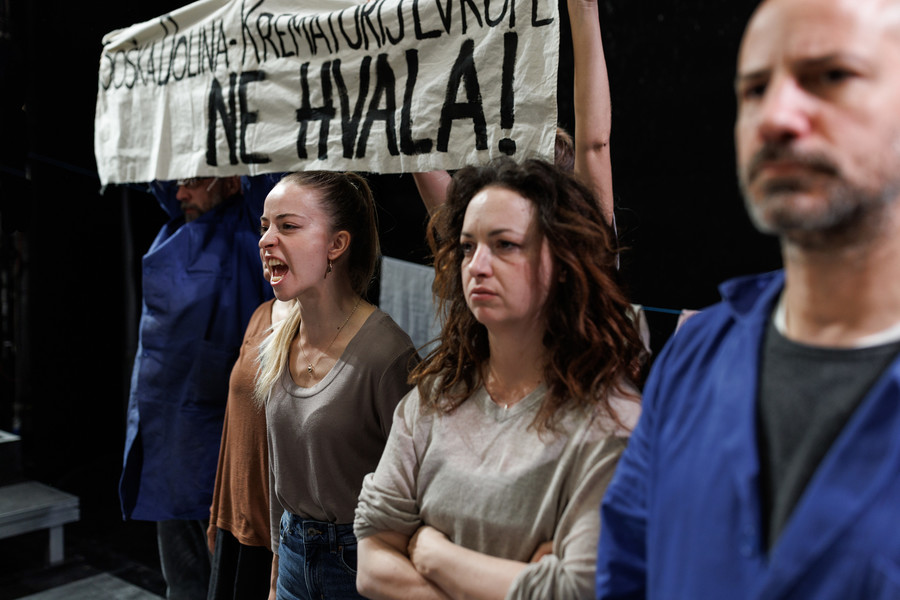
The Flipside, produced by the National Theatre of Montenegro, is an original project by Serbian director Boris Liješević. Structured as a sequence of episodes, it examines different aspects of contemporary Montenegrin society. Organised crime, the relationship between criminal networks and state institutions, the collapse of judicial independence, drug trafficking, prostitution and the marginalisation of political alternatives create the thematic framework of the performance. The Flipside illustrates particularly well the tendency of part of the Montenegrin theatre scene towards direct political commentary. Its characters are defined by their social roles (a dockworker, a local journalist, a criminal, a mother). They become the strokes with which the performance sketches a deliberately one-sided image of a corrupt society from which every possibility of change has been removed. A green-left political movement appears on the mafia’s payroll, while an ethical local journalist remains powerless in the face of corruption surrounding her on every side.
The dominant tone of the performance is one of profound pessimism. The intention was probably to provoke a desire for change through such an uncompromising portrayal of society. As the performance unfolds, however, every possibility of resistance is systematically eliminated. Each new scene introduces another form of violence and corruption. The accumulation of these motifs gradually weakens the ability of individual scenes to function as a critical mirror of society. By the end, the performance has enclosed its world within the defeatist conviction that social change is doomed to fail.
This points to another contradiction within contemporary Montenegrin theatre. In their determination to encompass every manifestation of social gloom, Montenegrin artists often add another layer of darkness. The result is a stage reality that appears even darker than the society from which it emerged.
Weeds, City Theater Podgorica
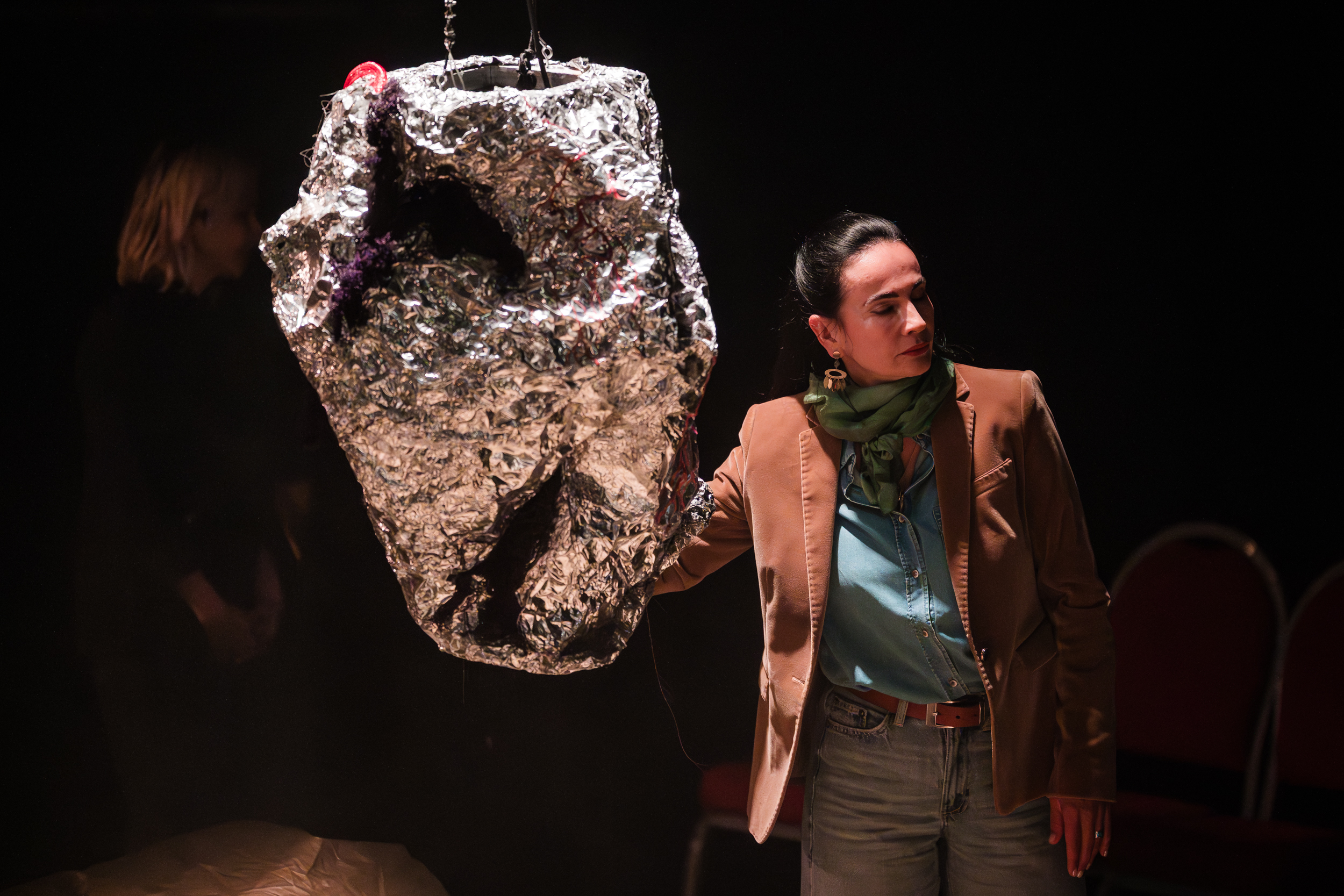
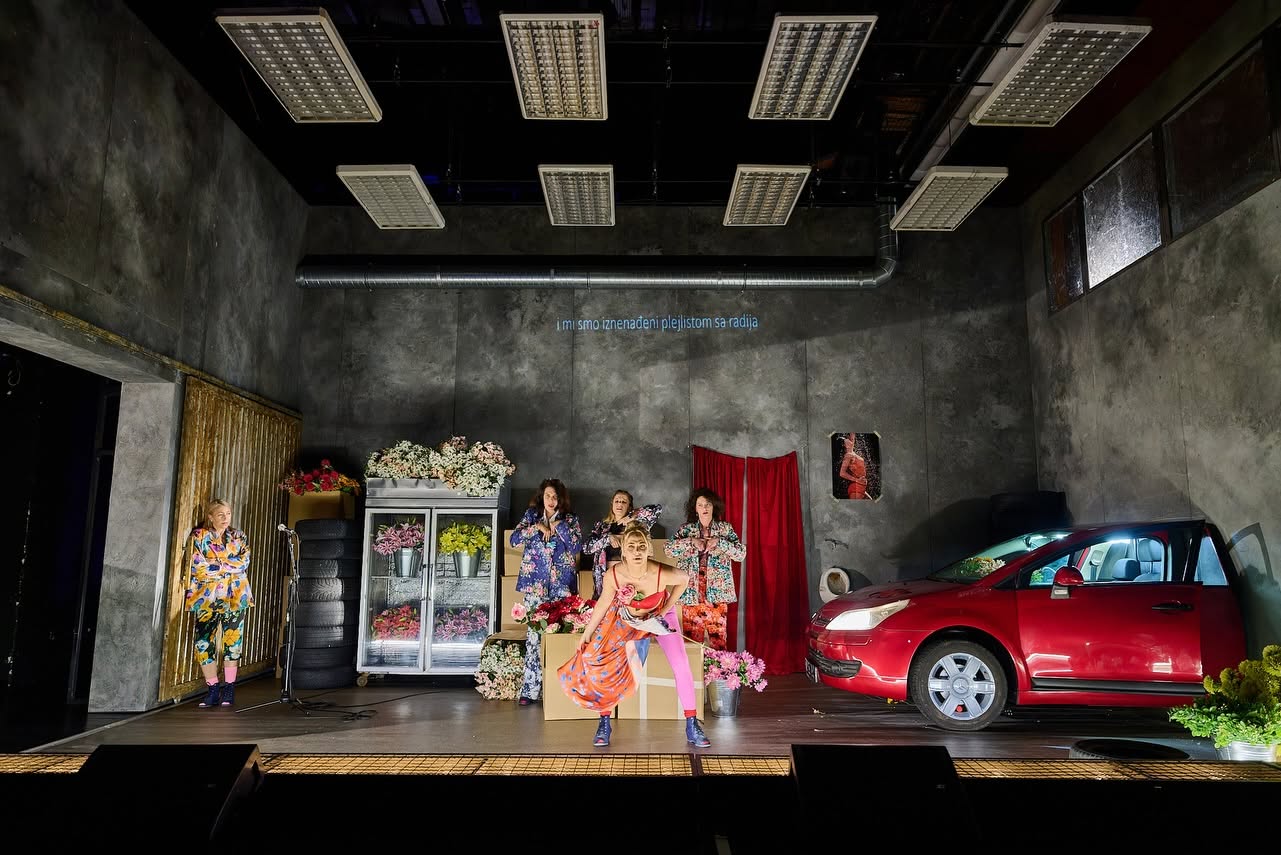
Although The Flipside provides the clearest example of this approach, the next two productions are marked by the same critical blind spot. At the same time, they stand out for their remarkable visual power. Weeds, produced by City Theater Podgorica, is based on Mirjana Medojević’s play The Florist. It is set in the Podgorica flower shop “Beautiful Occasions”, where the lives of women from different generations, yet the same social class, intersect. Their testimonies shape a stage image of a patriarchal society in which violence and economic insecurity appear as recurring patterns. Radonjić approaches this material with a distinctly painterly sensibility, at times moving close to performance art. The cold industrial interior of the flower shop (grey walls, refrigerated display cases, discarded tyres and cardboard boxes) remains in constant tension with lush floral arrangements and the vivid reds of a car and a stage curtain. A car with its headlights on becomes the dominant scenic element, shaping the composition of light, while the performers’ bodies and choreographed movement create a succession of striking stage images. Radonjić’s background as a painter, and his earlier work as a set and lighting designer, is clearly visible throughout the production.
This visual richness is accompanied by a dramaturgy built on the steady accumulation of women’s testimonies. Each new story reaches a similar emotional pitch, gradually erasing the distinctions between individual destinies. Finally, the accumulation of equally intense stories produces emotional saturation. The production’s powerful visual language and the urgency of its subject never fully overcome the dramaturgical monotony created by the continuous influx of tragic material.
Đekna, produced by the Royal Theatre Zetski dom in Cetinje and directed and adapted also by Mirko Radonjić, is based on the iconic television series Đekna još nije umrla, a ka’ će ne znamo by Miodrag Karadžić and Živko Nikolić, itself developed from Karadžić’s earlier radio play. Rather than recreating the celebrated 1988 television series, Radonjić dismantles it into its constituent elements and reassembles them into an autonomous theatrical work. Familiar characters, situations and lines reappear as traces of collective memory, opening a space for reflection on tradition and its place in contemporary life.
Aleksandar Anđelić’s set is dominated by a wall of old television screens. These relics of the past preserve fragments of a shared cultural memory. Episode titles, text, moving images and sound continuously intersect with the actors’ live presence, creating the impression that television history keeps entering the theatrical present only to be broken apart and reimagined. Snowflakes covering the performers, banknotes scattered through the air, improvised props that instantly acquire new meanings, together with the carefully orchestrated use of light, sound and perspective, give rise to a series of visually striking stage compositions. Here, too, Radonjić’s eye unmistakably reveals the sensibility of a painter.
At the same time, the performance struggles to establish a dramaturgical axis capable of holding together the abundance of ideas it sets in motion. Scenes shift between poetic stylisation and realism, continually opening new interpretative paths until the overall sense of coherence begins to dissolve. The richness of Radonjić’s visual imagination occasionally turns against the production itself, as each new idea redirects the audience’s attention, dispersing it among a multitude of equally compelling interpretive possibilities.
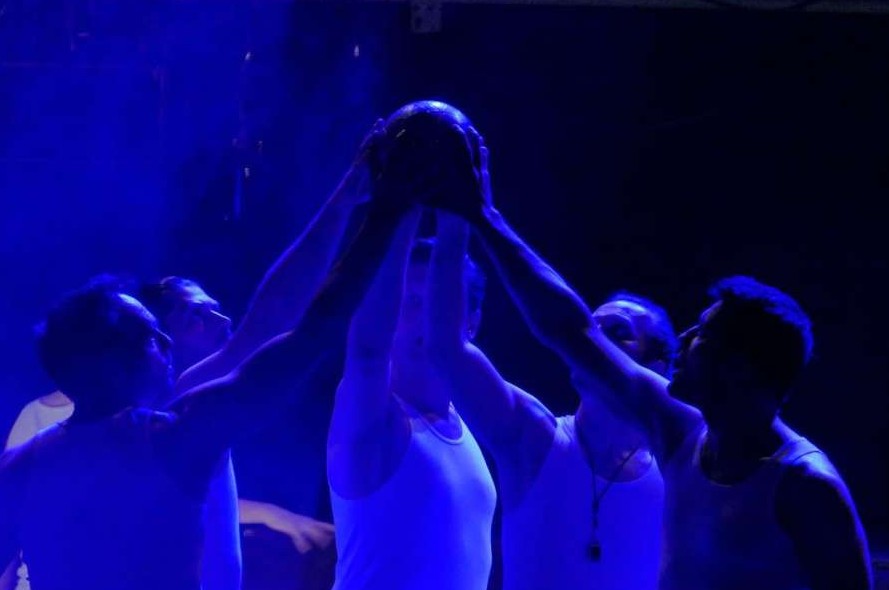
One of the most pleasant surprises of the Showcase was When Will It End, a co-production of Dance Company “Ballo” and the Montenegrin National Theatre. Working with a cast of young actors with little formal dance training, the production unfolds through four self-contained episodes, moving from images of war to intimate family relationships while exploring different patterns of violence that shape human experience. Within the context of the Showcase, this choreodrama offered a welcome expansion of the programme, drawing attention to a form of contemporary performance that remains underrepresented at theatre festivals across the region.
Alongside the productions that formed the artistic core of the Showcase, the programme also included a couple of smaller-scale works that reflected the breadth of the contemporary Montenegrin theatre scene. Elena Of Savoy transforms a historical figure into an intimate stage meditation on identity and cultural heritage, while Warm, based on a text by Jon Fosse, demonstrates the vitality of Montenegro’s independent theatre sector. The production is performed by professional actors originally from Russia who, after settling in Montenegro, found employment outside the theatre while continuing to devote their free time to creating performances in the Montenegrin language. Initiatives of this kind show that the country’s theatrical life is sustained not only by its public institutions but also by the persistence and commitment of independent artists.
Smrt u Dubrovniku
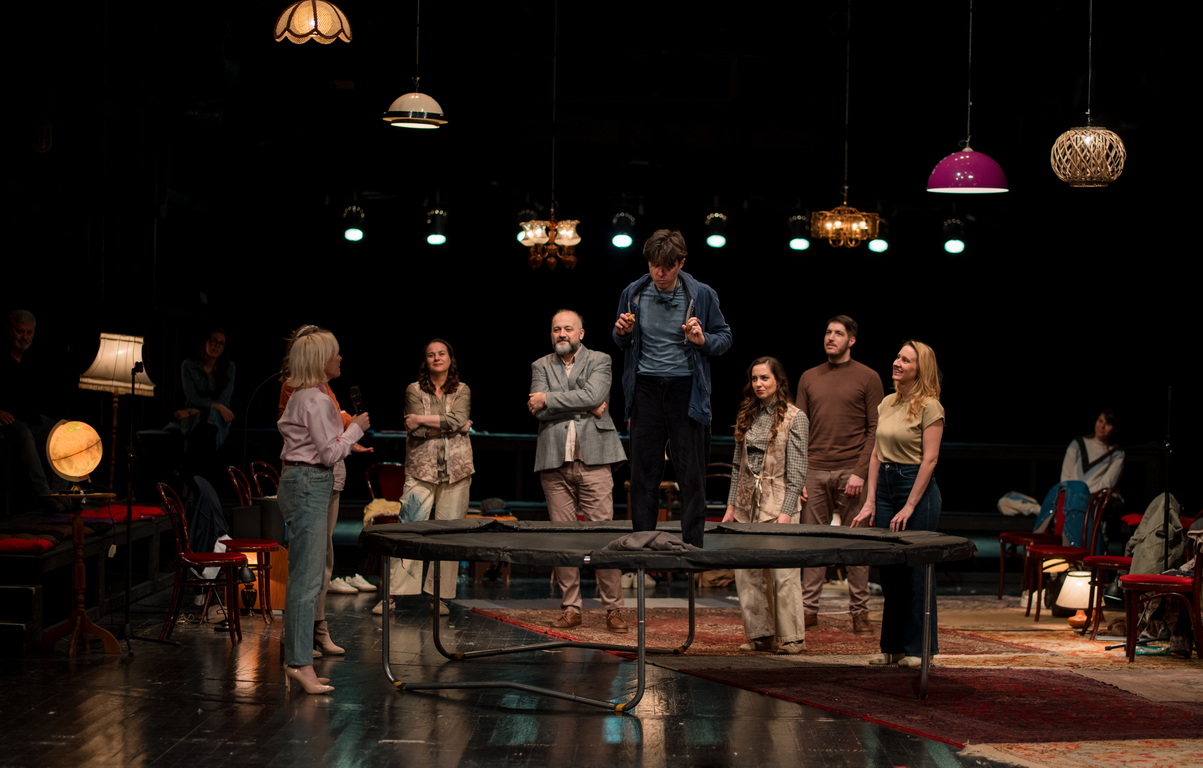
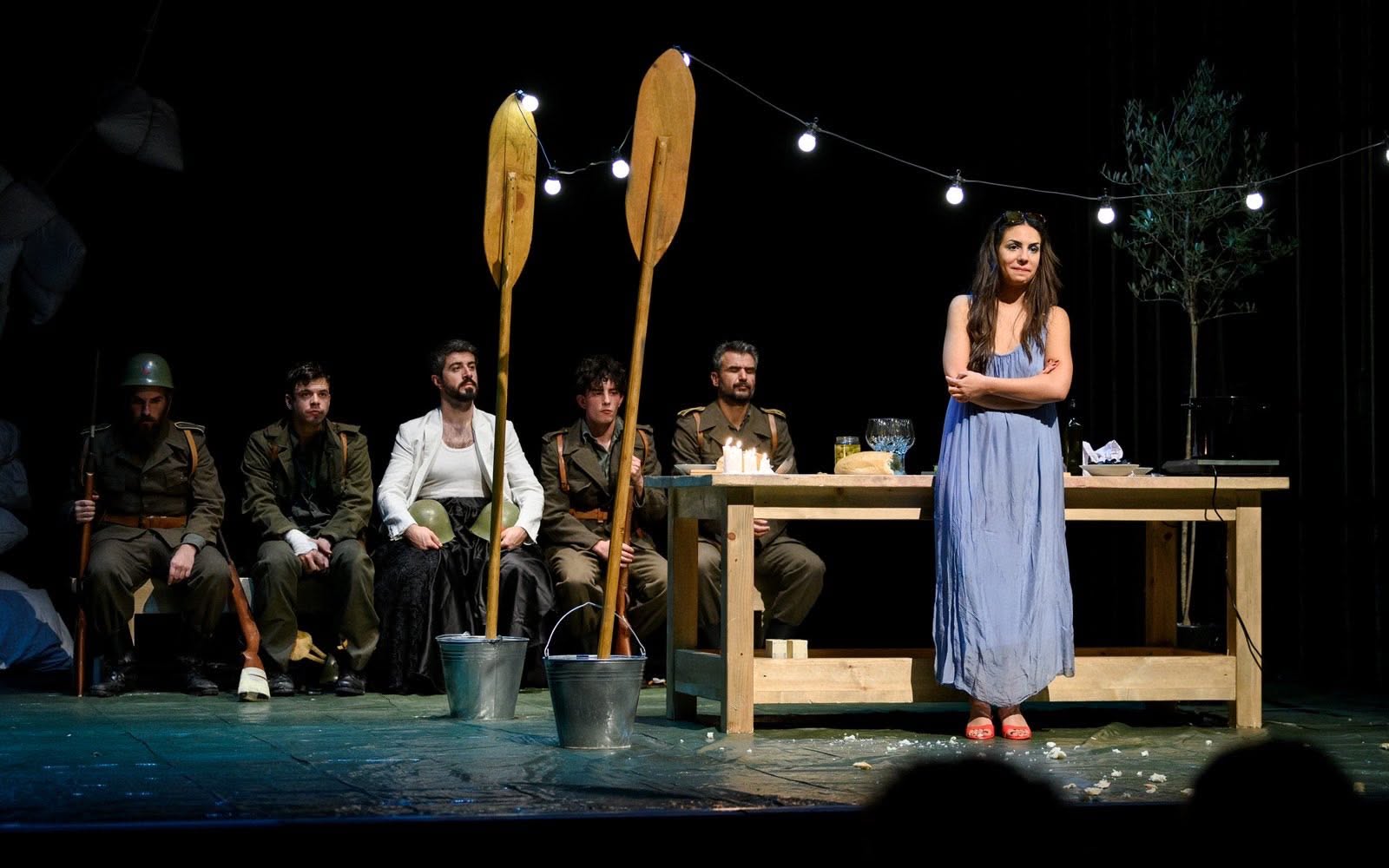
The artistic high point of the Showcase was Death in Dubrovnik, an independent production by the “Prazan proctor” Drama Studio, directed by Petar Pejaković after nearly three years of research and development. The performance emerged from an extensive process of collecting and selecting documentary material, interviewing witnesses, conducting archival research and devising the production through workshops. The result is a layered stage reconstruction of Montenegro’s involvement in the siege of Dubrovnik in 1991 and 1992, transforming individual testimonies into a collective act of confronting one of the darkest chapters in the country’s recent history.
Here, too, the performance relies on the accumulation of stories. The difference lies in the discipline with which the material has been shaped. The lengthy research process allowed for rigorous selection, enabling the production to sustain its internal rhythm and coherence throughout its nearly three-hour duration. Documentary material, symbolic imagery and the performances of a young ensemble merge into a unified whole, where irony and lyricism naturally alternate with scenes of war and human suffering. Theatre becomes a space of shared memory, free from pathos while remaining acutely aware of its responsibility towards history.
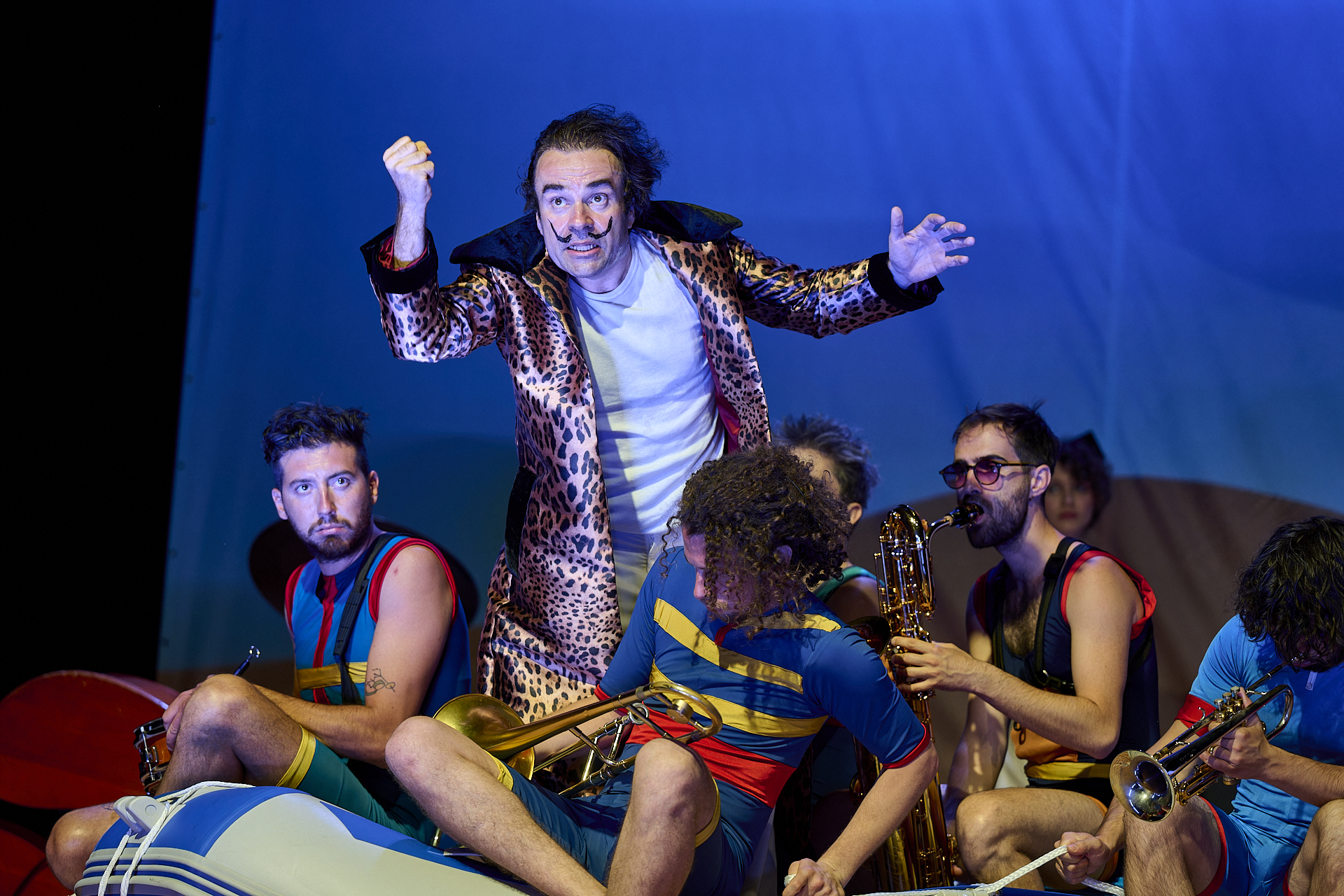
Contra Mundum, produced by the Tivat Cultural Centre and directed by Veljko Mićunović, occupies a distinct place within the Showcase programme. Its point of departure is a surrealist portrait of Salvador Dalí, transformed into a playful theatrical score in which acting, music and humour unfold in a shared rhythm. Performed live on stage, Nevena Glušica’s original score becomes an integral part of the performance itself.
The production rests on the remarkable performance of Croatian actor Ozren Grabarić. His Dalí is built through extraordinary precision. Every gesture, vocal shift, sung passage and fleeting improvisation has its exact place within the overall structure. Grabarić never relies on excessive movement or overt displays of virtuosity. The confidence of his performance grows out of an impeccable sense of rhythm, allowing the production to move effortlessly from witty storytelling into cabaret-like playfulness. The musicians actively participate in the action, entering Dalí’s world and shaping the stage alongside him. Their interaction reflects a carefully conceived directorial vision in which every joke, every change of tempo and every address to the audience contributes to a coherent artistic whole.
Within the Showcase, Contra Mundum stands apart through its affirmation of life, sustained by humour, playfulness and confidence in the creative imagination. It is telling that this perspective is brought by artists whose careers have developed across different cultural environments in the region. Veljko Mićunović and composer Nevena Glušica have pursued most of their professional careers in Serbia, while Ozren Grabarić is one of Croatia’s leading stage actors. Their collaboration with the Tivat production reflects the openness of contemporary Montenegrin theatre to regional exchange and artistic collaboration, an openness that is clearly yielding remarkable artistic results.
The Showcase leaves the impression of a vibrant, exciting and creatively charged theatre scene, determined to establish theatre as a space for public debate, confronting the past and reflecting on contemporary society. The dramaturgical shortcomings identified in several productions do not diminish the artistic achievements of this scene. They point instead to the need for a more carefully articulated stage language. The wars of the 1990s, corruption, patriarchy and social violence remain subjects that contemporary Montenegrin theatre cannot and should not abandon. Their importance calls for approaches that are more precise, more nuanced and more rigorously shaped. Finally, Contra Mundum demonstrates that critical awareness can coexist with humour, music, imagination and a distinctly life-affirming vision.
This diversity of artistic approaches may well be the greatest achievement of the Montenegrin Theatre Showcase. It confirms that contemporary Montenegrin theatre possesses the artistic energy, self-awareness and openness necessary for the continued development of a theatre culture that has already established itself as one of the most compelling in the region.

Andrej Čanji is a theatre critic and theatrologist based in Belgrade.