Faculty of Dramatic Arts, Belgrade, 15 December 2025
The 59th Bitef did not take place this year, at least not in its official form. Instead we got ne:Bitef, a guerrilla edition of the festival which took place between 15-18 December.
What led to this?
2025 was a year of protest and confrontation in Serbia. According to research published by CRTA, more than 10,000 protests were held between February and October 2025. Students and citizens occupied the universities/ They blocked streets, intersections, and bridges. They demanded accountability for the collapse of a railway station canopy that killed sixteen people on 1 November 2024. The government, meanwhile, hid behind riot shields, clouds of tear gas, and an improvised tent settlement in front of the parliament building and the presidential palace – inhabited by known criminals, as investigative journalists from KRIK demonstrated – individuals paid or blackmailed into protecting the president Aleksandar Vučić.
The theatre community and a large part of the cultural scene actively supported these protests. This resulted in the withdrawal of funding from numerous artistic organisations and the cancellation of many festivals – those that did take place did so with drastically reduced budgets, surviving only thanks to the efforts of dedicated managers and enthusiasts.
When BITEF’s artistic team – Miloš Lolić, and Borisav Matić – presented the board with a proposed programme for the 59th edition, it was accepted with the sole exception of Milo Rau’s performance The Pelicot Trial. During the opening address of the 58th BITEF, the Swiss director gave a speech in which he criticized the company Rio Tinto for its plans to mine lithium in Serbia, as well as the then German Chancellor Olaf Scholz. Arguably this speech was a contributing factor in the decision not to extend Nikita Milivojevic’s mandate as artistic director.
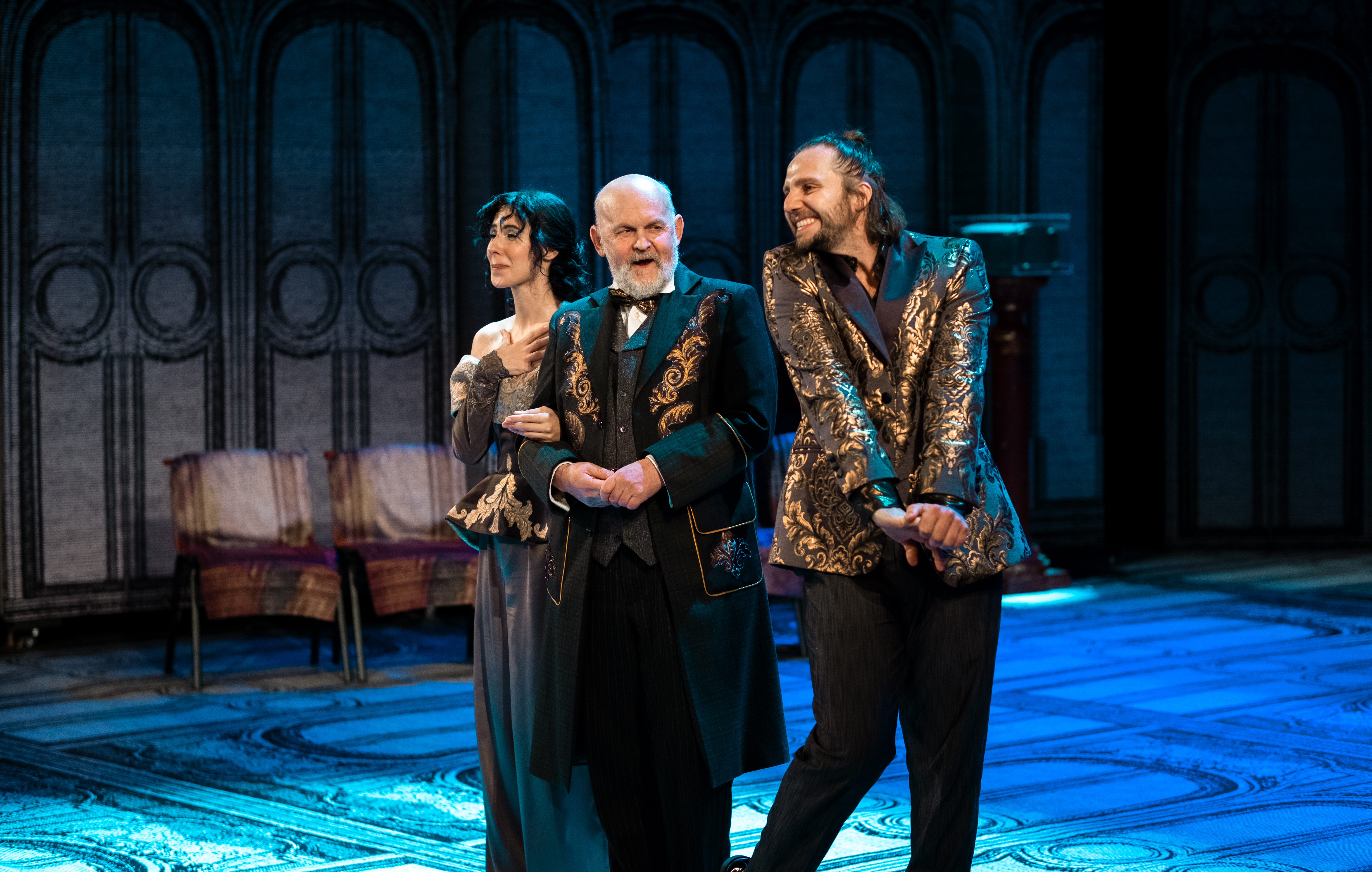
Even though, on a thematic level, Rau’s production of The Pelicot Trial, is no more problematic to the Serbian authorities than Bros by Romeo Castellucci, which deals with police brutality, and Andreja Kargačin’s Dora, or Who Will Sew the Vests? a piece about a female student accused of undermining Serbia’s constitutional order and who is currently living in exile, it is the piece to which they objected.
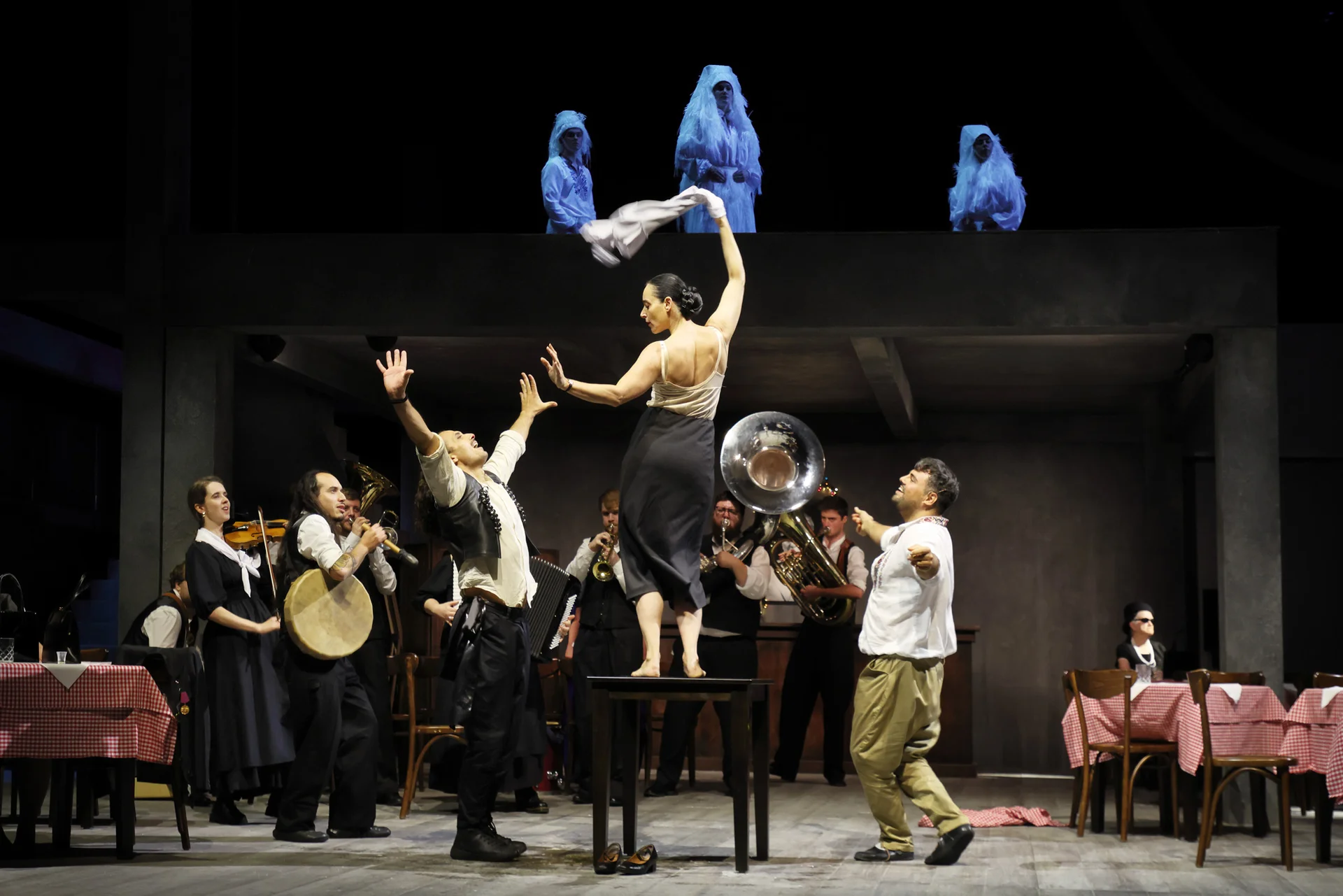
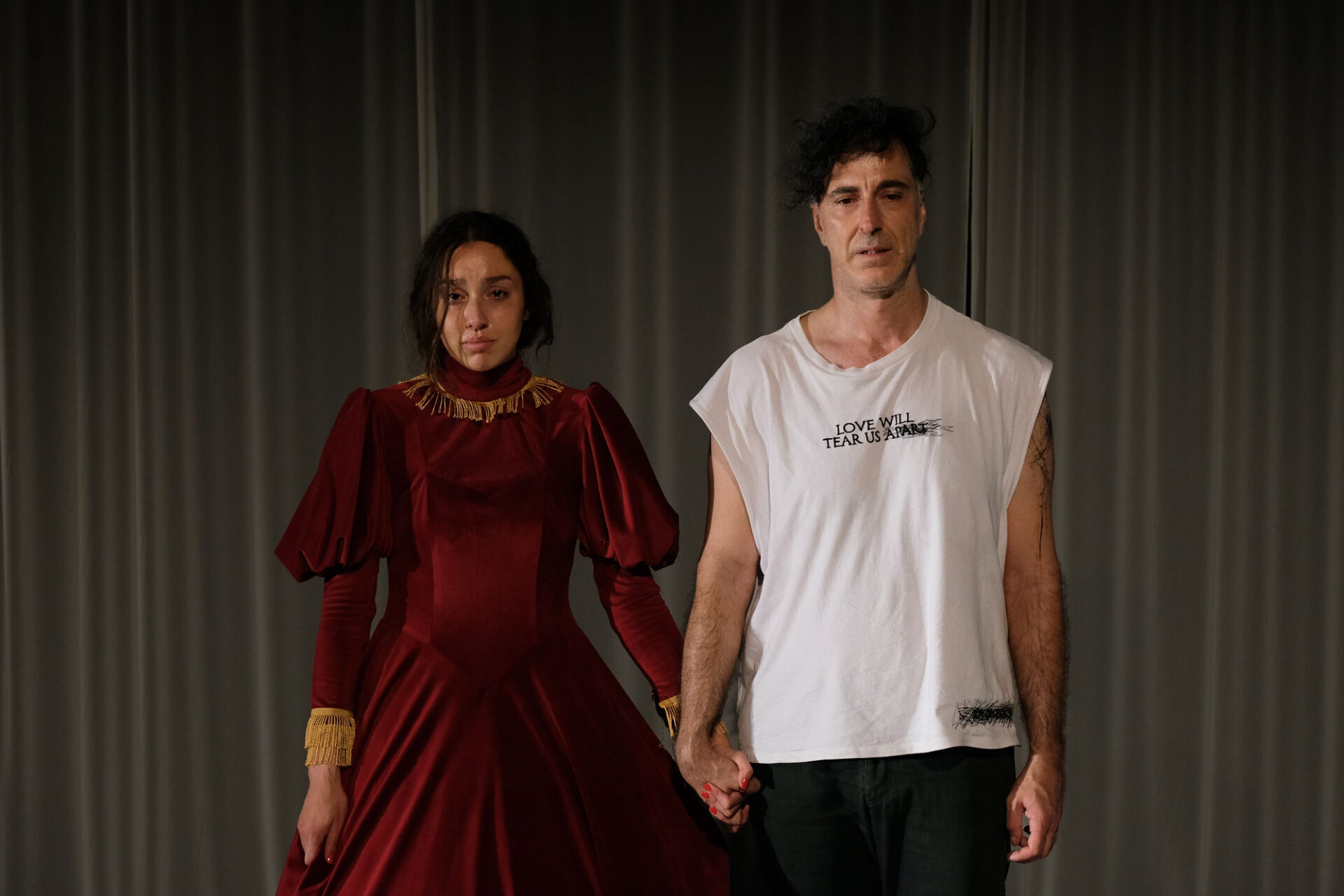
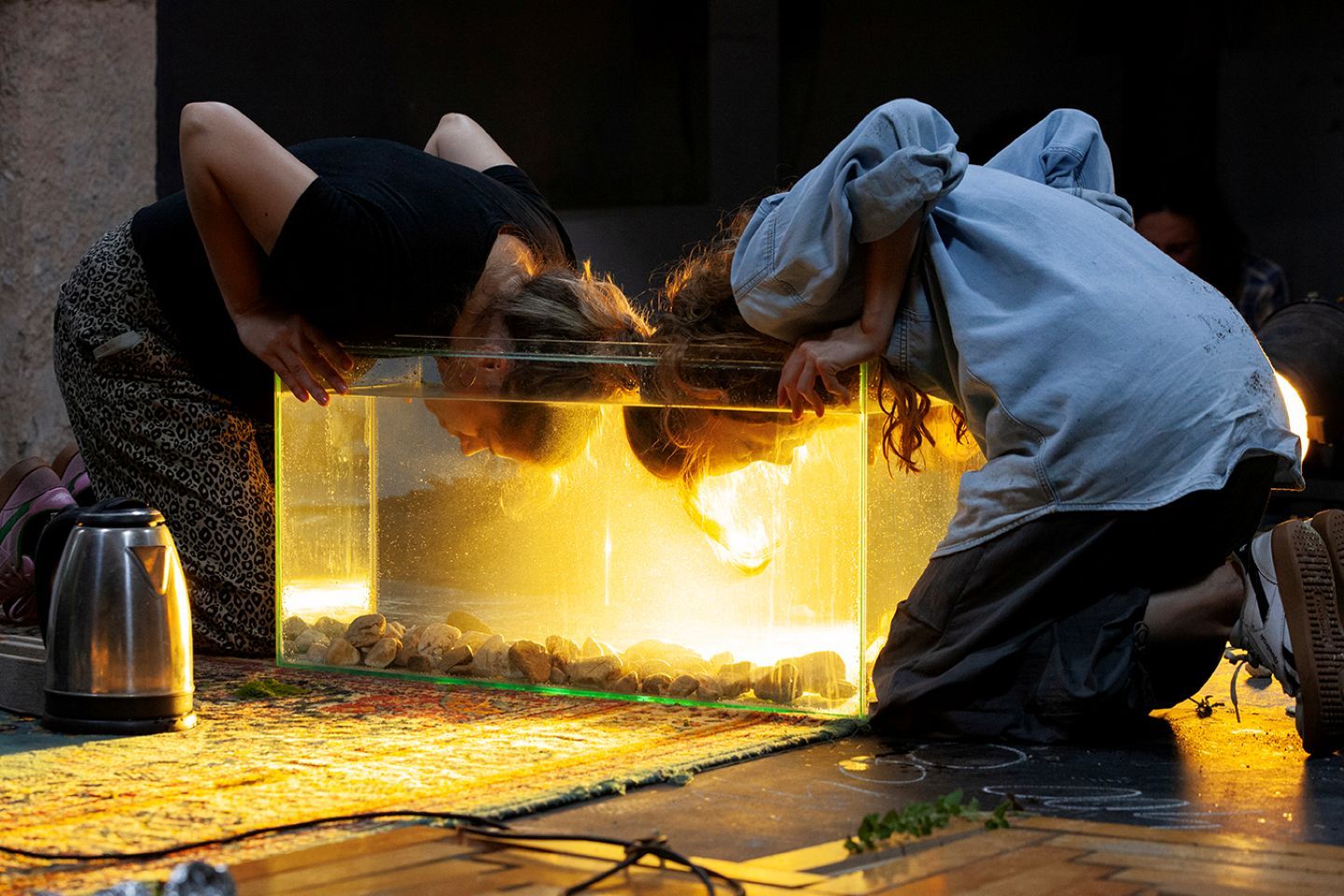
Refusing to comply with this crude act of censorship, Lolić and Matić, with the help of numerous collaborators, decided to organize Ne:BITEF. Armed only with defiance and enthusiasm, without a budget and in an extremely short amount of time, they managed to create an almost entirely free four-day programme, the centrepiece of which was a live performance of Rau’s The Pelicot Trial. (The festival programme also included a screening of Bros, and four projects by young local artists: Dora, or Who Will Sew the Vests, Tension by Aleksander Zain, Suicide as a Social Fact by Ana Janković, and The Society of the Spectacle: Diversions of Self-Management, by the collective Action Committee. Several panel discussions were also held, along with a concert by the punk band Pink Wonder, whose members include theatre workers from Berlin’s Volksbühne).
The performance of The Pelicot Trial in particular will have a significant impact on Serbian theatre. Although it is a documentary performance about the horror endured by Gisèle Pelicot based on a selection of court records and testimonies devised by Milo Rau together with dramaturg Servane Dècle, by staging it in Serbia, it generated several entirely new dimensions.
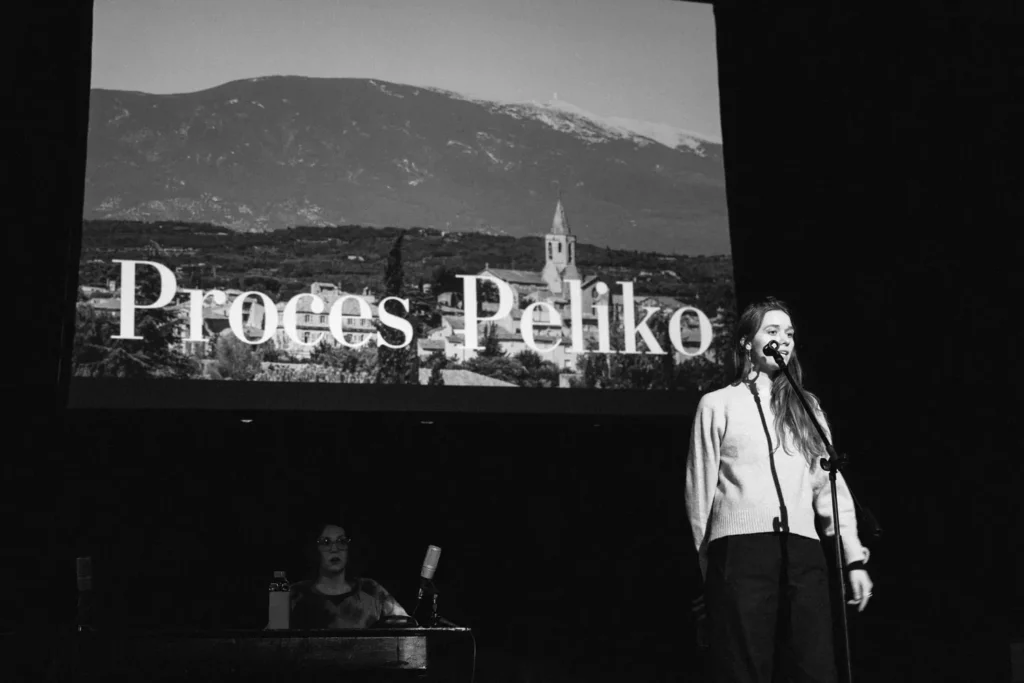
Photo: Jelena Jankovic
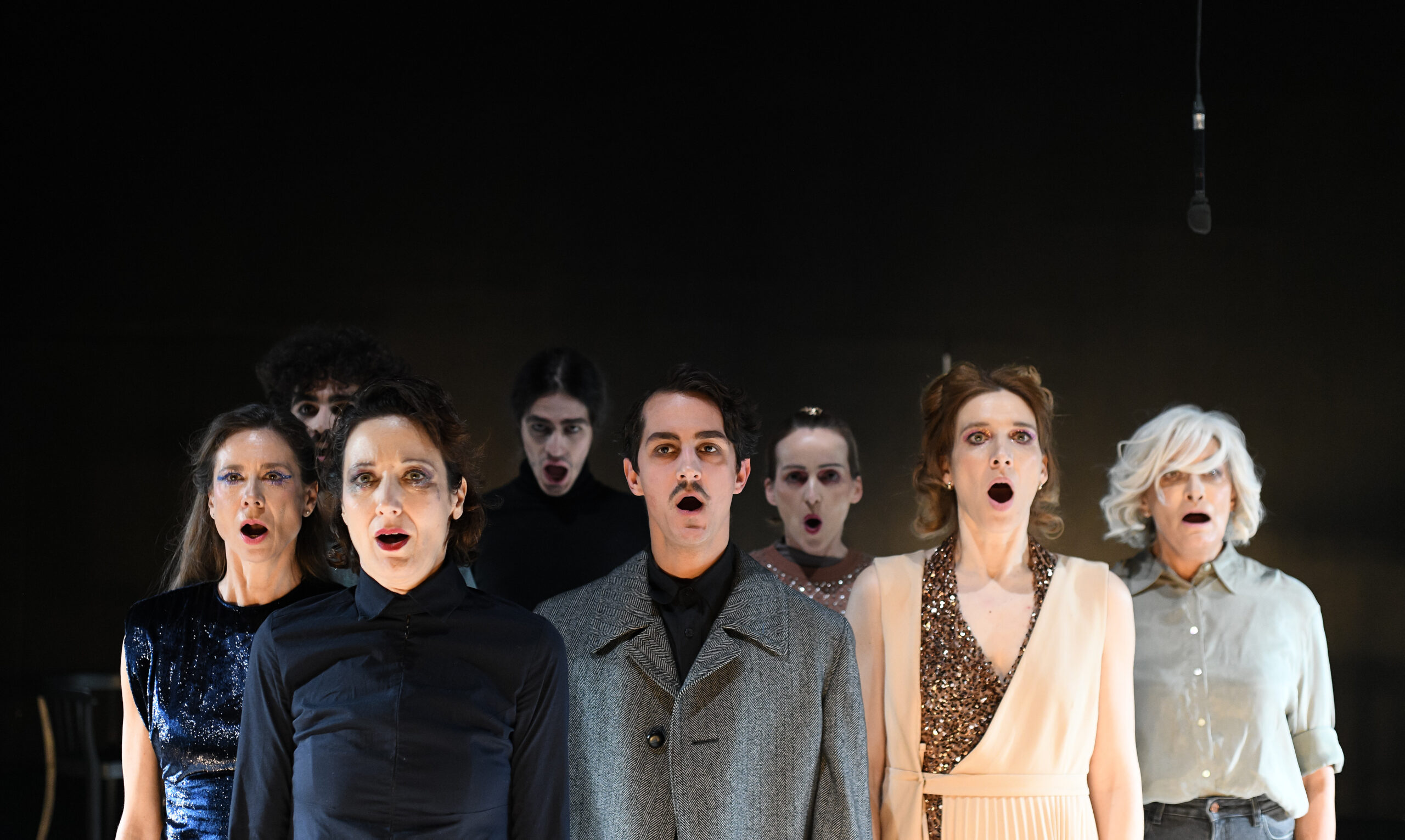
The choice of location played a great part in this. This was a performance which took place at the Faculty of Dramatic Arts, where the student uprising began. The atmosphere in the hall pulsed with the energy of that epicentre. The was also a performance staged at an educational institution which cultivates conservative artistic practices, particularly within its acting and directing departments – yet it is precisely within this theatrical institution that the achievements of radically different performative horizons are being demonstrated. In the audience were students who had sacrificed an entire year of study, who had been arrested and beaten, detained and charged in unjust proceedings, now watching a performance in which justice was being enacted. There were also professors who had supported the students and, as a result, had gone months without receiving salaries, and activists wo had endured much the same experiences as the students. And there were all the rest of us, people who have endured and survived this past year, who struggled and hoped for better times. And on stage? On stage were dozens of actors, directors, students, professors, and activists, people of different generations and gender identities – in other words, all of us – who, one after another, stepped forward to read the testimonies of Gisèle Pelicot as well as those of family members, expert witnesses, specialists, and finally the perpetrators themselves.
This was no ordinary theatrical performance. There is no fiction and no aesthetics. There is only an excess of reality. The reality survived by Gisèle Pelicot and the reality lived by the community gathered there to watch the performance. The frequencies began to merge. I watched the people on stage and around me, listened to what is being said, and found it difficult to separate text from context. My throat tightened and my eyes filled with tears because of everything. Then I gathered myself and surrendered fully to the nearly five-hour-long experience.
Performed without an interval and composed with rigorous dramaturgy, this extraordinary case of years-long sexual violence is structured as a sequence of testimonies. But while a court of law seeks criminal liability, adapting all prosecutorial and defence strategies to proving or refuting an indictment, in the theatrical context the selection of testimonies is oriented toward a broader understanding of an event so horrifying that it reverberated across the entire world. First and foremost, the production foregrounds the courage of Gisèle Pelicot to confront the violence she endured with determination and dignity, and to remove her personal experience from the sphere of privacy and make it an object of public testimony, thereby transforming the status of victim into a heroic act. Another crucial aspect lies in the expert analyses that attempt to explain the nature of the crime and the origins of a pathological violent psyche. The most controversial element is the granting of voice to the perpetrators themselves, each of whom, in his own way, attempts to deny or explain his role in the crime – momentarily creating the impression that we are developing an understanding of their actions. This occurs when they claim not to have known that the victim did not give consent, or when their personal histories and the abuse they themselves suffered are revealed. The dramaturgy of the performance does not leave these moments unresolved; instead, it establishes an unequivocally clear position in relation to them. To understand trauma is not to justify violent behaviour, and least of all to provide grounds for diminishing the guilt and responsibility of a conscious individual who made a choice.
Rau and Decle understand that the horrors endured by Gisèle Pelicot cannot serve as catalysts for scenic imagination, not because these events are not, in themselves, profoundly dramatic, but because within a classical theatrical constellation they would inevitably be instrumentalized toward the production of catharsis, through an adapted plot and the reduction of both victim and perpetrator to dramatic characters and types. They avoid this by not creating a “performance” in the conventional sense, but a conceptual framework in which local performers, not necessarily professionals, read documentary material. This, too, is a directorial procedure, reduced to its bare minimum.
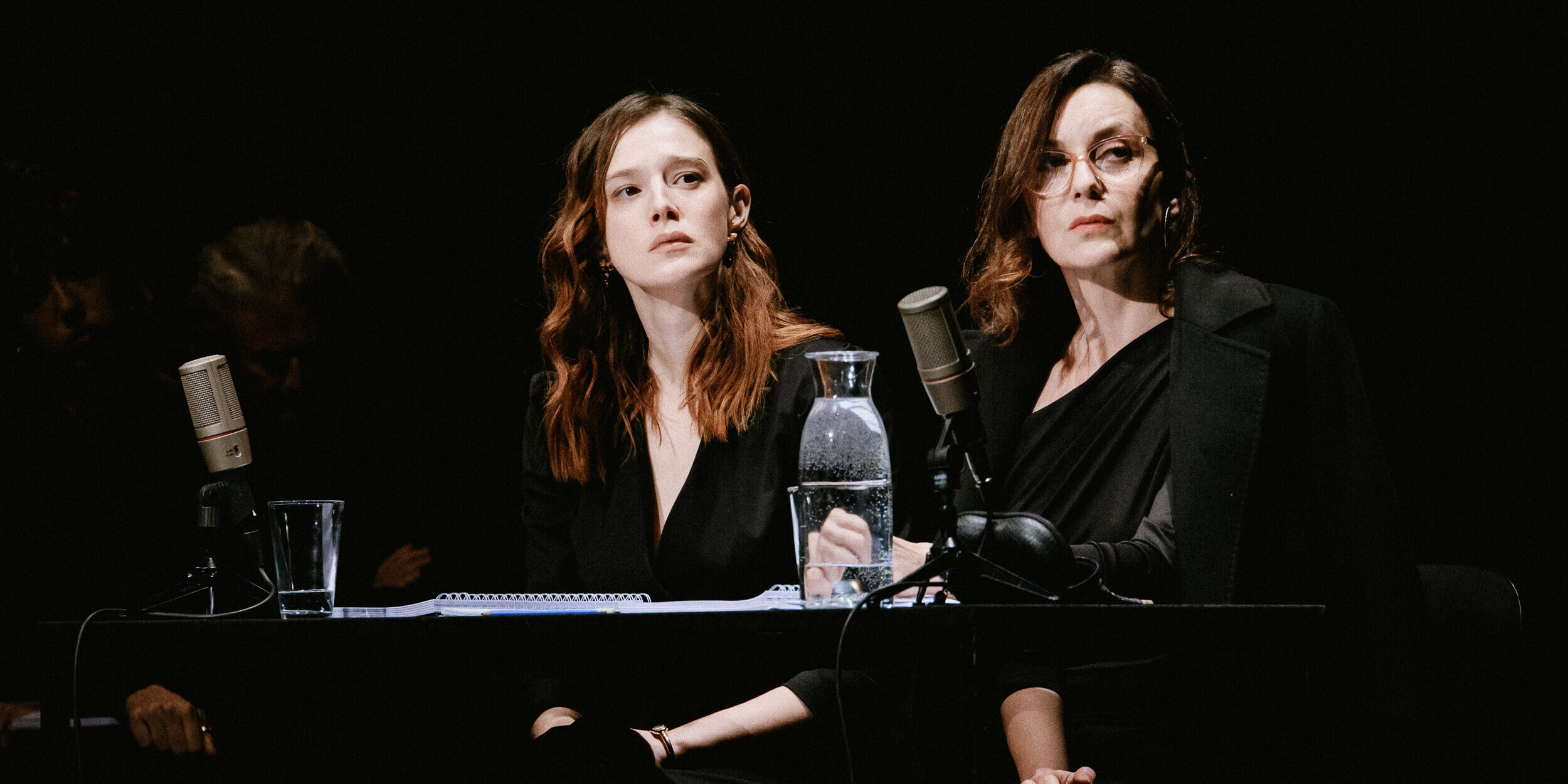
Everyone sits on stage. At the centre are the narrators who guide the process: Nada Šargin and Milena Radulović, the latter a representative of the #MeToo movement in Serbia, whose presence lends the event particular gravity. One by one, the performers step onto the proscenium and read their texts into a microphone, while a close-up of their face is projected onto a large screen, thereby foregrounding the relationship between image and word. This relationship varies from one appearance to the next. In the case of professional performers, we observe the power of trained acting expression; in the case of less skilled performers, we encounter a raw, spontaneous, and unmediated presence. This dual performative perspective, at once actorly nuanced and authentically unsophisticated, functions as a constant reminder that what we are witnessing is not a fictional event, and prompts an ongoing interrogation of human nature itself.
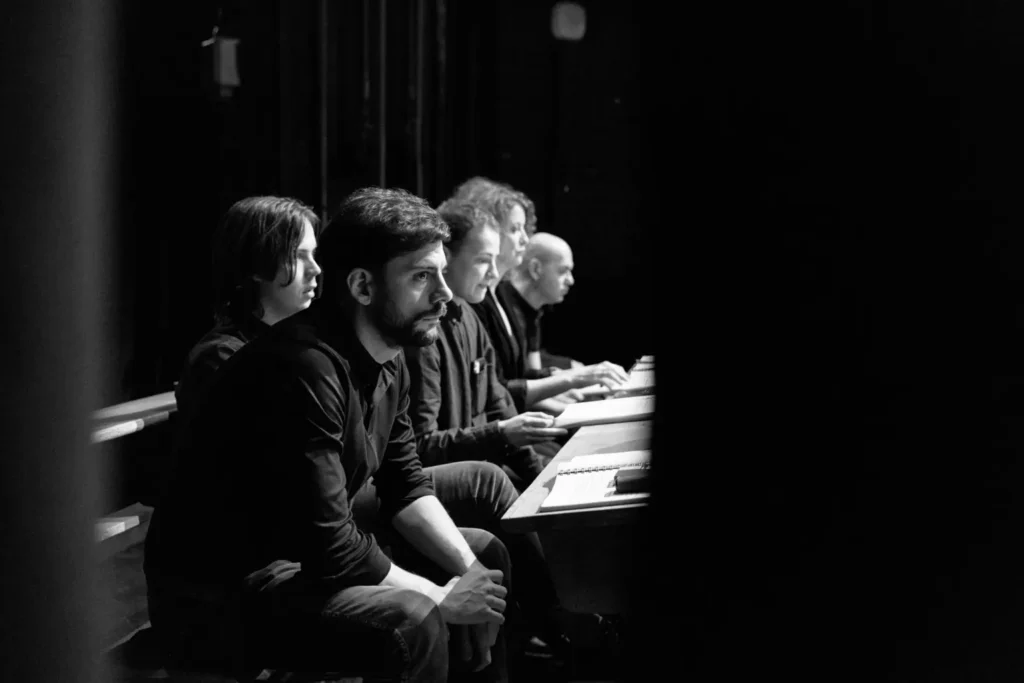
Photo: Jelena Jankovic
Vesna Trivalić, primarily known as an actress of singular comic brilliance, interprets Gisèle Pelicot. With reddened eyes that seem on the verge of tears, a constricted throat that appears ready to suffocate her, a roughened voice that threatens to fail, and a bodily tension on the brink of implosion, she delivers a performance that leaves the auditorium breathless. Over the course of a thirty-minute monologue, we observe a person at the edge, who ultimately states that the façade still stands, but that inside there is only ruin. This sustained tension between the repeated, public return to trauma and the determination to confront it is rendered by Trivalić with consummate mastery. Her performance entered the annals of Serbian acting even before she spoke her final lines.
Many others excelled as well, despite having only a few days to prepare. I cannot mention them all, there were dozens, but I will single out two who left the strongest impression. Nebojša Romčević, professor at the Faculty of Dramatic Arts and a dramaturg, for instance, who portrayed one of the expert witnesses, seemed perfectly matched to the role through the sheer force of his intellect and the breadth of erudition familiar to anyone who has attended his lectures; it was as if he had been preparing for it his entire life. Tihomir Stanić, in the role of Dominique Pelicot, succeeded in exposing the banality of evil, the rationalized conception of wrongdoing enacted by his character, and the fundamental inability to integrate his double life into a single, indivisible whole. In the disjunction between a linguistically precise discourse of logic, calmness, and politeness, on the one hand, and bodily nervousness on the other, he offered a harrowing study of a pathologically unbalanced personality.
Through The Pelicot Trial, two struggles converge. The circumstances under which the performance was staged are unique. We bear witness to Gisèle’s struggle while constantly recognizing our own. Her victory instils hope in us as well. Her perseverance binds us together in an unrepeatable exchange of solidarity and strength. Theatre stripped of all conventions, reduced to the sheer presence of a community following a single life story, this zero degree of theatre, reveals itself as a site of essential meaning, theatre at its most pure, the highpoint of a historic edition of this important international festival, a BITEF that was not BITEF but was somehow – in spirit – the most BITEF of all.
Further reading: Milena Radulović wins ne:Bitef award

Andrej Čanji is a theatre critic and theatrologist based in Belgrade.