
Teatar 071 Sarajevo, premiere 27th December 2025
When a theatre production titled Sniper takes place in Sarajevo, there is ample room for horribly familiar associations: 1.423 days of an unending siege, countless bullets, Sarajevo Safari, and more. Yet, what the very first production of Teatar 071 offers its audience is none of that.
Sarajevo has gained a new theatre space—one that consciously positions itself outside the framework of state institutions. Founded by Senad Alihodžić, actor and former artistic director of the Chamber Theatre 55, Teatar 071 advocates freedom of speech, political independence, and creative courage. Conceived as a “living-room theatre,” it has established its permanent home at the Multimedia Cultural Center (CZK) on Sime Milutinovića Sarajlije Street, directly across from the Museum of Theatre and Literature and only steps away from the notorious Despić’s House, which was, decades before the National Theatre opened in 1921, already staging theatre in its own living room.
Even though Teatar 071 aims to represent alternative theatrical practices and operate independently of established institutions, the team of authors behind its first production consists of well-established figures from the mainstream theatrical scene — such as Dino Mustafić, the artistic director of the city’s largest and oldest remaining state theatre institution, precisely the kind of conventional establishment the new space seeks to challenge.
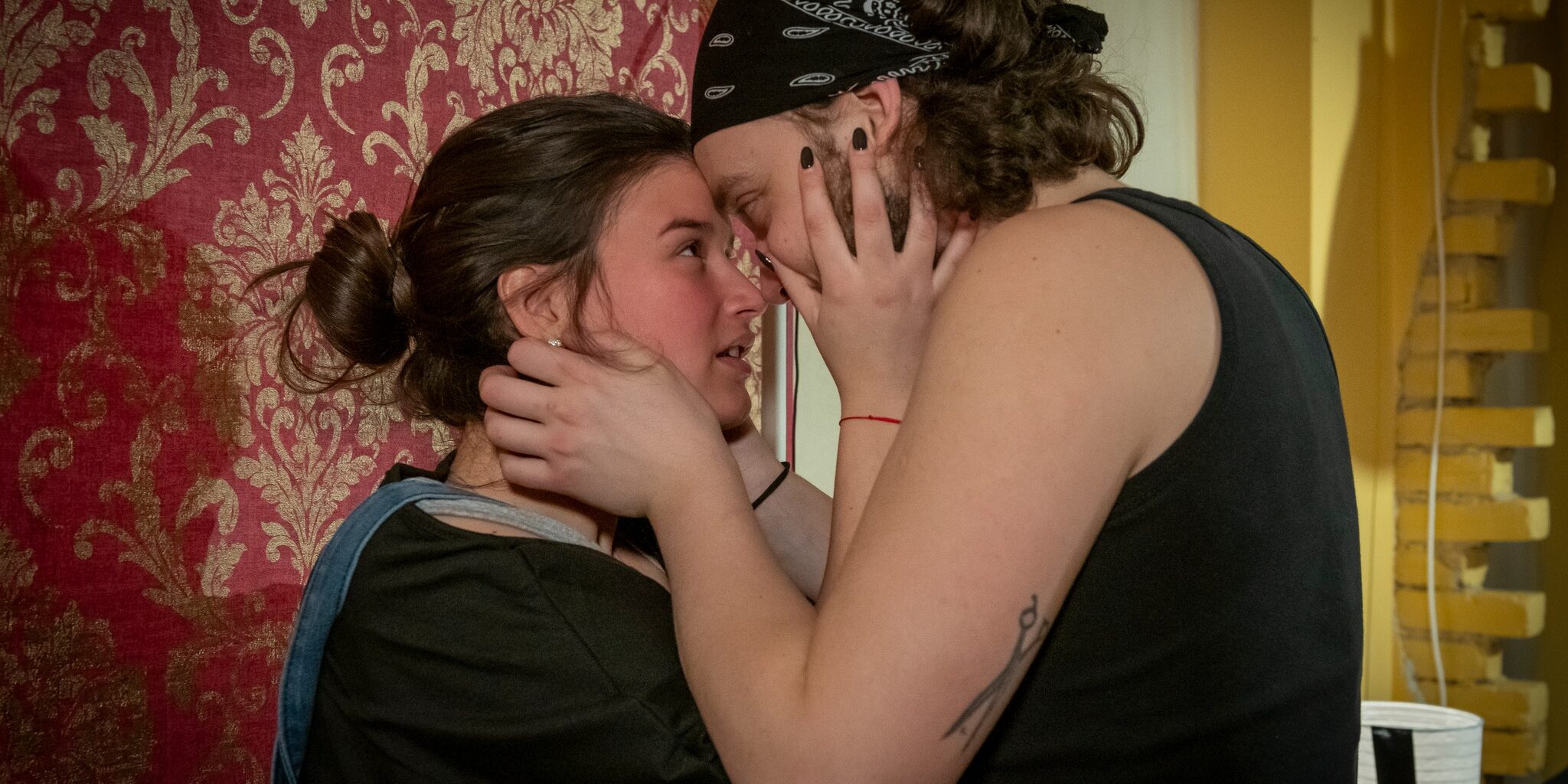
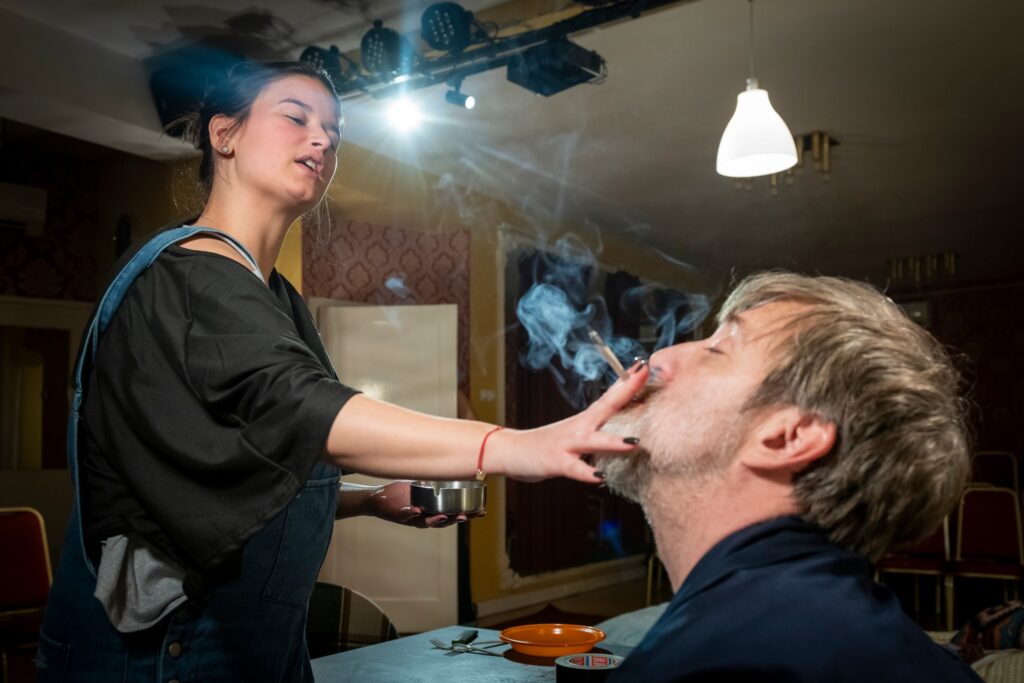
The choice for the inaugural production fell on Damir Karakaš’s early work Sniper, a play that explores the use of violent acts in the name of democratic values. The story centres on a young couple, Muki and Sunčica, who plan to assassinate a presidential candidate in order to secure the money needed for their escape to Paris. For them, the Ville Lumière is a mythical destination, a promise of a better life for themselves and their unborn child, far removed from the frustrations of living in a country shaped by corruption and collective PTSD. When the building’s caretaker accidentally intrudes, their plan unravels: he becomes their hostage. Blood will flow—but what follows is not an action-driven political thriller propelled by suspense. Instead, the play deliberately slows down, turning into a restrained, at times feeble confrontation that unfolds as a debate on democratic values, responsibility, and the limits of political action—and, ultimately, on the role of art itself—leaving behind a rhythm that undercuts urgency and risks narrative stagnation.
Sniper’s quality fails to carry the grand issues it seeks to address. The story unfolds in an overly explanatory manner, driven by dialogue that is more informative than expressive. It lacks three-dimensional characters and relationships and, above all, a believable premise. One example is the introduction of the third character: the caretaker enters the apartment in the middle of the night, while the tenants are asleep, simply to water the plants. Sniper is full of such implausibilties, which generate confusion rather than emotional engagement.
Sniper
Beyond this, an underlying pretentious idealism sustains the play through a multitude of hackneyed, empty phrases. Without revealing too much, the final moments of the performance amount to a truism. As a result, the entire production suffers from the weaknesses of the text itself—shortcomings that could not be redeemed, despite Adnan Lugonić’s dramaturgical efforts, to give the material greater depth and coherence.
Much like the dramatic structure itself, both Muki and Sunčica—played by the young talents Vedad Čano and Anastasija Dunjić—oscillate between flaunted mime and near-filmic naturalism—sometimes within seconds—resulting in an acting style that wavers between theatrical display and psychological realism rather than forming a deliberate contrast. Despite their evident effort, the performances cannot compensate for the superficiality of the text. What remains is a sense of simulation—as if emotions are being imitated rather than experienced, a manufactured intensity that gestures toward meaning without fully generating it. Kept at arm’s length, the audience is constantly reminded of this vagueness, especially since the intimate setting of the “living-room theatre” seems to call for a more contained, naturalistic mode of acting. One that founder, producer and actor Senad Alihodžić, in the role of the caretaker, seems to embody more smoothly, rendering the ensemble’s overall approach uneven.
Except for the undisclosed ending, which demonstrates a deliberate artistic choice, it is not entirely clear how to situate Dino Mustafić’s direction in this production. Throughout the performance, the actors appear to move intuitively, attempting to support one another, as if lacking clear directorial guidance—an issue that once again points to the production’s inherent indecision over whether Sniper should be staged realistically, almost in a documentary mode, or approached in a more stylized manner. As a result, the performance can feel slightly disorganized and unintentional.
The costume and set design by Adisa Vatreš Selimović, however, are simple yet effective. A double-sized bed, a table with two chairs, and a broad carpet mark the absence of a conventional stage, while the presence of a single sniper rifle anchors the story’s central tension. A blue bandana scarf and a loose white undershirt underline Muki’s working-class masculinity, a denim dungaree suggests Sunčica’s practicality and admirable childlikeness, and the janitor’s blue work overalls are self-explanatory. All scenography, costume, and props remain minimal but purposeful, providing just enough structure to support the action without overwhelming the intimate atmosphere.
Nevertheless, whenever a new theatre emerges, hope is never far behind. It may be that Teatar 071’s first literary choice fails to live up to the ambitions articulated in Alihodžić’s manifesto, leaving Sniper as a comparatively weak theatrical experience; however, this shortcoming is not without its productive implications. The very articulation of such ambitions signals that the Sarajevo-based theatre-maker is aiming beyond prevailing conventions, acknowledging the need—and the capacity—for a more diverse, politically engaged, and genuinely free theatrical landscape. Moreover, such aspirations demand time and patience. As Sniper itself suggests, revolutions do not happen overnight, and certainly not by force—or, to borrow a local idiom, na silu. One can therefore hope that Teatar 071 will move toward truly uncompromising work in the near future.
Credits
Director: Dino Mustafić//Author: Damir Karakaš//Dramaturgy: Adnan Lugonić//Set & costume design: Adisa Vatreš Selimović//Producer: Senad Alihodžić//Co-producers: Nihad Kreševljaković, Alma Ferović Fazlić//Executive producer: Adna Rizvan//
Performed by Vedad Čano, Anastasija Dunjić and Senad Alihodžić

Berina Musa is a writer, dramaturg, and critic based in Sarajevo and Freiburg. She studied German linguistics, literary studies, and art history at the University of Freiburg and is currently completing a second degree in dramaturgy at the Academy of Performing Arts in Sarajevo. Her plays and short films have been presented at the Bosnian National Theatre Zenica, MESS, the Sarajevo Film Festival, and the Mostra Internazionale del Nuovo Cinema di Pesaro.