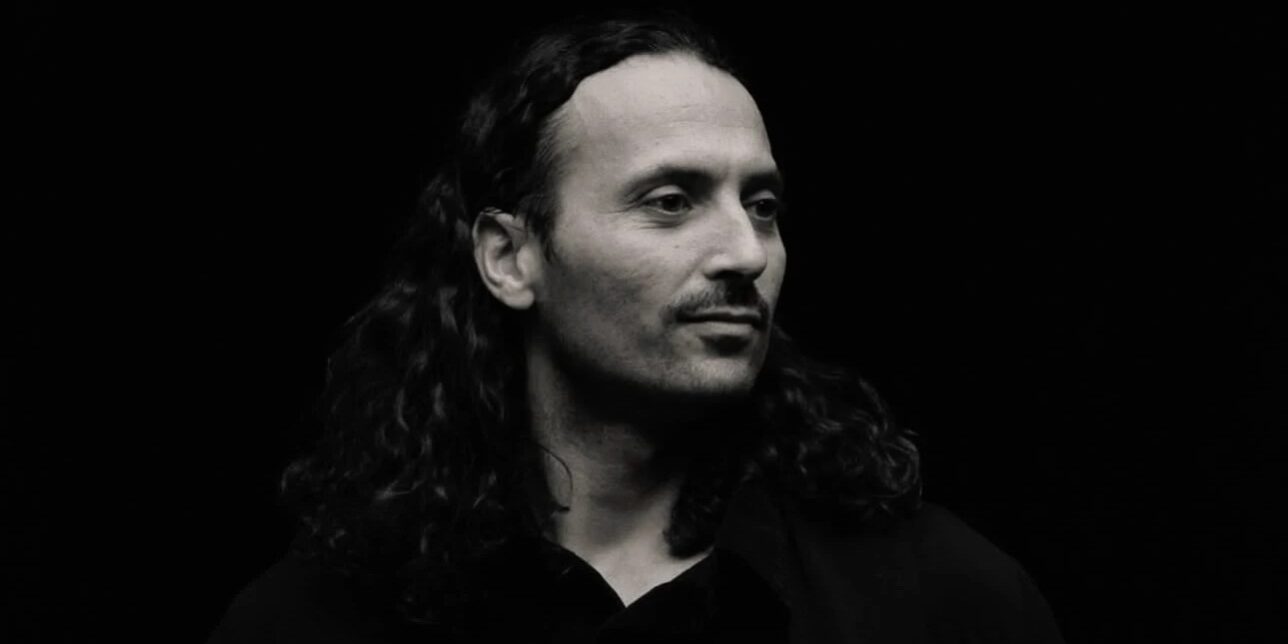
Blenard Azizaj is an Albanian choreographer and dancer whose work bridges contemporary dance with ritual, memory, and Balkan cultural heritage. He talks to Belkisa Zhelegu about one of his most ambitious projects to date, Marina Abramović’s Balkan Erotic Epic.
Born in Albania to parents who were traditional folk dancers, he began dancing at a young age and went on to train professionally at the National School of Dance in Athens, Greece, where he graduated in dance pedagogy and choreography.
With nearly two decades of international experience, Blenard has performed with leading companies including Sasha Waltz & Guests (Berlin), the Akram Khan Company (London), Compagnie Linga (Lausanne), and the Hellenic Dance Company (Athens).
As a creator, his notable works such as The Great Migration, Ukiyo, Human, and Walls have been presented across Europe, and in 2025 he choreographed and performed in Marina Abramović’s Balkan Erotic Epic – one of the most ambitious projects of her career.
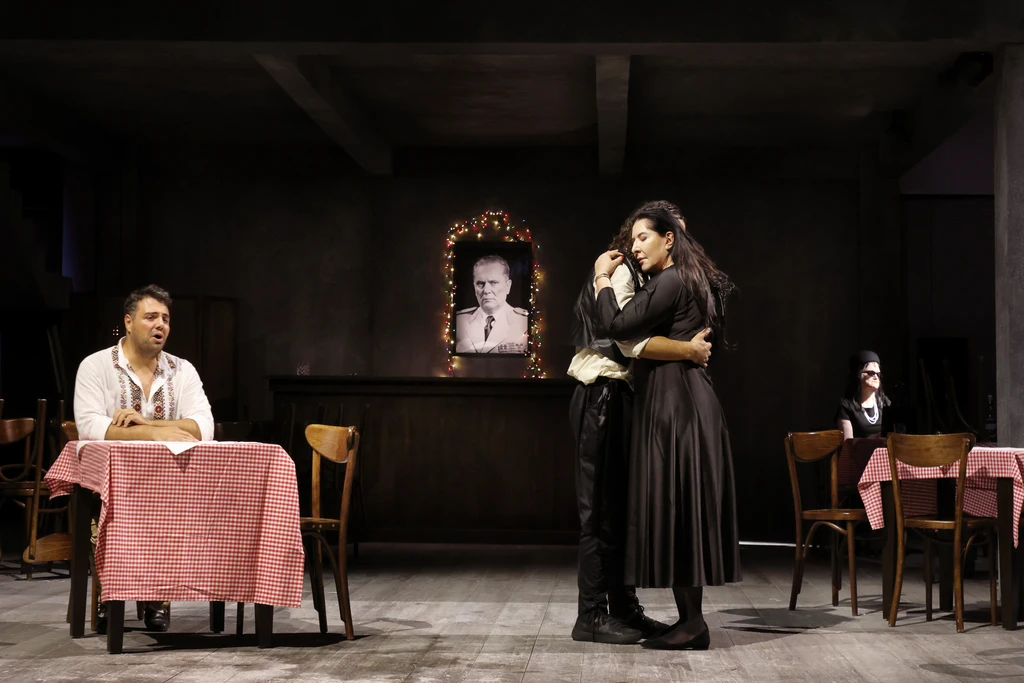
Balkan Erotic Epic. Photo: Marco Anelli
Belkisa Zhelegu: What was it like working on Marina Abramović’s Balkan Erotic Epic? How did you first become involved in this project and what was the creative process like?
Blenard Azizaj: For me, this collaboration came from the universe. I have manifested almost all my wishes in life, but they never come from nowhere. I have worked – and I am still working – very hard. This is the only way to make things happen.
It was the first time Marina invited a choreographer into one of her own productions. Balkan Erotic Epic is one of the most significant and daring works of her 65-year career, and I took it very personally. I wanted to create something together with Marina and the entire team that had never been seen before. She gave me total trust, and from the very beginning it felt destined.
When the right team is there, everyone has their own space to contribute to a creation that becomes pure magic. When communication and understanding exist, anything can happen – not only in art, but in life. We received extraordinary reviews from all around the world.
With this collaboration, Marina and I discovered a new form of art that had not existed before: long-durational performance combined with dance and choreography.
It was also my first time working with long-durational performers. Marina’s form is unique. In dance, time is fixed and everything is precise. In her world, you must let time be. Time dissolves: it ceases to exist.
Everything truly begins with exhaustion – when you believe you have no strength left. In that state, something genuine appears. I have always been impatient, both as a person and as an artist. Stillness and silence used to frighten me. During rehearsals, Marina would simply say:
“Relax. Wait.”
From those moments of waiting, she gave me something almost indescribable – a kind of magic. It allowed me to enter her vision more deeply and to uncover new dimensions within my own work through her guidance. The process was immense and transformative, and I am still absorbing it.
The story of this collaboration began in Berlin. One night, Teodor Currentzis – a close friend and conductor – had a concert at Funkhaus. He invited friends to listen to classical and contemporary music, followed by an after-party. Luka Kozlovsky was playing music that night. His sound was so powerful and deep that I couldn’t resist – I started dancing. I love dancing, just as I love life.
Luka had previously collaborated with Marina on The Seven Deaths of Maria Callas and later became one of the composers of Balkan Erotic Epic. I asked him where he was from and about the music. He said, “Serbia.” I said, “Albania.” We exchanged Instagram contacts, and that was it.
A few months later, I received a call from an unknown English number. I didn’t answer – I declined it. Imagine, I almost missed the biggest opportunity of my life: working with Marina Abramović.
Soon after, I received an email from Rafi, Marina’s executive producer. He wrote that Marina was reimagining Balkan Erotic Epic and was looking for a choreographer. He asked if I could join a Zoom call with Marina because she had seen and liked some videos of my work.
I was in shock. Three days later, I met Marina on Zoom – she was in Brazil. From the very first moment, as we introduced ourselves, we felt a strong connection. She is incredibly intuitive, and so am I. My choreography and my dance come from intuition.
BZ: What folkloric and traditional elements from the region did you incorporate into Balkan Erotic Epic?
BA: In Balkan Erotic Epic, I didn’t draw from one specific Albanian folk tradition. Instead, I worked with broader Balkan references and archetypes, transforming them through a contemporary and ritualistic lens.
One important reference was the Burrnesha – the sworn virgins of Albania – figures that embody a powerful crossing of gender, social role, and identity. This influence appears most strongly in one of the climaxes of the performance: eight women dressed as warriors, fighting with real swords. The scene evokes strength, sacrifice, and collective energy.
There is also a def dance, built on traditional folk steps but reworked into a minimalist, ritual form. The performers wear white costumes designed by Roksanda Ilinčić, which makes them feel more like spirits or ancestral echoes than folkloric characters.
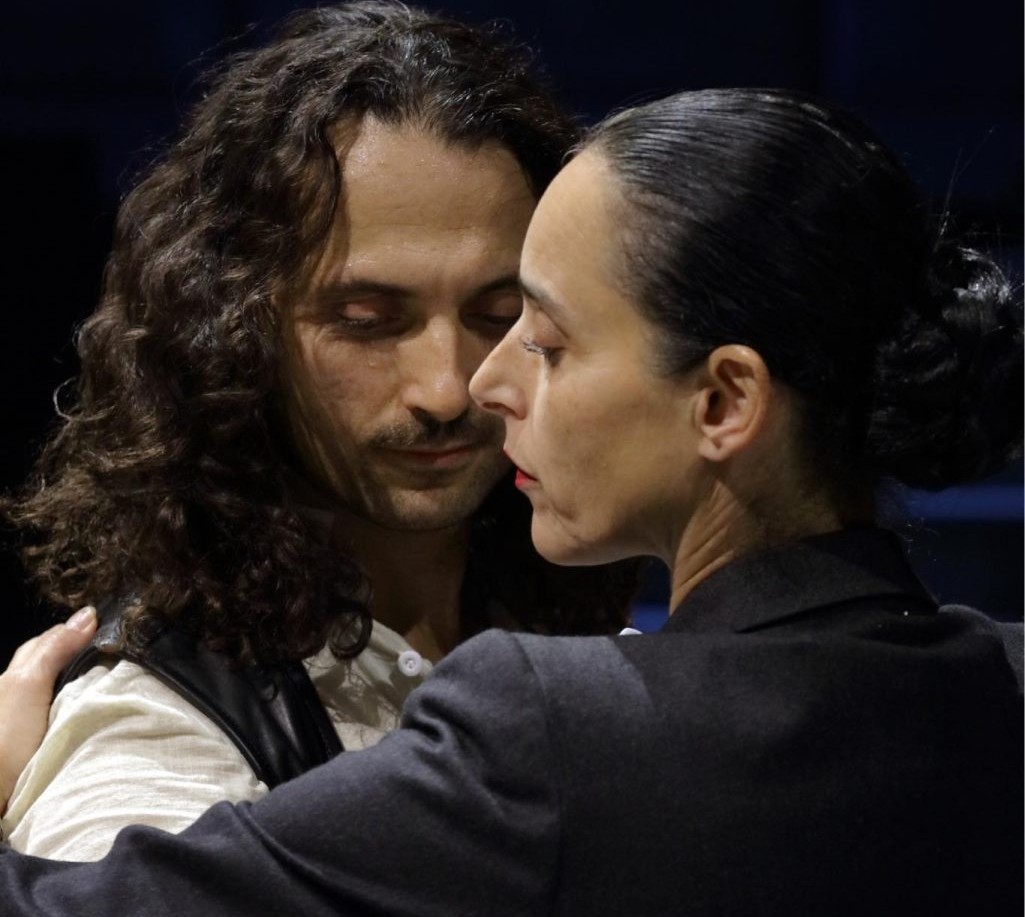
Balkan Erotic Epic. Photo: Marco Anelli
BZ: What challenges did the durational nature of the piece present as a choreographer and as a performer?
BA: Durational work shifts choreography from designing actions to designing conditions, and performance from executing movement to inhabiting time.
The challenge, both as a choreographer and as a performer, is learning how to remain honest, persistent, and open. Physical and mental endurance, listening, a controlled ego, honesty, and trust in the process – the journey – are the main elements needed to bring a new artistic universe to life. And this is always teamwork.
The body cannot fake duration. Fatigue, pain, and vulnerability inevitably appear. The challenge is not to suppress these states, but to remain present within them and allow the work to deepen.
BZ: How sustainable is a career as a choreographer in Albania? Has this changed in recent years?
BA: For now, I believe that a career as a choreographer in Albania is still developing the stability it needs, especially in terms of long-term job security. Although I live abroad, I have returned in recent years to create and stage choreographic works, thanks to the generous support of several cultural institutions. I am deeply grateful for their trust.
What I truly love is coming back to Albania and sharing my experiences, ideas, and energy with the new generation of dancers and choreographers – helping to inspire them, exchange knowledge, and build a vibrant future for dance in our country.
BZ: Your personal story of emigration has appeared in several of your works. How has displacement influenced your themes and physical language?
BA: On a thematic level, my work often explores the space between “here” and “home.”
My experience as an emigrant has deeply shaped how I explore movement and how I use the body. Displacement, in my work, becomes a tension between loss and adaptation: new places, learning a new language – because language is a home. I work a lot with emotions and with the feeling of being both present and absent, of belonging and not belonging.
This tension often becomes the core narrative of my pieces, expressed through text, physicality, and visual imagery. The body becomes a vessel for memory, nostalgia, struggle, and the search for identity in unfamiliar surroundings.
BZ: What are the biggest challenges contemporary choreographers face today when working internationally?
BA: Being a freelance choreographer today comes with many challenges, especially internationally. Income is never stable – you may work intensely for a few months and then face long gaps without projects, making financial sustainability a constant concern.
For artists from countries like Albania or the Balkans, mobility adds another layer of difficulty. Visa processes and bureaucracy consume time and energy, often pulling focus away from the work itself. Funding for the independent scene is limited, which makes creating and presenting work even harder.
At the same time, these challenges build resilience. Ultimately, showing up consistently, staying present, and remaining true to yourself is essential.
BZ: What do you find most essential in building trust and encouraging artistic risk-taking during rehearsals?
BA: I like to create worlds where everyone I choose walks the path together. I believe in coexistence through art, because art is sacred – in the studio, on stage, and in performance.
Artists need to feel that their ideas, bodies, and emotions will not be judged. Trust grows when people feel respected, heard, and supported. From that trust comes freedom – the freedom to explore, to experiment, and to be fully present
BZ: As someone who works internationally, how do you see the relationship between Balkan cultural heritage and contemporary choreographic practice?
BA: I have been working internationally, in different countries, for almost twenty years. In my practice, I see the relationship between Balkan cultural heritage and contemporary choreography as a source of new movement dialects.
Folk is the core of dance because it is connected to identity, life, and the rituals and stories that have shaped communities for generations. Engaging with these traditions is like learning a new language of expression – a way of telling stories through the body. By bringing elements of Balkan folk into contemporary choreography, I find it fascinating how these cultural roots can inspire fresh, innovative forms while remaining in dialogue with the past.
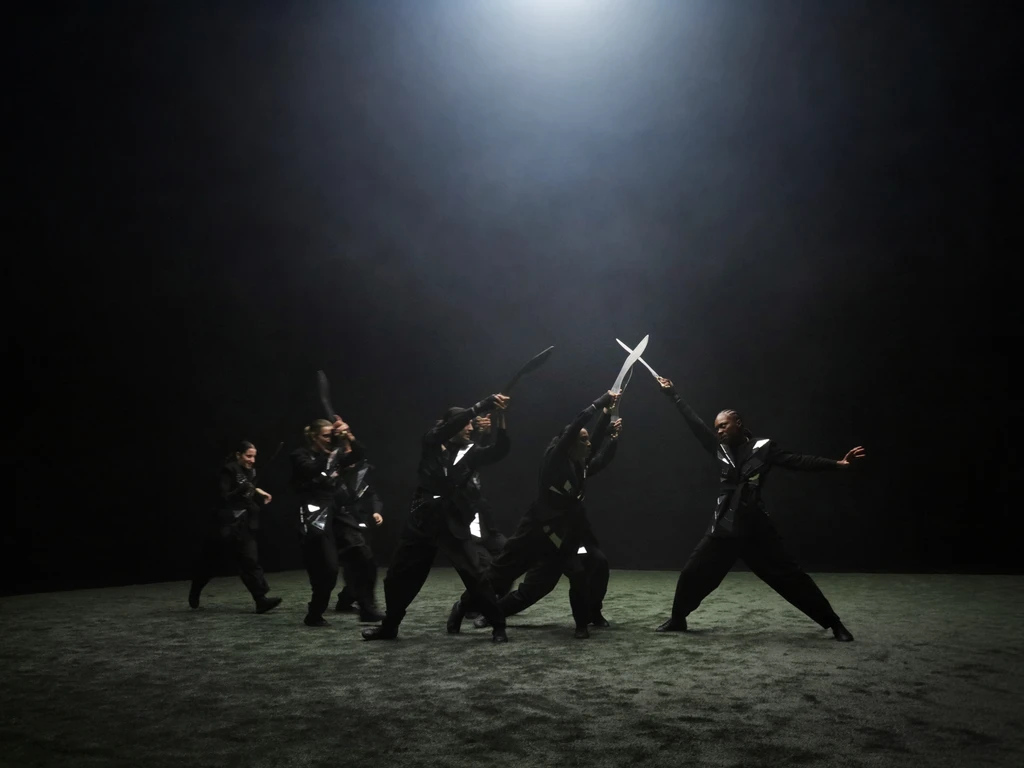
Balkan Erotic Epic. Photo: Marco Anelli
BZ: Looking ahead, what projects or themes are you most excited to explore next?
In the next chapter of my artistic journey, I am drawn to exploring emotional in-between states – those delicate spaces where life feels both fragile and profound. I am interested in everything that touches me deeply on a personal level.
My intention is to transform these experiences into work, creating stories that resonate and invite the audience into a shared emotional space.
Main image credit: Rowan Schratzberger