National Experimental Theater “Kujtim Spahivogli”, Tirana, premiere 29 January 2026
Few contemporary plays can match the emotional gravitas of The Son, the final instalment of French playwright Florian Zeller’s family trilogy, following The Mother and The Father. Zeller’s writing has become synonymous with a delicate yet unflinching examination of mental health, fractured families, and the invisible burdens that pass from one generation to another.
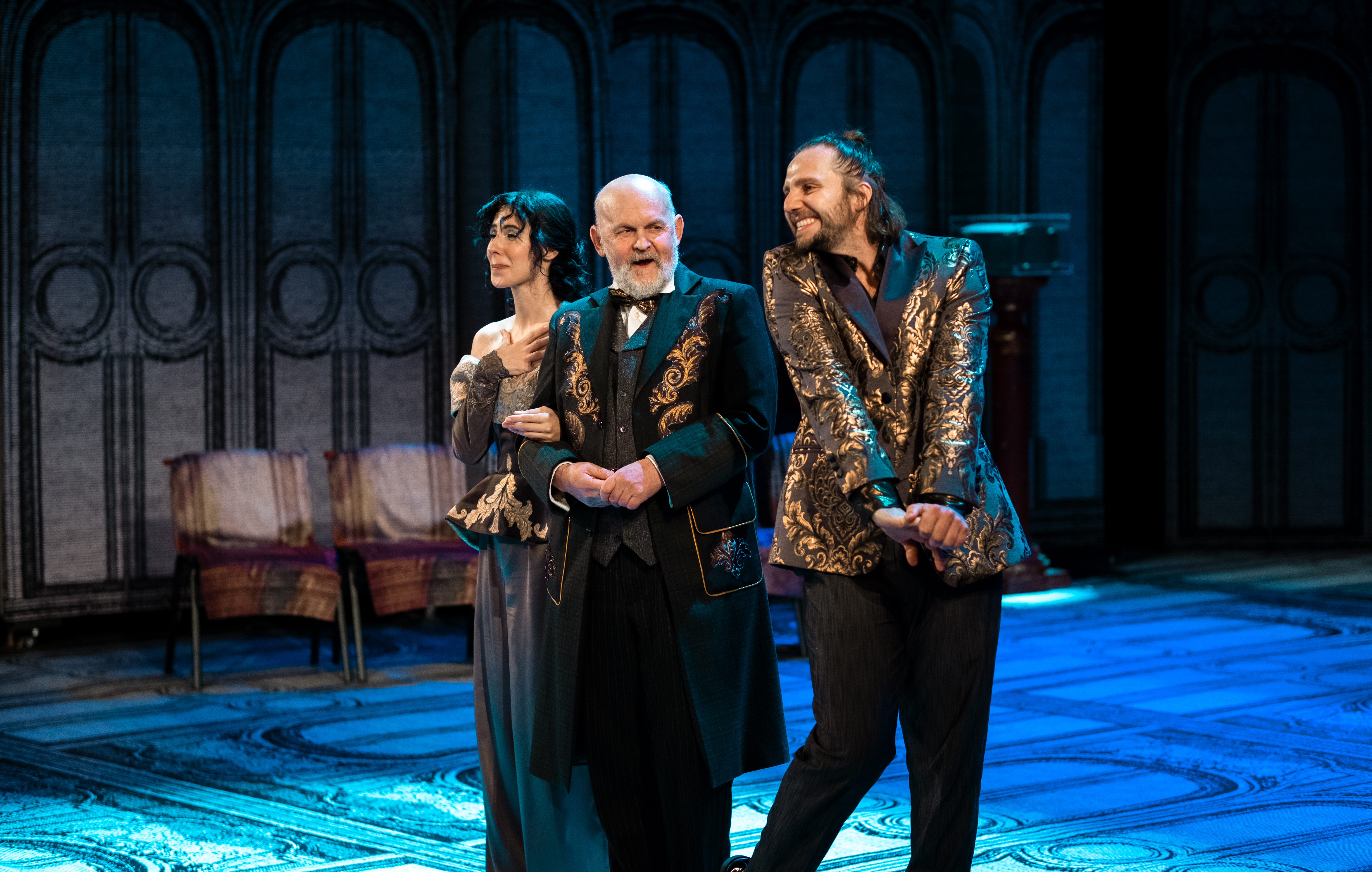
Written on 2018, and the basis for Zeller’s 2022 film, The Son is a poignant exploration of adolescent depression and the emotional paralysis of parents confronted with a suffering they cannot fully comprehend. Teenage Nicholas is struggling with depression and his divorced parents, mother Anne and father Pierre, who has recently had a child with his new partner, don’t know how to help him. Director Fatos Berisha approaches the text through a visual and emotional language situated between symbolism and realism, crafting a production that seeks to externalize inner trauma while preserving the intimate psychological core of the play.
Berisha’s direction proves to be one of the production’s most compelling aspects. The staging unfolds through a series of transitions in which characters momentarily freeze before being propelled into the next scene. This device establishes a fractured temporal rhythm that mirrors the emotional stagnation at the centre of the play. Conceptually, it underscores the sense of a family suspended between past and present, unable to escape inherited patterns yet continuously forced into confrontation. At times, however, this mechanism creates a subtle tension within the performances, as the abrupt physical interruptions occasionally hinder the emotional flow between scenes. Nonetheless, the overall directorial structure remains coherent, reflecting a thoughtful and ambitious engagement with Zeller’s dramaturgy.
A particularly notable dimension of the production was its use of multimedia to foreground intergenerational trauma. Through projected interventions, the figure of Peter’s father appears on stage, portrayed by Viktor Zhusti, addressing his son from what seemed like the depths of his subconscious. This addition – absent from Zeller’s original text – functions as a symbolic embodiment of inherited emotional patterns and the lingering authority of the paternal figure. Zhusti’s presence urges Peter to confront his own responsibility as a father rather than attributing his emotional limitations solely to his upbringing. The concept introduces an experimental layer, expanding the thematic scope of the production beyond the immediate family dynamic.
Yet while this multimedia intervention enriches the performance visually and conceptually, its sporadic appearance somewhat dramatic potential. A more consistent or episodic recurrence might have reinforced the sense of psychological haunting, rendering the father’s presence a persistent echo within Peter’s consciousness. Even so, the multimedia design by Dhespina Cani enhances the production’s exploration of generational trauma.
The Son
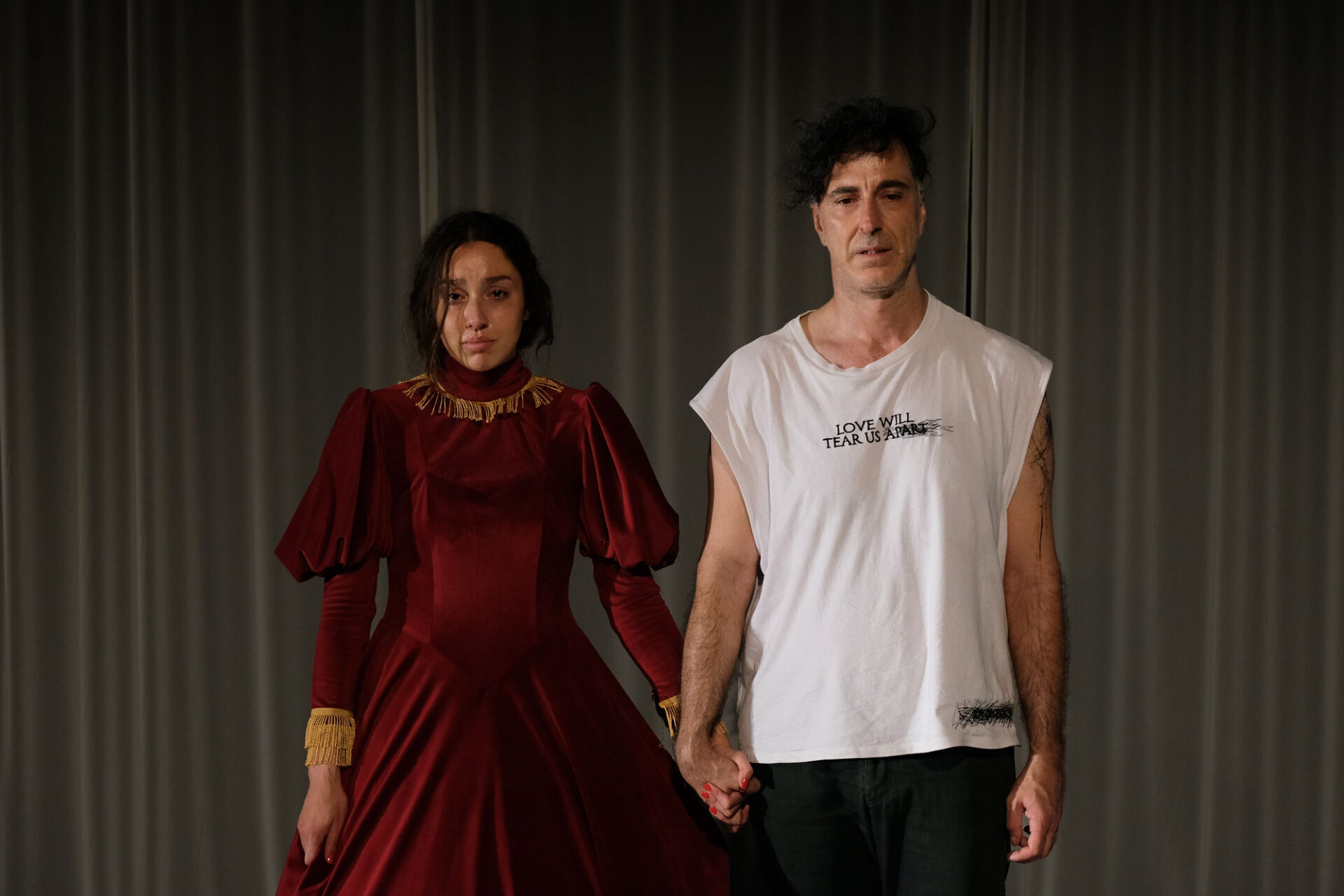
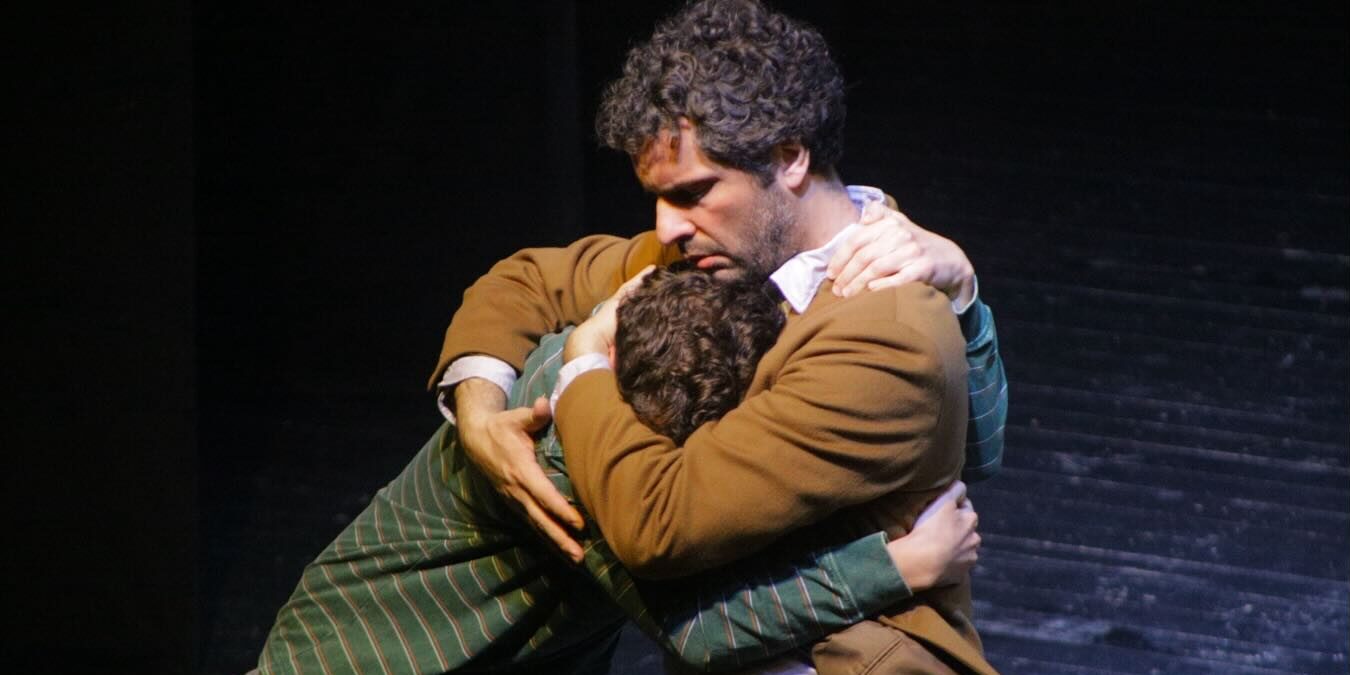
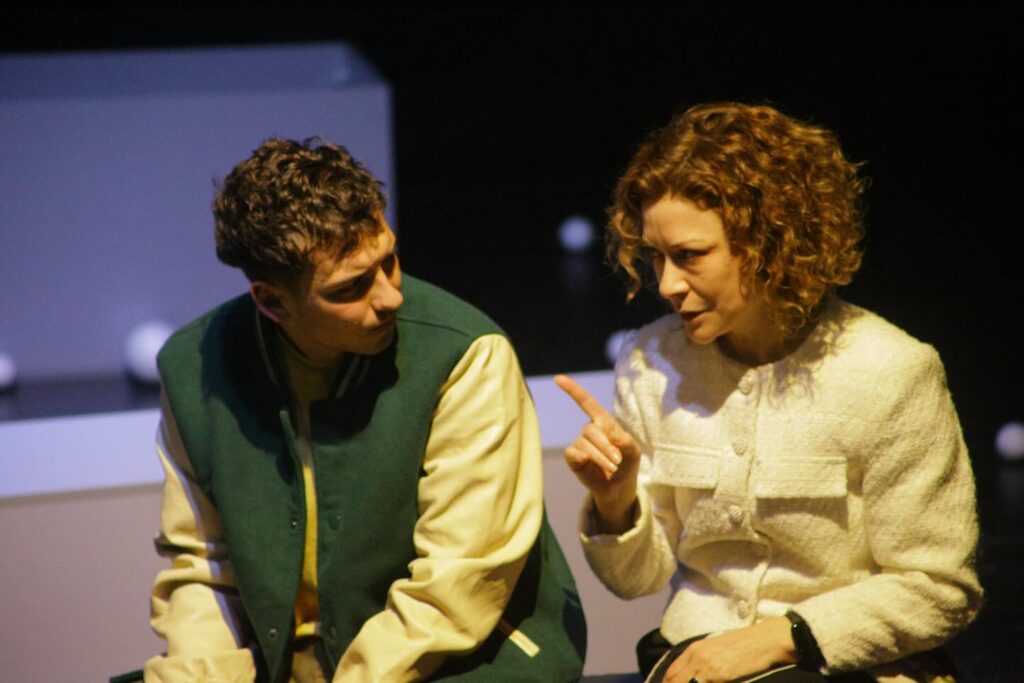
As Nicolas, Arjon Pulleja delivers a portrayal marked by emotional nuance and restraint. Navigating the character’s fragile oscillation between vulnerability, quiet pain, and occasional cynicism, Pulleja gradually reveals the complexity of a young individual struggling to articulate his inner turmoil. Nicolas is a role that resists easy interpretation, often appearing elusive from an external perspective. Through subtle shifts in tone and physicality, Pulleja succeeds in making the character’s emotional landscape perceptible without resorting to overt dramatization.
The relationship between Egla Ceno and Jozef Shiroka as Nicolas’ parents offers a clear portrayal of post-divorce emotional distance. Their interactions conveys a lingering awkwardness and unresolved tension, reflecting the fragile dynamic of two individuals bound by responsibility yet separated by emotional disconnection. Shiroka’s interpretation of Peter emphasized a certain emotional detachment, aligning with the character’s inability to establish a meaningful connection with his son. While this choice effectively highlighted Peter’s paternal shortcomings, the role might have benefited from a deeper excavation of the character’s internal conflict, particularly given the production’s emphasis on inherited trauma and psychological burden.
As Pierre’s girlfriend Beth, Krist Lleshi brings an engaging emotional depth to the stage, embodying both sensitivity and unease within the newly formed family unit. Her presence conveys the discomfort of accommodating Nicolas while maintaining empathy toward his condition. Endri Cela, in the role of the family doctor, offers a measured and controlled performance, presenting the character with a clinical detachment tempered by a subtle layer of cynicism that enriched the interpretative texture of the production.
Beqo Nanaj’s scenography functions as both symbolic framework and practical environment, reinforcing the thematic undercurrents of the play. One of its most evocative elements was the scattering of white balls across the stage by Nicolas upon joining his father’s household. These objects operate simultaneously as symbols of childhood innocence and as physical obstacles disrupting the domestic space. The characters’ continuous discomfort in navigating around them generate a palpable sense of unease, visually articulating the emotional tension and lack of personal space within the reconfigured family environment. Their eventual removal following Nicolas’s suicide transforms absence into a poignant visual marker of loss.
Equally striking was the representation of the hospital setting, positioned at a distance and partially concealed by a semi-transparent black curtain. This spatial separation intensifies the emotional rupture between Nicolas and his family once he was institutionalized, reinforcing the sense of isolation that permeates the narrative. Through these visual choices, the scenography deepens the production’s exploration of distance, both physical and emotional.
Ultimately, this staging of The Son offers a thoughtful and emotionally resonant interpretation of Zeller’s work, guided by a strong directorial vision and supported by committed performances. While certain conceptual elements might have achieved greater impact through increased consistency, the production succeeded in confronting the audience with the fragile realities of adolescent mental health and the enduring weight of inherited emotional patterns. In doing so, it reaffirms theatre’s capacity to illuminate the often-unspoken complexities of familial relationships, leaving spectators with a lingering sense of introspection beyond the confines of the stage.
Author: Florian Zeller//Director: Fatos Berisha //Scenography: Beqo Nanaj// Costume Design: Desantila Lika// Multimedia Design: Dhespina Cani// Assistant Director: Klaudia Piroli
Cast:
Arjon Pulleja, Egla Ceno, Jozef Shiroka, Krist Lleshi, Endri Çela
Further reading: review of The Father