National Theater of Kosovo, Prishtina, premiere 19 January 2026
Written and directed by Astrit Kabashi, a renowned name in Kosovo theatre and film, Disgust is a powerful reminder of the delicate state of humanness, especially under the burden of societal rules, many of which bear no reason or rhyme.
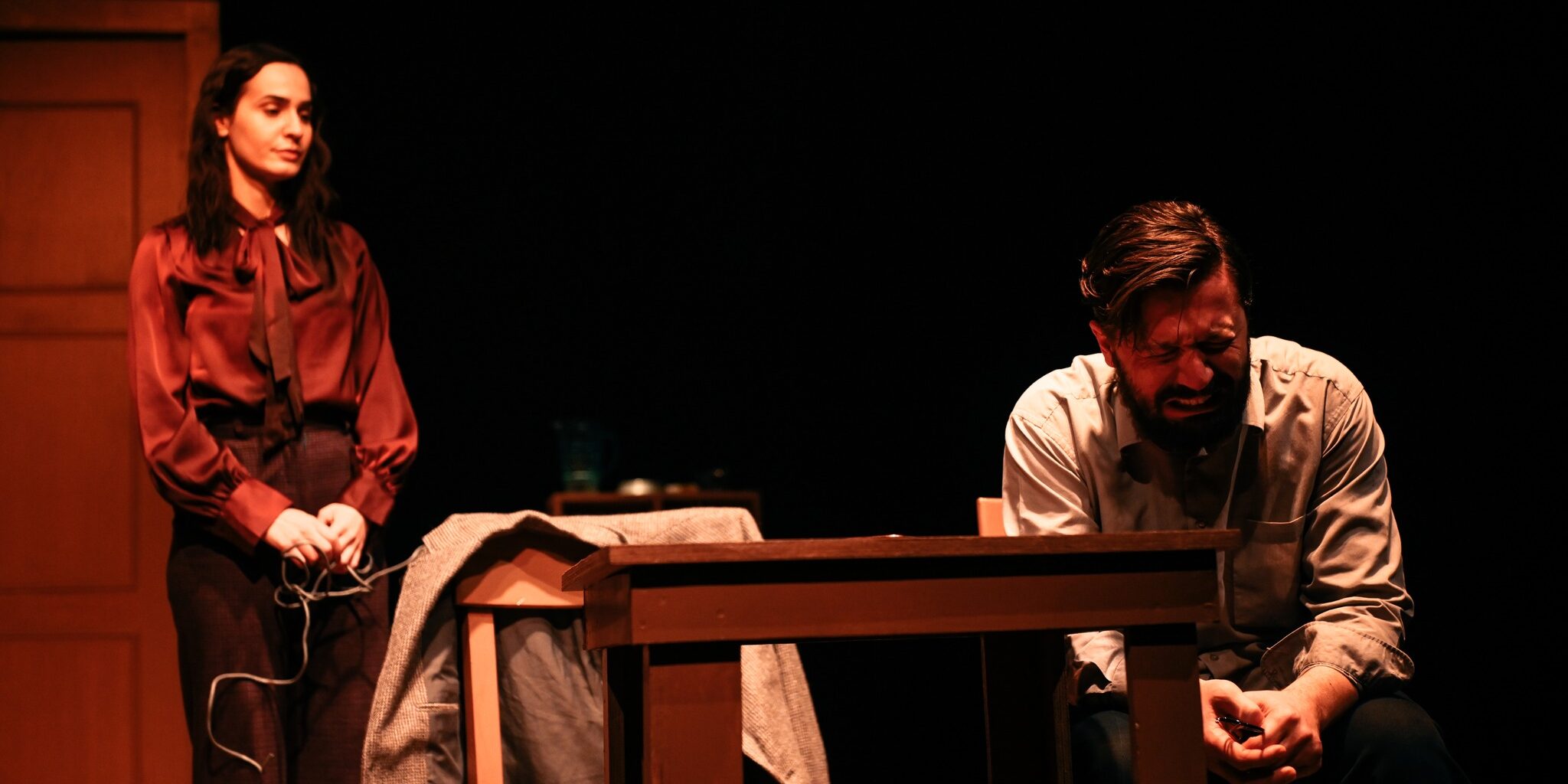
The main character, Lekë (Bujar Ahmeti) is a school teacher going through a troubled phase. He’s gradually coming undone. He is haunted by the image of a lamb he accidentally let drown in a sceptic tank years ago. That turns out to be only the tip of the iceberg. He keeps bursting into tears at the most inopportune moments. Furthermore, his (emotionally unavailable) father is in hospice and is a constant burden on him with no reprieve in sight.
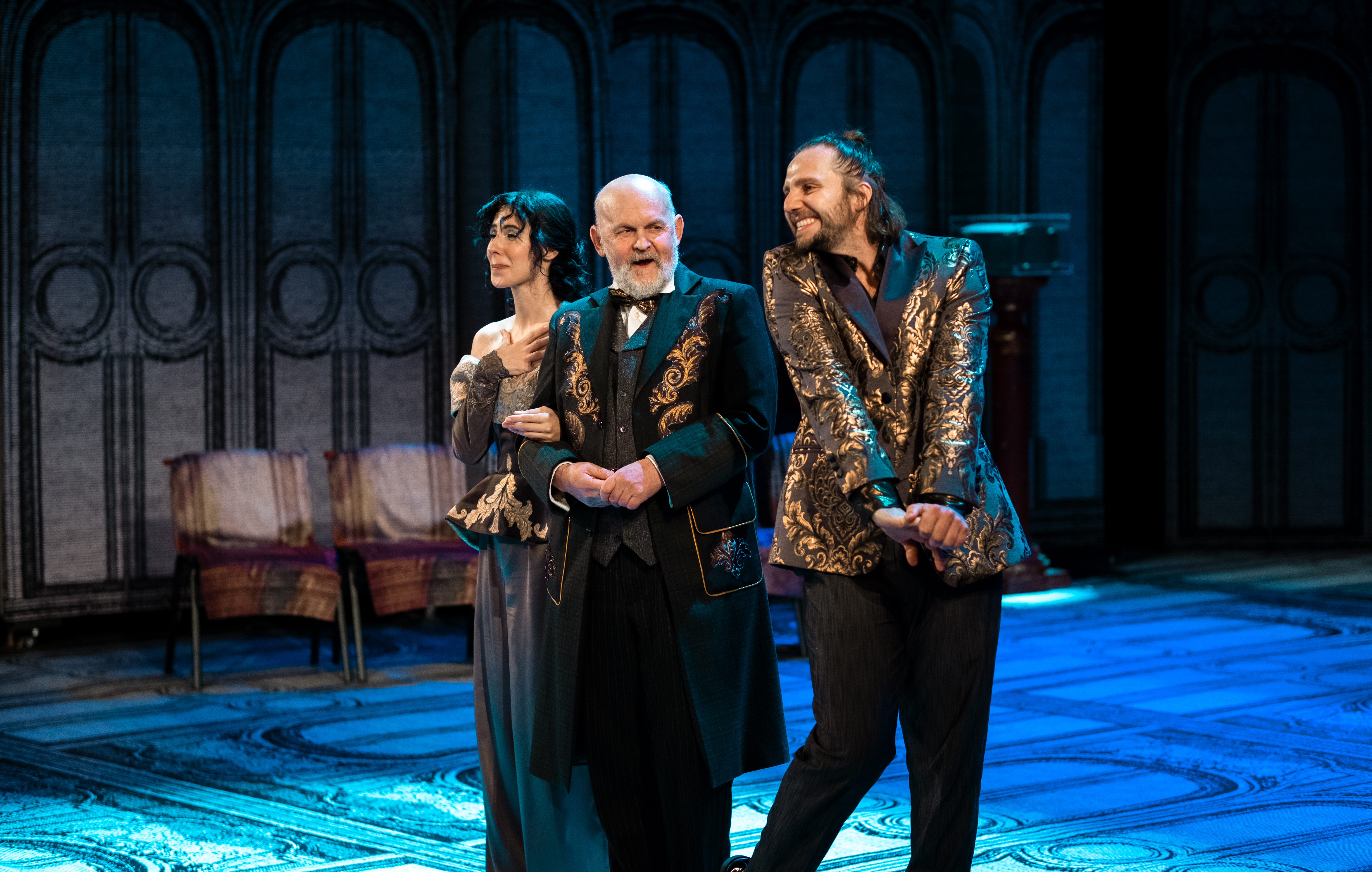
Lena, his wife (Maylinda Kosumovic) is a rational woman, who guides her clueless husband through life and puts an occasionally light spin on things through a combination of humor and common sense. She takes care of everything and tries to get him to open up, while he keeps pretending everything is fine. That is until he finally gives in and collapses in her arms sobbing…
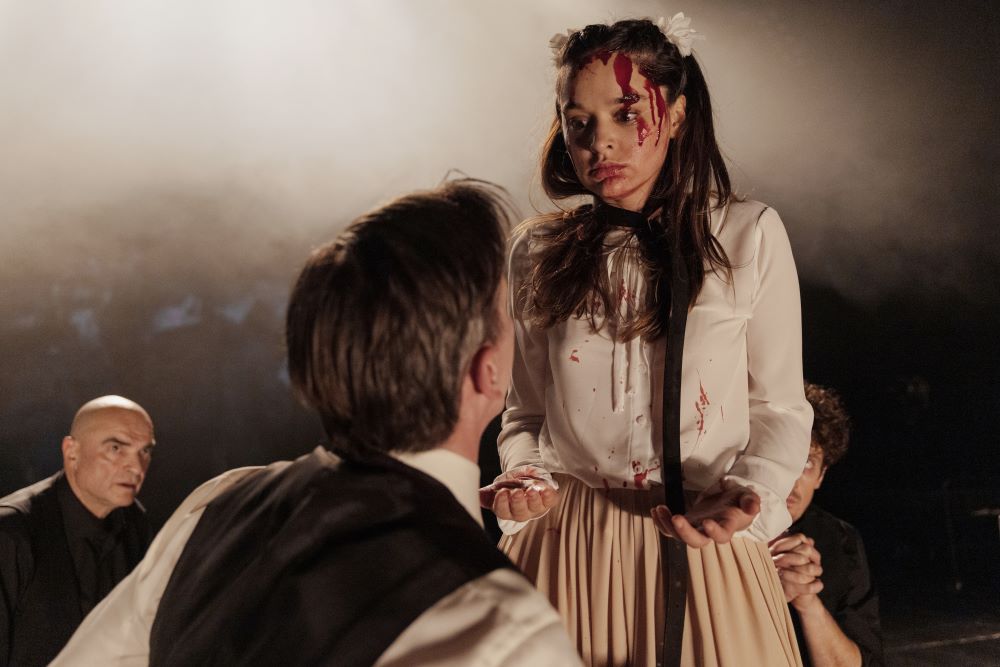
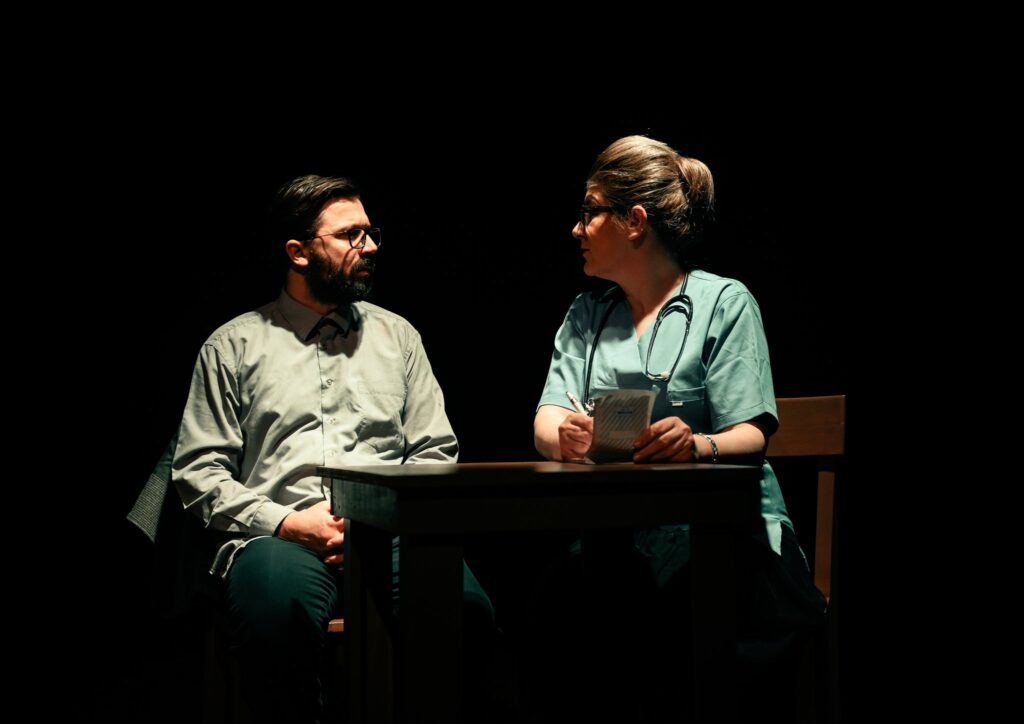
The nurse (Rebeka Qena), who Lekë confides in, first seems to be a welcome presence but soon starts to feel like an eerie apparition, as he dives deeper into psychological abyss in her presence. She tries to help but is aware of her limitations; either way, she creates a safe and non-judgmental space for the downtrodden man who opens up to her.
Though small in scale, with just three characters, Disgust abounds with suppressed guilt, confusion, and darker parts of the subconscious. Lekë’s final monologue, sees him spew forth all the things people always told him to do. “Sit still, moron! Move, you idiot! Don’t breathe so loud! Shake it off! Off to school! Don’t go to school! Don’t do politics! Vote! …” On and on he goes, with countless patronizing instructions, one more irrational than the next. The intensity of his outburst is like a volcano erupting. It drew gasps and a spontaneous burst of applause.
Disgust, National Theatre of Kosovo
Throughout the play, Ahmeti has the stage to himself, as his monologues slowly reveal more of his character. The bleak spotlight he’s under during his final outburst cements his loneliness and the austerity of his state. That’s when the audience begins to realize that Lekë’s lifetime of accumulated disgust has taken a tremendous toll. The play ends with the death of his father and a shocking revelation that makes it clear why he is on the verge of a breakdown. He is a victim of a society that thrives on preaching morality and has the presumptuousness to impose impossible standards on others, where the pressure can drive one beyond sanity.
Ahmeti’s shattering performance compellingly conveys Lekë’s mental and physical breakdown. It is not the first performance of this sort for him. His performance in Father and Father is still imprinted on the audience’s memory. May-Linda Kosumovic – superb in Club Albania – maintains a dignified stance as the cool practical wife: warm and fun at first but cold and distanced once she realizes her husband is beyond help. Although it feels like her role could use a bit more umph, it may be an intentional move laying the groundwork for her change of heart later in the play. Rebeka Qena plays the hands-on nurse: calm, composed, clinical. Although hers is a side character, she plays it capably, as her resonant voice manages to quell the demons in her patient’s head.
Kabashi’s play is direct, relevant, and pertinent, astutely written in local Kosovo dialect. Yllka Brada’s costumes are simple but on-point, particularly the way Lekë’s neatly ironed clothes become increasingly dishevelled. Arben Shala’s stage design consists of a spartan living room and a corner table where the nurse’s sessions are held, quietly complimenting the main character’s poor state of mind. Finally, the soundtrack is curated by prominent composer and director Memli Kelmendi, whose musical productions have received accolades across the world.
To say that a crisis of identity is underway in this play is an understatement. It’s a portrait of human fragility and a soul suffocated by societal pressure. It’s a cry for help and an impossible quest for meaning. Theatre of this kind is rare. Kabashi shows how easy it is to lose one’s way and how hard it is to recover.
Credits:
Author & Director: Astrit Kabashi//Stage: Arben Shala// Costumes: Yllka Brada// Soundtrack: Memli Kelmendi// Assistant Director: Lendi Aliu// Adaptation: Mursel Haziri// Lights: Bujar Bekteshi//Photography: Kushtrim Haxha
Actors: Bujar Ahmeti, May-Linda Kosumovic, Rebeka Qena;

Bora Shpuza is a literary translator and freelance art reviewer based in Prishtina,