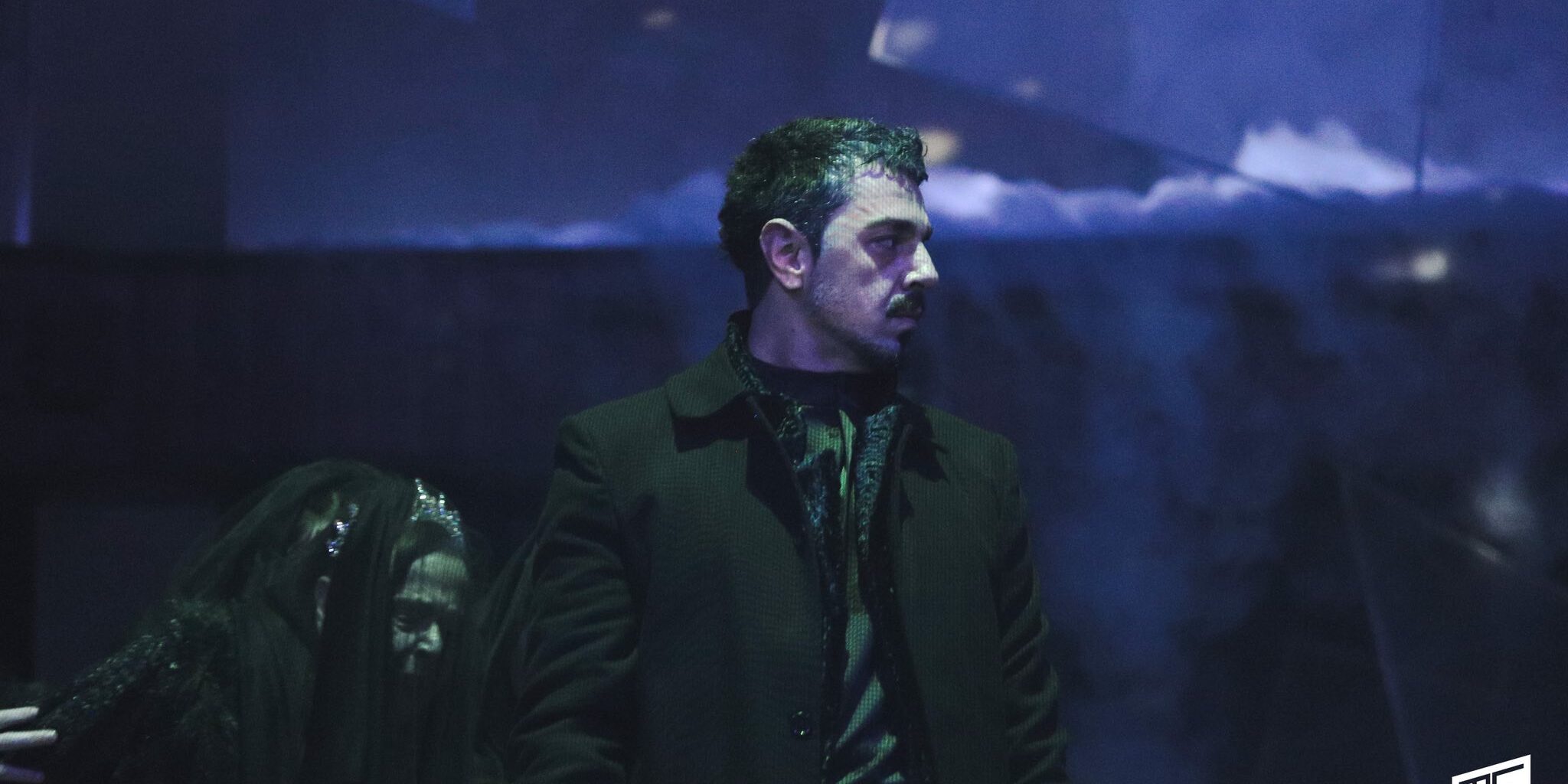
Metropol Theatre, Tirana, premiere 4th December 2025
Staging Shakespeare’s Hamlet requires not only courage but also a touch of madness. This production, staged in the Shakespeare Hall of the Metropol by director and translator Jonida Beqo, presents the play in a modern language and features renowned actors and multidisciplinary artists, including circus performers.
The opening étude – a finely crafted mise-en-scène elevated by Rafael Hoxhaj’s choreography – set the tone, shifting from the mourning of King Hamlet’s funeral to a royal wedding. The choreography blended seamlessly with the events of the play and the characters’ inner nature.
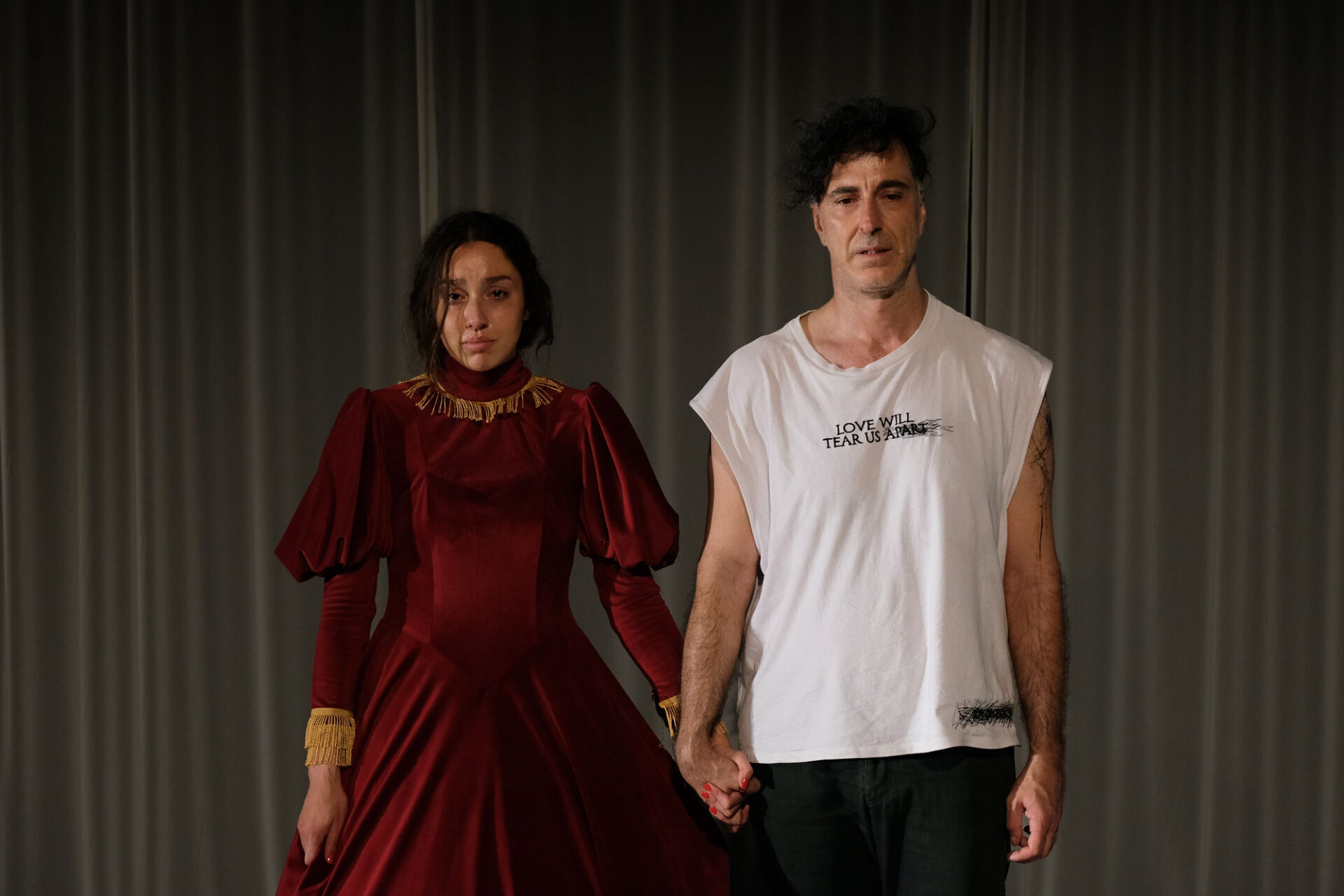
Amos Zaharia’s Hamlet is a character both dual and charismatic. His Hamlet was modern, bitter, half-mad, courageous, and, above all, an idealist. Zaharia internalizes these aspects and aims to remain natural and relatable for a contemporary audience through his posture, reactions, and gestures. The role of the Prince of Denmark did not trap him in a clichéd interpretation; instead, he brought a vivid, artistic spirit. Still, a deeper focus on the character’s hesitation to kill his uncle might have drawn the portrayal even closer to Hamlet’s core.
The other actors inhabit their roles with dignity, including Zaharia’s real-life mother Yllka Mujo as Hamlet’s mother, Gertrude. Viktor Zhusti appears as the ghost of Hamlet’s father; Armela Demaj plays Ophelia’s mother (the character of Polonius reimagined as a woman); Xhino Musollari delivers a fantastic performance as Horatio; and Kosovare Krasniqi offers a delicate interpretation as Ophelia.

Hamlet. Photo: Besart Cani
The decision to portray Polonius as a woman is one of the most intriguing choices in the production. Armela Demaj delivers the role with exceptional warmth, making the character engaging and endearing. Her interactions with the other actors brings a fresh emotional dimension to Polonius’ relationships within the Danish royal court.
However, changing Polonius’s gender raises several important questions that were not fully explored in the performance: Is it the same for Ophelia to be raised by a widowed mother rather than a father? How does Hamlet perceive a woman he must kill? How does a mother respond her daughter suffering for love? And how does a woman judge the Queen’s remarriage to Claudius, whom she had loyally served? Exploring these dilemmas could have added a deeper dramaturgical layer to the characters’ relationships and heightened the tension within the royal court.
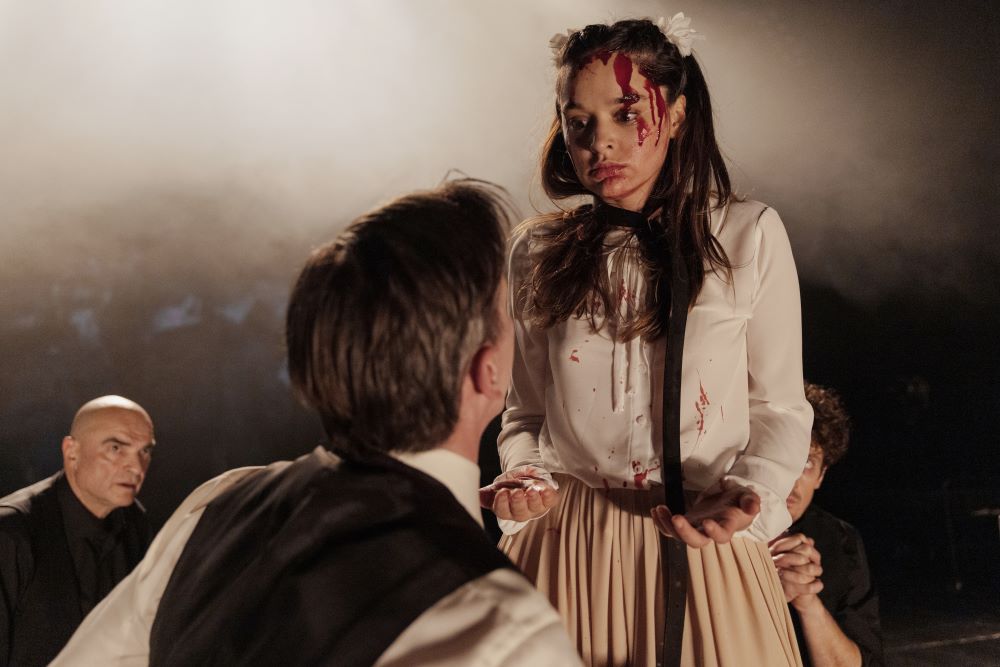
On the other hand, Ophelia’s role – despite Kosovare Krasniqi’s elegant performance – did not move beyond the classic interpretation of the character. Her Ophelia seemed to remain in the service of Hamlet’s emotional fluctuations and the manipulation coming from her mother and the king. Her approach to a partner once again felt underdeveloped, denying the character the chance to be reshaped through her personal conflicts and traumas. The most striking scene of the production was Ophelia’s suicide, where the interplay of stage lighting created an elegiac and visually captivating atmosphere.
The lighting design by Ilva Dodaj reshaped the stage into a space between nightmare, drama, and reality. The set design, by Ibrahim Burgu and Beqo Nanaj, did meanwhile, resembled the base of a shattered glass globe that centralized all actions; fragments of broken glass suspended above the characters reinforced the line delivered at the start of the play, “Something is rotten in the state of Denmark,” as though this cracked glass world surrounding the characters might collapse on them at any moment. an excellent job realizing this concept. The first image presented to the audience as the play opens is the ghost of the king holding a glass globe and shaking it – a warning of Denmark’s fracture and the breaking of harmony.
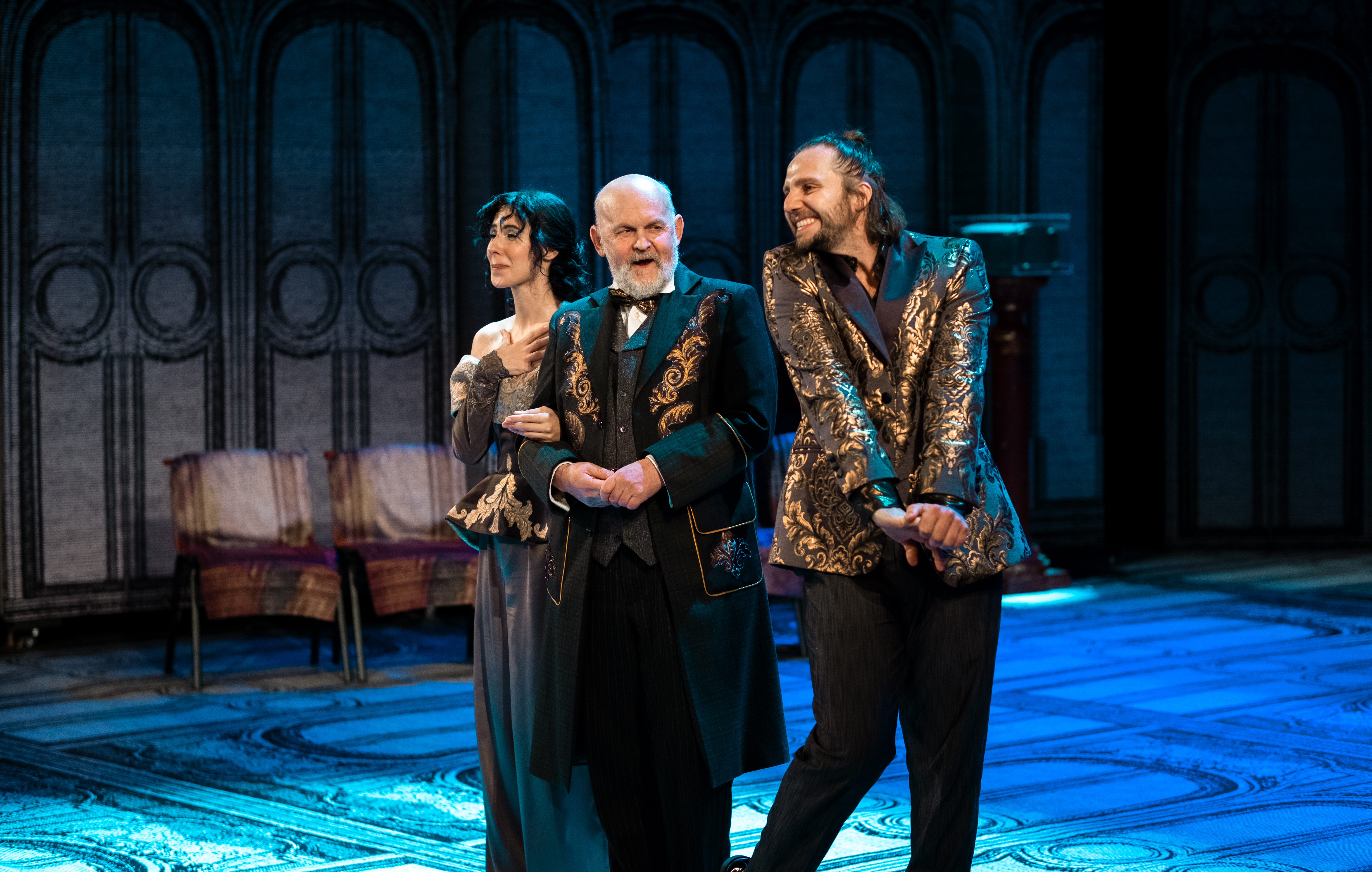
The intent to create a mini-globe, a miniature world of a kingdom, was also achieved through the costume – unique and full of detail. Also designed by Jonida Beqo, they were crafted with special attention to each character – especially Ophelia. Her costume, resembling a bouquet of flowers or a meadow, reflected delicacy and youth; after her madness, it appeared aged, its colours fading just like her sparkle. Hamlet wore a modern and elegant costume, while the other characters reflected their own distinct aura.
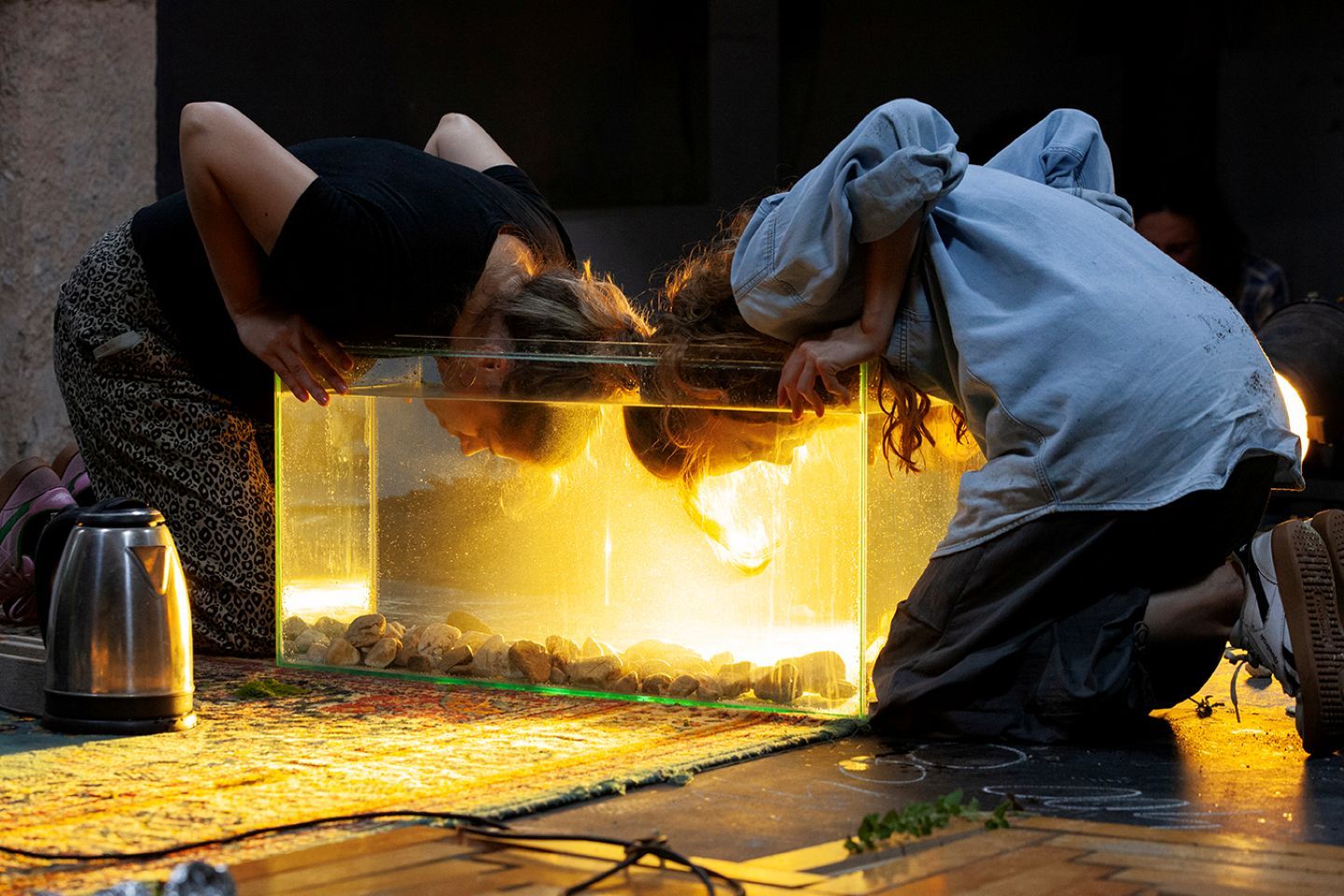
From a theatrical and artistic standpoint, the production is accomplished. It offers a modern take on Hamlet, full of light, energy, and – most importantly – a dignified harmony between performance, stage design, costumes, and directing. There were many enjoyable directorial choices: Polonius spying on Hamlet with a smartphone camera as proof of his madness, the visual shaping of the set through lighting, and the play-within-a-play performed by circus artists. Hamlet is a show that awakens multiple senses at once, inviting the audience to follow the characters’ tense journey as they struggle between evading death and confronting it head-on.
Credits: